


Vietnam's exports to Singapore increased by over 184% in May
Friday, July 3,2026
AsemconnectVietnam - In the first five months of 2026, Vietnam's exports to Singapore increased by 184.7%, bringing the trade surplus of domestically produced goods to over US$5.6 billion.
Vietnam-Singapore trade increased by over 43%
According to the Vietnam Trade Office in Singapore, citing data from the Singapore Enterprise Agency, in the first five months of 2026, Singapore's total import and export turnover with the world reached SGD 729.3 billion, an increase of 30% compared to the same period in 2025. Of which, exports reached SGD 388.6 billion, an increase of 30.4%; imports reached SGD 340.7 billion, an increase of 29.6%.
Notably, Singapore's trade activities with major partners continued to maintain positive growth momentum. Taiwan (China) temporarily holds the position of Singapore's largest trading partner with bilateral trade reaching SGD 127.4 billion, a 90% increase year-on-year. This is followed by China with SGD 72 billion (up by 13.9%), Malaysia with SGD 67.9 billion (up by 13.5%), the United States with SGD 63.5 billion (up by 7.3%), and Hong Kong (China) with SGD 44.6 billion (up by 29%).
In this picture, Vietnam continued to maintain its position as Singapore's 10th largest trading partner. The total bilateral trade between the two countries in the first five months of 2026 reached SGD 23.3 billion, a 43.4% increase year-on-year. Of this, Singapore's exports to Vietnam reached SGD 12.3 billion, up by 4.8%; imports from Vietnam reached SGD 11 billion, a significant increase of 142.9%. Notably, if only considering domestically produced goods, Singapore was experiencing a trade deficit with Vietnam of over SGD 7.3 billion, equivalent to approximately USD 5.6 billion. This indicated that the value of goods actually originating from Vietnam exported to Singapore was high and continued to increase.
In May of 2026 alone, the total import and export turnover between the two countries reached nearly SGD 4.5 billion, an increase of 42.1% compared to the same period last year. Of this, Singapore's exports to Vietnam reached SGD 2 billion, a decrease of 11.8%, while imports from Vietnam reached nearly SGD 2.5 billion, a sharp increase of 184.7%.
Regarding the structure of goods, in the first five months of 2026, the two main groups of goods were machinery and electrical equipment and parts (HS 85) and fuels, petroleum and distillate products; bituminous substances; mineral waxes (HS 27) continued to be Singapore's top two export categories to Vietnam. Specifically, HS 85 reached SGD 5.9 billion, a slight decrease of 2.8% compared to the same period last year; HS 27 reached SGD 2.5 billion, an increase of 28.8%.
Although both categories accounted for a large proportion, the nature of these two categories differs significantly. For HS 85, 95.3% of the value consists of goods temporarily imported and re-exported from a third country via Singapore. Meanwhile, HS 27 mainly consists of goods manufactured domestically in Singapore, with domestic value accounting for 90.1% of total exports to Vietnam.
In addition, several other categories also recorded notable growth, such as nuclear reactors, boilers, machinery and equipment (HS 84), reaching SGD 1.2 billion, an increase of 49.7%. The essential oils, cosmetics and hygiene products group (HS 33) reached S$292.7 million, an increase of 14.4%.
Conversely, machinery and electrical equipment and parts (HS 85) continued to be the group of goods Singapore imported most from Vietnam with a value of nearly S$5.9 billion, an increase of 161.8%, accounting for 53.6% of total imports from Vietnam.
The second was the HS 84 group with nearly S$3.7 billion, an increase of 268.7%. Several other groups also recorded high growth rates such as fuels and petroleum products (HS 27) up 244.9%; salt, sulfur, rocks, gypsum, lime and cement (HS 25) up 55.3%; paper and paper products (HS 48) up 58.1%; toys and sporting goods (HS 95) up 87.9%.
According to the foreign trade report published by the Singapore Ministry of Trade and Industry (MTI) on June 17, 2026, Singapore's non-oil domestic exports increased by 38.4%, with electronics exports rising by as much as 94.8%, mainly driven by demand related to artificial intelligence (AI), integrated circuits, data storage products, and personal computers.
This is a crucial foundation for the growth of HS 85 and HS 84 product groups, and reflects Vietnam's increasing involvement in the regional supply chain for electronics, components, machinery, and industrial equipment.
For the fuel, petroleum, and distillate products group (HS 27), trade growth was supported by Vietnam's need to diversify its energy sources. In the first four months of 2026, Vietnam's imports of refined petroleum products increased by 28.7%, while LPG imports increased by 34.5%.
Against this backdrop, Singapore continues to play a leading role as a regional hub for trading, warehousing, refining, and distributing fuel, thereby contributing to the growth of energy trade between the two countries.
Opportunities for Vietnamese businesses
According to Mr. Cao Xuan Thang, Vietnam's Trade Counselor in Singapore, a report published by the Singapore Ministry of Trade and Industry (MTI) on May 25, 2026, shows that Singapore's economy in 2026 is expected to continue its relatively positive growth momentum, but the overall outlook is becoming more cautious due to the volatile external environment.
Singapore's GDP in the first quarter of 2026 was projected to increase by 6% year-on-year, higher than the 5.7% increase in the fourth quarter of 2025. Based on this, MTI continues to maintain its forecast for full-year GDP growth in the range of 2-4%.
The prominent growth drivers come from industries closely linked to the global technology cycle, especially the wave of artificial intelligence (AI) development. The demand for AI has strongly boosted activities in the electronics, precision engineering, machinery and equipment, and wholesale sectors.
In the first quarter of 2026, Singapore's manufacturing sector was projected to grow by 7.9%; construction by 11.8%; wholesale trade by 11.7%; and finance and insurance by 5.7%. These are all sectors that generate significant demand for electronic components, machinery, construction materials, logistics services, and supporting industrial products.
However, Singapore's growth prospects also face several challenges. According to MTI, geopolitical tensions in the Middle East increase the risk of disruptions to energy and raw material supplies, thereby driving up production costs and inflation.
Some refineries and petrochemical plants in Singapore have had to reduce capacity, while many downstream chemical businesses have declared force majeure. According to a survey by the Monetary Authority of Singapore (MAS), overall inflation in 2026 is forecast at 2.3%, a significant increase from the previous forecast of 1.5%. Core inflation also increased from 1.5% to 2%.
Price pressures could reduce real household income and make people more cautious in their spending. This is why the forecast for private consumption was revised down from 3.5% to 3.2%, thereby bringing the overall GDP growth forecast given by MAS down to 3.5%.
Nevertheless, the Singaporean labor market is still considered relatively stable. According to Mr. Cao Xuan Thang, the unemployment rate at the end of 2026 is projected at 2.1%, unchanged from the previous survey. Labor demand remains positive in the technology, finance, construction, logistics, and professional services sectors, although divergence between industries may affect the pace of job creation in the near future.
Singapore remains a market with high purchasing power, a leading regional trade and financial center, and an important gateway for Vietnamese businesses to participate more deeply in international supply chains.
According to Mr. Cao Xuan Thang, the demand in the Singapore market is likely to remain positive in the coming period for technology products, electronic components, machinery and equipment, construction products, logistics, food, beverages, and essential consumer goods. However, Vietnamese businesses need to focus on quality, standards, stable delivery capabilities, and competitive pricing, especially given that Singaporean importers and consumers may be more cautious due to inflation and the cost of living.
Mr. Cao Xuan Thang stated that the Vietnamese Trade Office in Singapore will continue to closely monitor and update the situation, mechanisms, and policies of the region to provide timely support to businesses. Simultaneously, the Trade Office will strengthen the implementation of trade promotion activities, supporting Vietnamese businesses in connecting with trading partners, showcasing goods, and promoting corporate and product brands, thereby enhancing the presence of Vietnamese goods in the Singapore market.
The Vietnamese Trade Office in Singapore will promote the introduction of the Vietnamese market and industries to Singaporean and regional partners, support the export of goods to this market, and assist delegations from Singapore to Vietnam in sourcing goods and promoting investment in the industrial, commercial, and service sectors. The Trade Office will also continue to accompany Vietnamese businesses to Singapore to implement trade promotion activities and expand business cooperation opportunities.
CK
Source: VITIC/congthuong.vn
Vietnam's exports of iron and steel in 5 months of 2026
Two tech laws take effect from July 1
Dong Nai seeks to pioneer pilot nuclear power plant using small modular reactors
Vietnam commodities market on July 2, 2026: Gold rebounded, coffee rose, pepper fell to three-month Low
Energy efficiency drives Vietnam's green transition ambitions
Vietnam orders fuel firms to ensure uninterrupted petroleum supply
Resolution 10 opens a new development stage for the FDI sector in Vietnam
Opportunities for agricultural products, textiles and electronics to increase exports to South America
Vietnam-Malaysia trade showed strong growth in five months of 2026
For better development of the International Financial Center in Vietnam
Tax incentives on petroleum products extended
Vietnam commodities market on July 1, 2026: Gold fell, coffee and rice declined while pepper held steady
Vietnam's imports of phones and components in 5 months of 2026
2026 Oil and Energy Forum opens in Hanoi

Place preserving memories of President Ho Chi Minh in ...
Although there is little publicly available documentation confirming exactly when Place Ho Chi Minh was established, French urban ...Vietnamese leaders pay tribute to President Ho Chi Minh on ...
16th NA reviews amendments to four tax-related laws on ...
General Secretary, State President praises ethnic minority ...
National conference disseminates resolution of 14th Party ...
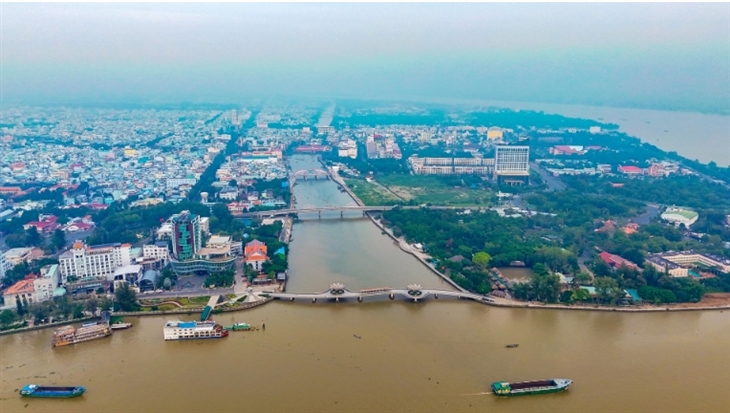
General plan task of Can Tho City until 2050 with a vision ...
General plan of Can Tho city is based on viewpoint of inheritance and development, in accordance with the Party's Resolutions on ...International market expansion program in a period of ...
Public debt borrowing and repayment plan for 2026

Tourism destinations refresh offerings to welcome New ...
Across the Mekong Delta, many tourist sites have been busy upgrading their offerings. At the Con Son tourism site in Can Tho city, members ...Annual New Year festival shines in Da Nang
Phu Quoc emerging as a favourite global destination
Vietnam Airlines adds 270 flights to during 2026 New Year ...
