


For better development of the International Financial Center in Vietnam
Saturday, July 4,2026
AsemconnectVietnam - Vietnam needs to make comprehensive and well-coordinated preparations in order to successfully develop its International Financial Center and secure a competitive position on the regional financial map.
The Vietnam International Financial Center (VIFC) is widely regarded as one of the key strategic directions the country is actively promoting in order to reposition its role within the global financial network. In the context of increasingly-deep global financial integration and intensifying competition between regional financial hubs, the VIFC is expected to serve as a critical platform for attracting international capital, enhancing financial connectivity, and strengthening Vietnam’s role in global value chains.
The recent establishment of the VIFC in two of the country’s major economic hubs - Ho Chi Minh City and Da Nang - is not only an institutional step forward but also a strategic choice driven by practical development needs. Ho Chi Minh City, as Vietnam’s largest economic and financial center, offers a strong foundation in banking, capital markets, and corporate activity, while Da Nang provides strategic advantages in terms of geographic positioning, governance flexibility, and potential for developing a modern, innovation-driven financial ecosystem.
Improving the legal framework
The development of the VIFC in Ho Chi Minh City (VIFC HCMC) and in Da Nang (VIFC DN) reflects a dual-pillar approach aimed at balancing scale with innovation and domestic strengths with international connectivity. The initiative is therefore not merely about establishing financial infrastructure, but about creating a comprehensive ecosystem capable of supporting long-term economic transformation, improving capital allocation efficiency, and elevating Vietnam’s position in the global financial architecture.
One of the key roles of the VIFC is to establish a legal framework and business environment capable of attracting global capital flows. At the same time, it aims to form an ecosystem operating in accordance with international standards, enabling foreign investors to access a familiar, transparent, and predictable environment, thereby increasing confidence in investing in Vietnam.
When investment funds, financial institutions, and international investors are present in Ho Chi Minh City or Da Nang, domestic enterprises, not only in these two localities but around the country, will have greater opportunities to access capital more easily and directly. Instead of having to seek funding in international markets, enterprises can connect immediately within a financial ecosystem located in Vietnam.
However, according to experts at the “VIFCs Unlocked: Vietnam’s Play to Become Asia’s Next Financial Hub” seminar, held on June 17, the VIFC is still in its early stages of development, while leading financial centers in the region such as Singapore and Hong Kong (China) have gone through decades of building reputation, institutional development, and global network expansion. Therefore, the current priority is not only to establish the model but, more importantly, to transform the initial “momentum of recognition” into substantive and sustainable progress.
According to Mr. Oscar Njuguna, Director of the Membership Department at VIFC DN, Vietnam’s top priority at the moment is to build a regulatory system that meets international standards, thereby creating familiarity, transparency, and trust for global investors.
In parallel, it is necessary to strengthen cooperation with other international financial centers in order to expand connectivity, attract cross-border capital flows, and facilitate more efficient and smoother investment activities. New technologies such as blockchain and Web3 are also opening opportunities to form a new-generation financial infrastructure, thereby helping Vietnam connect more quickly and more deeply with global financial markets.
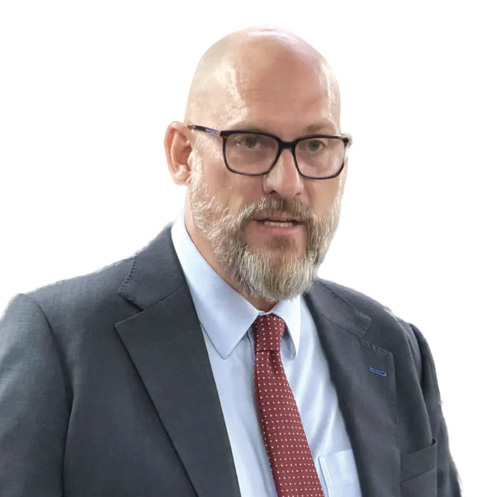

Building the VIFC will be a long journey that requires persistence and gradual trust-building with the market. If the right mechanisms and orientation are established, the benefits of the VIFC will not be limited to Ho Chi Minh City or Da Nang, but will extend to enterprises, projects, and investors around Vietnam.”
Mr. Richard D. McClellan, CEO of the Vietnam International Financial Center in Ho Chi Minh City (VIFC HCMC)
The country currently possesses several distinct competitive advantages, such as high economic growth, improving quality of life, competitive costs, and long-term development potential. The issue is to combine these advantages with an international-standard governance framework in order to form a financial center with credibility, competitiveness, and long-term sustainable development. “The VIFC is not a project of one or two years,” Mr. Njuguna emphasized. “Building an international financial center is a long-term journey that requires persistence, continuous improvement, and extensive cooperation with domestic and international partners.”
Moreover, Mr. Richard D. McClellan, CEO of VIFC HCMC, said Vietnam’s top priority at present is to complete the institutional foundation and legal framework for the VIFC. In that regard, the regulatory system must ensure transparency and predictability, accompanied by efficient licensing procedures and dispute resolution mechanisms aligned with international practices. This is considered a core factor in building investor confidence.
In addition, promoting capital flows and financial integration also plays an important role. Issues such as foreign exchange convertibility, capital repatriation rights, and the level of integration with the international banking system are factors that investors particularly care about when considering market participation.
Finally, it is necessary to comprehensively develop the financial market and ecosystem. This includes areas such as capital markets, asset management, private investment, and financial technology. Though many initiatives have been implemented, it is agreed that no single project can create a complete financial center without a synchronized, interconnected, and efficient operating ecosystem.
Human resources readiness
In addition to institutional and legal frameworks, the readiness of human resources is considered one of the key conditions determining the success and sustainable development of the VIFC. An international financial center can only operate effectively when it has a sufficiently large, high-quality workforce that meets international standards.
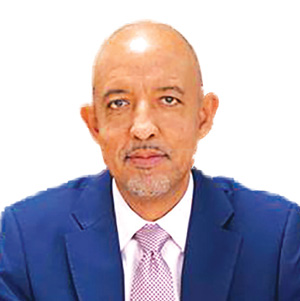
The VIFC is not a project of one or two years. Building an international financial center is a long-term journey that requires persistence, continuous improvement, and extensive cooperation with domestic and international partners.
Mr. Oscar Njuguna, Director of the Membership Department at the Vietnam International Financial Center in Da Nang (VIFC DN)
Currently, human resources remain one of the biggest challenges. In order to operate the VIFC effectively, Vietnam will need tens of thousands of experts in international finance in the years to come. However, there is still a noticeable gap between the current workforce and the practical requirements of a regional and international-scale financial center. To narrow this gap, Mr. McClellan proposed that Vietnam implement synchronized solutions in both the short and long term.
In the short term, the main focus is to invest strongly in structured education and training at the undergraduate and postgraduate levels. The VIFC should work closely with domestic universities specializing in economics and finance, international training institutions, and the private sector to develop curricula aligned with global standards and closely linked to the practical needs of the financial market.
In the long term, vocational training programs and international certification schemes also play a particularly important role. Cooperation with reputable professional training organizations from the UK and other developed countries will help rapidly enhance the capabilities of the domestic workforce, while also providing globally-recognized certifications. Through this, Vietnamese professionals can more quickly access international professional standards.
In addition, attracting foreign experts is also very important to fill the gap in skills and experience during the initial phase. According to the development orientation of the VIFC, Vietnam needs to create favorable conditions for international financial institutions to bring experts to work in the country. These experts will not only directly operate systems but also help train and transfer experience to domestic personnel. However, the development of human resources for the VIFC cannot rely on a single stakeholder; it requires the coordinated participation of many parties, from universities and training institutions to financial enterprises, recruitment companies, professional associations, and State regulatory agencies.
“Building the VIFC will be a long journey that requires persistence and gradual trust-building with the market,” Mr. McClellan said. “If the right mechanisms and orientation are established, the benefits of the VIFC will not be limited to Ho Chi Minh City or Da Nang, but will extend to enterprises, projects, and investors around Vietnam.”
Phuong NhiSource: Vneconomy.vn
Conference reviews 18 months of Resolution No.57 implementation
Dong Nai seeks to pioneer pilot nuclear power plant using small modular reactors
Vietnam's GDP grows 8.18% in first half of 2026
MoIT Party Committee attends national conference on governance reform
Vietnam's Energy Labeling Program drives market transformation
Vietnam's exports to Singapore increased by over 184% in May
Vietnam's seafood exports and imports in 5 months of 2026
Vietnam's exports of iron and steel in 5 months of 2026
Two tech laws take effect from July 1
Vietnam commodities market on July 2, 2026: Gold rebounded, coffee rose, pepper fell to three-month Low
Vietnam orders fuel firms to ensure uninterrupted petroleum supply
Resolution 10 opens a new development stage for the FDI sector in Vietnam
Opportunities for agricultural products, textiles and electronics to increase exports to South America
Vietnam-Malaysia trade showed strong growth in five months of 2026
