


To conquer Chinese market, agricultural products must compete on added value
Thursday, June 25,2026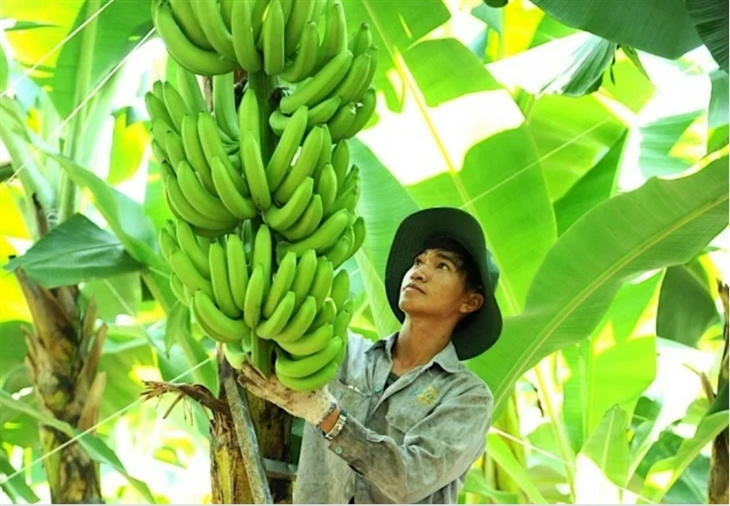
AsemconnectVietnam - Chinese market is shifting strongly towards high-quality consumption, forcing Vietnamese businesses to invest in processing, traceability and perfecting supply chain.
China is currently Vietnam's largest consumer market for fruits and vegetables and also significantly influences development direction of this industry. However, along with increasing scale of imports, requirements for quality, traceability and transparency in supply chain are becoming increasingly stringent.
At the first Vietnam-China Agricultural Trade Connection Forum held on June 24th, many experts and businesses argued that growth phase based on production volume is gradually coming to an end. To expand market share in a market of over 1.4 billion people, Vietnamese agricultural products must shift to competing on quality and added value.
Banana industry is a prime example of this transformation. Mr. Pham Quoc Liem, Chairman of Board of Directors of Unifarm and Vice President of the Vietnam Fruit and Vegetable Association, stated that China imports approximately $1 billion worth of bananas annually. Meanwhile, Vietnam is currently among the top 10 banana exporting countries in the world, with export revenue exceeding $418 million and a production area of approximately 161,000 hectares. Vietnamese banana industry is also aiming to achieve $1 billion in export revenue in the coming years. However, to achieve this goal, simply expanding the area or increasing production is not enough. “Opportunities don’t create value on their own. Value is only formed when products are built on a foundation of science and technology, quality standards and market trust”, Mr. Liem emphasized.
According to him, Vietnam’s advantages lie in its suitable climate, proximity to major consumption centers in Asia and its potential for developing high-tech agriculture. However, potential for growth can only truly be exploited when entire production chain is upgraded, from plant varieties, raw material areas, cultivation, harvesting to preservation and consumption. Based on Unifarm's experience, the company has invested in over 1,500 hectares of raw material areas, developing Uni126 banana variety with 95-98% resistance to Panama disease, while simultaneously applying strict quality management standards throughout entire production process.
Mr. Liem believes that the most important thing is not possessing modern technology but maintaining consistent quality. This is key factor that helps products penetrate and establish themselves in demanding markets such as Japan, South Korea, China and Singapore.
Building a supply chain instead of just exporting goods
Story of banana industry reflects general requirement for Vietnam's fruit and vegetable industry today: to shift from exporting based on raw material advantages to exporting based on value. This shift is becoming increasingly urgent as China is no longer just a consumer market. The rapidly growing middle class, coupled with development of the food and beverage industry, is changing structure of consumer demand. Beyond fresh fruit, this market is increasingly importing more processed products such as concentrated fruit juices, fruit purees, frozen fruits and vegetables, canned goods and raw materials for the food industry.
According to Mr. Dinh Cao Khue, Vice President of Vietnam Fruit and Vegetable Association and Chairman and CEO of DOVECO, this is segment with the greatest growth potential in the coming years. Unlike fresh fruit, which is seasonal and subject to significant pressure regarding consumption time, deeply processed products have longer shelf life, greater stability, and higher economic value.
Surveys conducted by DOVECO at logistics centers and processing enterprises in Zhejiang, Hubei and Ningbo show a significant increase in demand from Chinese businesses for raw materials and processed products from Vietnamese tropical fruits. Many Chinese businesses are interested in products from pineapples, passion fruit, mangoes, bananas and other tropical fruits and vegetables. These are items where Vietnam has an advantage in terms of raw material supply, but there is still much room for increasing processing rate.
Mr. Khue believes that next phase of cooperation between Vietnam and China should not only focus on exporting fresh agricultural products but should also expand to include regional raw material linkages, investment in processing plants, development of cold storage, logistics and distribution systems. “By participating more deeply in supply chain, Vietnamese businesses can retain a larger share of value instead of just selling raw materials”, Mr. Khue said.
However, to realize this goal, many bottlenecks still need to be addressed. Mr. Nguyen Dinh Tung, Chairman and CEO of Vina T&T Group, stated that issuance of planting area codes and packaging facility codes remains a major obstacle for export businesses. These are mandatory requirements for agricultural products to be officially exported to China, but assessment and approval process has not kept pace with the growing demand for production expansion.
According to Mr. Tung, this delay not only increases costs for businesses but also leads to missed trade opportunities. Therefore, it is necessary to strengthen online inspections, build a coordination mechanism between the functional agencies of two countries and create a "green lane" for businesses with a good compliance history. In addition, building a shared digital data system to manage planting area codes is also considered an important solution to increase transparency and limit fraud.
According to Mr. Vu Ba Phu, Director of Trade Promotion Department (Ministry of Industry and Trade), China currently accounts for about two-thirds of Vietnam's total fruit and vegetable export turnover. In 2025, fruit and vegetable exports are expected to reach US$8.56 billion, with Chinese market alone accounting for about US$5.5 billion. Along with numerous export protocols signed recently, opportunities for Vietnamese fruits and vegetables remain significant. However, approach to the market is changing rapidly.
E-commerce platforms, modern retail systems and digital distribution models are gradually replacing role of traditional wholesale markets. Meanwhile, requirements for traceability, planting area codes, packaging facilities and food safety are becoming increasingly stringent.
According to Mr. Nguyen Quoc Manh, Deputy Director of Department of Crop Production and Plant Protection (Ministry of Agriculture and Environment), Vietnamese fruit and vegetable industry is facing need to shift from growth based on volume to growth based on quality and sustainable development. Successes of durian and jackfruit in recent times show the enormous potential of the Chinese market. However, that advantage will be difficult to maintain if businesses continue to depend on exporting raw materials.
For Chinese market, future direction should not only be to expand list of products licensed for export but also to improve quality of raw material areas, promote deep processing, perfect logistics system and strengthen application of technology in traceability. As the market becomes increasingly competitive, added value will be the decisive factor in determining position of Vietnamese agricultural products. To conquer Chinese market, businesses cannot simply sell more but must sell higher-quality, more transparent products that meet the market's needs.
Source: Vitic/ congthuong.vn
Vietnam coffee prices rise on June 25 as domestic and global markets advance
Circular on product and goods traceability issued
MoIT promotes sustainable rice exports
Vietnam's pepper exports in first 5 months of 2026
Vietnam's imports from China in May and 5 months of 2026
Vietnam commodities morning roundup, June 24, 2026: Gold steady, coffee extends losses while pepper advances
Directive No.20/CT-TTg: Steel industry accelerates green transition
Two new ordinances strengthen judicial procedures and legal reform
Efforts to promote double-digit export growth
Series of new policies to boost supporting industries
Foreign trade management regulations and import quotas updated
Vietnam's imports of goods from Japan in May and 5 months of 2026
Vietnam's industrial output growth fell in May of 2026
FDI into Vietnam increased by 9.6% in the first five months of 2026

Place preserving memories of President Ho Chi Minh in ...
Although there is little publicly available documentation confirming exactly when Place Ho Chi Minh was established, French urban ...Vietnamese leaders pay tribute to President Ho Chi Minh on ...
16th NA reviews amendments to four tax-related laws on ...
General Secretary, State President praises ethnic minority ...
National conference disseminates resolution of 14th Party ...
General plan task of Can Tho City until 2050 with a vision ...
General plan of Can Tho city is based on viewpoint of inheritance and development, in accordance with the Party's Resolutions on ...International market expansion program in a period of ...
Public debt borrowing and repayment plan for 2026

Tourism destinations refresh offerings to welcome New ...
Across the Mekong Delta, many tourist sites have been busy upgrading their offerings. At the Con Son tourism site in Can Tho city, members ...Annual New Year festival shines in Da Nang
Phu Quoc emerging as a favourite global destination
Vietnam Airlines adds 270 flights to during 2026 New Year ...
