


Vietnam agricultural market on June 1, 2026: Domestic prices stabilized as key commodities lost momentum
Monday, June 1,2026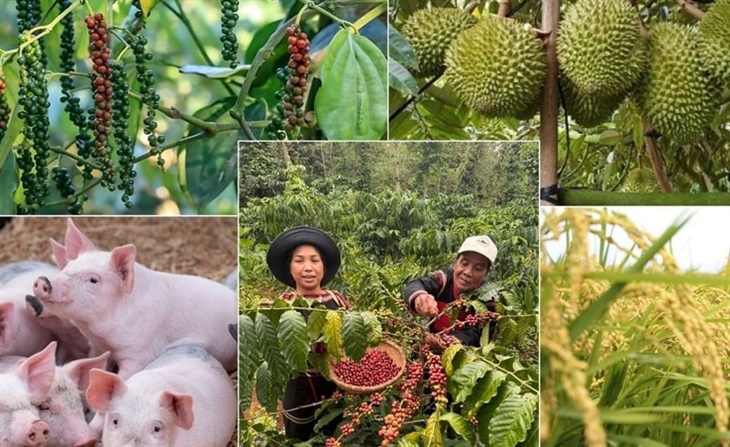
AsemconnectVietnam - Vietnam’s domestic agricultural markets showed signs of consolidation on June 1, 2026, as several key commodities lost upward momentum following earlier gains, while others held broadly steady. Coffee, pepper and live hog prices either leveled off or edged lower, reflecting cautious sentiment and subdued demand. Meanwhile, rice, durian and rubber maintained stable price ranges, providing a degree of support to the broader market.
Domestic coffee prices steadied after late-May decline
Domestic coffee prices were largely unchanged on June 1 following a sharp decline in the final sessions of May. In the Central Highlands, Vietnam’s main coffee-producing region, farmgate prices for raw coffee beans ranged between 86,800 and 87,400 dong per kg, with an average level of around 87,300 dong.
Lam Dong recorded the lowest prices at 86,800 dong per kg, while Gia Lai and Dak Lak both traded at around 87,300 dong. Dak Nong posted the highest level in the region at 87,400 dong per kg. Price differentials among provinces remained narrow, indicating a relatively stable market.
The sideways movement reflected cautious sentiment among both farmers and traders. Growers held back sales in anticipation of improved prices, while buyers refrained from aggressive procurement amid concerns over short-term volatility. As a result, trading activity remained moderate.
Pepper prices fell for a second consecutive week
Domestic pepper prices declined for a second straight week, signaling a cooling trend after a period of rapid gains. Prices ranged from 137,000 to 142,000 dong per kg, down by 2,000–3,000 dong compared with the previous week.
Dong Nai recorded the sharpest drop, with prices falling to 137,000 dong per kg. Gia Lai also declined to the same level. In Ba Ria–Vung Tau, prices eased to 139,000 dong per kg. Meanwhile, Dak Lak and Dak Nong maintained the highest levels nationwide at 142,000 dong per kg, showing little change over recent sessions.
The decline suggested a technical correction as selling pressure increased, particularly from farmers and intermediaries locking in profits. Demand remained insufficiently strong to absorb available supply, though the current adjustment was seen as orderly and not disruptive to the overall market.
Rice market held firm, high-quality segment remained resilient
Vietnam’s domestic rice market remained stable, with prices holding firm across most categories. In the Mekong Delta, fresh paddy prices showed little fluctuation, with high-quality varieties continuing to lead the market.
OM 18 and Dai Thom 8 were traded at between 6,500 and 6,700 dong per kg, among the highest levels. OM 5451 ranged from 5,800 to 6,000 dong per kg. Lower-grade varieties such as IR 50404 and OM 34 were priced at 5,400–5,500 dong and 5,100–5,200 dong per kg, respectively.
Retail rice prices were also stable due to the absence of strong trading activity. Finished IR 504 rice was sold at 10,750–10,900 dong per kg. Other varieties, including OM 5451 and Dai Thom 8, ranged between 9,200 and 9,600 dong per kg, while lower-tier products remained at more modest levels.
The steady performance indicated balanced supply-demand conditions, with domestic consumption holding up. High-quality rice continued to attract stronger buying interest, reflecting an ongoing shift toward higher-value products.
Durian prices stabilized after earlier declines
Durian prices across key growing regions stabilized following a previous downturn. Thai durian Grade A was traded at 70,000–78,000 dong per kg, while Ri6 hovered at 40,000–45,000 dong per kg.
In the Mekong Delta, Thai durian Grade A ranged from 72,000 to 74,000 dong per kg, while Grade B stood at 52,000–54,000 dong. Ri6 Grade A was priced at around 40,000–42,000 dong per kg. Premium varieties such as Black Thorn reached as high as 112,000 dong per kg, although supply remained limited.
Prices in the southeastern region were generally higher by 3,000–8,000 dong per kg compared with the Mekong Delta, particularly in Dong Nai.
The stabilization suggested that the market had found a new equilibrium after a period of oversupply. However, price disparities across regions and quality grades remained evident, highlighting increasing competition within the sector.
Live hog prices edged lower, recovery remained elusive
Vietnam’s live hog prices continued to decline slightly, with transactions ranging from 66,000 to 68,000 dong per kg. Compared with mid-May levels, prices were notably lower, and no locality maintained the 69,000 dong threshold.
Northern provinces still recorded the highest prices, at 67,000–68,000 dong per kg, though this represented a decline of 1,000–2,000 dong from the previous week. Central and Central Highlands regions saw lower levels of 66,000–67,000 dong per kg.
In the south, prices were relatively stable at 67,000–68,000 dong per kg. However, there were no clear signs of recovery, as demand remained weak while supply stayed ample.
The trend underscored ongoing pressure on the livestock sector, where declining selling prices contrasted with still-elevated input costs. In the near term, hog prices were expected to fluctuate within a narrow range.
Rubber prices remained stable
Domestic rubber prices were largely unchanged on June 1, with procurement levels at major companies holding steady.
Latex was purchased at around 420 dong per degree TSC, while coagulated rubber was priced at approximately 14,600 dong per kg and raw rubber materials at around 18,100 dong per kg. Other firms applied rates ranging from 458 to 505 dong per degree TSC depending on quality and location.
The stability indicated balanced market conditions, with no significant shifts in supply or demand. Rubber remained one of the more stable commodities during the current adjustment phase.
Market overview
Overall, Vietnam’s domestic agricultural markets entered June in a consolidation phase. Commodities that had previously surged, such as coffee, pepper and live hogs, lost momentum or declined slightly, while rice, durian and rubber helped anchor the market.
With demand yet to show strong improvement, divergence among commodity groups was expected to persist. Higher-quality products were likely to retain their advantage, while lower-grade goods could continue to face pricing pressure in the near term.
Source: Vitic
Global rubber prices surge, raising hopes for Vietnamese exporters
Vietnam attracts wave of hi-tech investments as push for value chain advancement continues
Exports of phones and components increased in four months
Da Nang opens runway for startup investment
Hai Phong urged to take lead in growth model transformation
Vietnam’s imports of chemical and chemical products increased
Mineral ore imports decreased in April
180-day campaign launched to accelerate Long Thanh airport project
Vietnam’s digital economy surpasses 72 billion USD in 2025: press briefing
New orders rebound, Vietnam manufacturing PMI reaches three-month high
Vietnam one of Southeast Asia’s most dynamic logistics markets: survey
OP-ED: Vietnam's E10 biofuel rollout: Separating facts from misinformation
Smart payments drive digital finance development
Fruit and vegetable exports increased slightly in four months of 2026
