


Vietnamese rice export expected to recover from Q2/2026
Wednesday, May 27,2026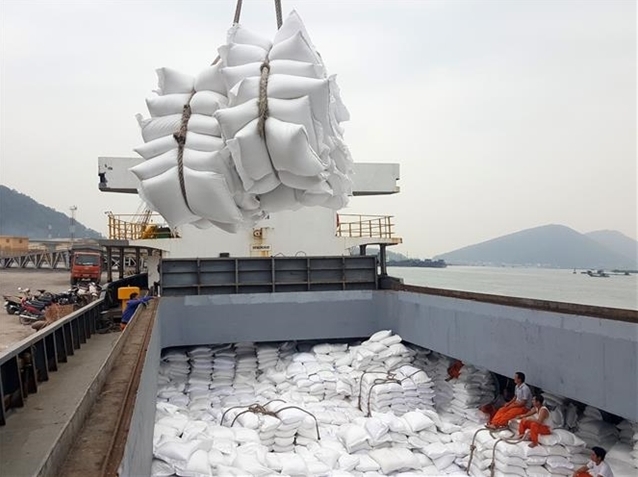
AsemconnectVietnam - Rice exports are expected to recover from Q2/2026 thanks to resurgence in import demand, along with a global market trend favoring high-quality, low-emission rice.
Global supply remains an important "buffer zone"
According to the latest report from Vietnam Food Association, white rice oryza index (WRI) ended the second week of May 2026 at US$406/tonne, an increase of US$16/tonne compared to the previous month but still US$40/tonne lower than the same period last year. This development reflects a mixed picture of rice export market, with both short-term pressure and expectations of medium-term recovery.
In recent months, geopolitical conflicts in the Middle East have significantly impacted global agricultural supply chains, including the rice industry, forcing many farmers in Vietnam, Thailand, the Philippines and Indonesia to consider reducing input investments or adjusting planting plans. International Grains Council (IGC) warns that rice planting area in Southeast Asia for the 2026/27 season could decrease by 1.8-2.2% if fertilizer shortages persist.
In addition, climate risks continue to cast a shadow over the outlook for global agricultural production. International climate models currently forecast a 90-94% probability of a strong El Niño to a "super El Niño" occurring by the end of 2026. South Asia may experience a rainfall deficit of 10-25%, while many areas of Southeast Asia are forecast to record temperatures 1.2-1.8°C higher than average during main rice growing season.
Combined effects of fluctuating input costs, extreme weather and logistics disruptions have begun to directly impact Asian rice prices. Thai white rice prices at one point increased by nearly 10% in just one week in April 2026; Vietnamese 5% broken rice prices also increased by 6-8%.
Despite facing numerous pressures, global rice market currently has a crucial support: high supply and inventory levels. FAO forecasts world rice production for the 2025/26 crop year to reach a record 563.3 million tonnes, bringing total supply to approximately 773.6 million tonnes. Global rice inventories are projected to rise to 219.3 million tonnes, equivalent to an inventory-to-use ratio of approximately 39% – the highest level since 2018.
The US Department of Agriculture (USDA) also predicts that global rice consumption growth is slowing, while inventories are expected to increase by another 1.5-2 million tonnes in the 2025/26 crop year. This is seen as a "buffer" to limit risk of price surges in the short term.
However, paradox of current market is that despite large inventories, global supply system is becoming increasingly sensitive to external shocks. A major change in climate, logistics, or geopolitics could immediately reverse rice prices.
In this context, many countries are stepping up strategies to ensure food security. Indonesia has emerged as a notable bright spot in Southeast Asia, accelerating agricultural reforms, expanding cultivated land, investing in irrigation and mechanizing production.
Thanks to strong support policies, Indonesia's rice production is projected to increase by more than 13% in 2025, bringing national rice reserves to approximately 5 million tonnes – a record high. The country has stopped importing rice in 2025 and aims for zero imports in 2026.
Meanwhile, the Philippines and Bangladesh continue to face significant pressure from extreme weather and rising production costs. The Philippines is expected to import approximately 4.8 million tonnes of rice in 2026, a record high, to ensure supply amidst El Niño and rising food inflation.
Notably, the Philippines remains Vietnam's largest rice export market, accounting for about 87% of its total rice imports. This means that any fluctuations in the Philippines' trade policy or import demand directly impact the Vietnamese rice industry.
Opportunity to increase the value of Vietnamese rice
In context of a volatile global market, Vietnamese rice industry is facing a strong opportunity to transform from exporting quantity to improving quality and added value.
According to statistics, in the first four months of 2026, Vietnam's rice exports reached over 3.3 million tonnes with a value of approximately US$1.57 billion, a decrease in both quantity and value compared to the same period last year. However, from the second quarter of 2026, import demand in many markets is showing signs of recovery as concerns about supply shortages increase.
Experts believe this is a favorable period for Vietnamese rice to reposition its brand, especially in the high-quality and low-emission segment, a trend that is being prioritized by many markets. A positive sign is that just one year after the first shipment of over 400 tons exported to Japan, approximately 70,000 tonnes of "Green, Low-Emission Vietnamese Rice" have been brought to the international market. This shows that Vietnam's high-quality, environmentally friendly rice products are gradually gaining a foothold in the global supply chain.
At the workshop “Focus in Vietnam: Opportunities to Promote Low-Emission Rice in the Mekong Delta,” Dr. Nguyen Do Anh Tuan, Director of International Cooperation Department (Ministry of Agriculture and Environment), emphasized that if implemented correctly, low-emission rice is not only an agricultural product but also a climate solution, a national brand story and a driving force for improving the livelihoods of millions of farmers.
According to experts, the project to cultivate 1 million hectares of high-quality, low-emission rice in the Mekong Delta is opening a new direction for Vietnam's rice industry. Not only does it help reduce emissions and improve production efficiency, but this model also meets the growing global trend of green consumption. Many market studies show that international consumers are now willing to pay more for high-quality, safe rice products that meet sustainable development criteria.
From a business perspective, in an interview with Vietnam Industry and Trade Newspaper, Mr. Do Ha Nam, Chairman of Vietnam Food Association, stated that Vietnam currently has many high-quality fragrant rice varieties recognized internationally. However, the brand image of Vietnamese rice in the international market is still not commensurate with the actual quality of the product.
According to Mr. Do Ha Nam, to enhance position and pricing power of Vietnamese rice, the industry needs to focus on core factors such as ensuring the purity of rice varieties, implementing consistent quality control, building a traceability system, and developing unique brands for each specialty rice variety.
According to experts and businesses, in the context of a global market increasingly prioritizing green, transparent, and sustainable standards, competition is no longer solely based on production volume but is strongly shifting towards quality, branding, and the ability to meet new standards. This is an opportunity for Vietnamese rice to gradually transform its growth model, increase export value, and assert its position in the international market.
Source: Vitic/ congthuong.vn
According to the latest report from Vietnam Food Association, white rice oryza index (WRI) ended the second week of May 2026 at US$406/tonne, an increase of US$16/tonne compared to the previous month but still US$40/tonne lower than the same period last year. This development reflects a mixed picture of rice export market, with both short-term pressure and expectations of medium-term recovery.
In recent months, geopolitical conflicts in the Middle East have significantly impacted global agricultural supply chains, including the rice industry, forcing many farmers in Vietnam, Thailand, the Philippines and Indonesia to consider reducing input investments or adjusting planting plans. International Grains Council (IGC) warns that rice planting area in Southeast Asia for the 2026/27 season could decrease by 1.8-2.2% if fertilizer shortages persist.
In addition, climate risks continue to cast a shadow over the outlook for global agricultural production. International climate models currently forecast a 90-94% probability of a strong El Niño to a "super El Niño" occurring by the end of 2026. South Asia may experience a rainfall deficit of 10-25%, while many areas of Southeast Asia are forecast to record temperatures 1.2-1.8°C higher than average during main rice growing season.
Combined effects of fluctuating input costs, extreme weather and logistics disruptions have begun to directly impact Asian rice prices. Thai white rice prices at one point increased by nearly 10% in just one week in April 2026; Vietnamese 5% broken rice prices also increased by 6-8%.
Despite facing numerous pressures, global rice market currently has a crucial support: high supply and inventory levels. FAO forecasts world rice production for the 2025/26 crop year to reach a record 563.3 million tonnes, bringing total supply to approximately 773.6 million tonnes. Global rice inventories are projected to rise to 219.3 million tonnes, equivalent to an inventory-to-use ratio of approximately 39% – the highest level since 2018.
The US Department of Agriculture (USDA) also predicts that global rice consumption growth is slowing, while inventories are expected to increase by another 1.5-2 million tonnes in the 2025/26 crop year. This is seen as a "buffer" to limit risk of price surges in the short term.
However, paradox of current market is that despite large inventories, global supply system is becoming increasingly sensitive to external shocks. A major change in climate, logistics, or geopolitics could immediately reverse rice prices.
In this context, many countries are stepping up strategies to ensure food security. Indonesia has emerged as a notable bright spot in Southeast Asia, accelerating agricultural reforms, expanding cultivated land, investing in irrigation and mechanizing production.
Thanks to strong support policies, Indonesia's rice production is projected to increase by more than 13% in 2025, bringing national rice reserves to approximately 5 million tonnes – a record high. The country has stopped importing rice in 2025 and aims for zero imports in 2026.
Meanwhile, the Philippines and Bangladesh continue to face significant pressure from extreme weather and rising production costs. The Philippines is expected to import approximately 4.8 million tonnes of rice in 2026, a record high, to ensure supply amidst El Niño and rising food inflation.
Notably, the Philippines remains Vietnam's largest rice export market, accounting for about 87% of its total rice imports. This means that any fluctuations in the Philippines' trade policy or import demand directly impact the Vietnamese rice industry.
Opportunity to increase the value of Vietnamese rice
In context of a volatile global market, Vietnamese rice industry is facing a strong opportunity to transform from exporting quantity to improving quality and added value.
According to statistics, in the first four months of 2026, Vietnam's rice exports reached over 3.3 million tonnes with a value of approximately US$1.57 billion, a decrease in both quantity and value compared to the same period last year. However, from the second quarter of 2026, import demand in many markets is showing signs of recovery as concerns about supply shortages increase.
Experts believe this is a favorable period for Vietnamese rice to reposition its brand, especially in the high-quality and low-emission segment, a trend that is being prioritized by many markets. A positive sign is that just one year after the first shipment of over 400 tons exported to Japan, approximately 70,000 tonnes of "Green, Low-Emission Vietnamese Rice" have been brought to the international market. This shows that Vietnam's high-quality, environmentally friendly rice products are gradually gaining a foothold in the global supply chain.
At the workshop “Focus in Vietnam: Opportunities to Promote Low-Emission Rice in the Mekong Delta,” Dr. Nguyen Do Anh Tuan, Director of International Cooperation Department (Ministry of Agriculture and Environment), emphasized that if implemented correctly, low-emission rice is not only an agricultural product but also a climate solution, a national brand story and a driving force for improving the livelihoods of millions of farmers.
According to experts, the project to cultivate 1 million hectares of high-quality, low-emission rice in the Mekong Delta is opening a new direction for Vietnam's rice industry. Not only does it help reduce emissions and improve production efficiency, but this model also meets the growing global trend of green consumption. Many market studies show that international consumers are now willing to pay more for high-quality, safe rice products that meet sustainable development criteria.
From a business perspective, in an interview with Vietnam Industry and Trade Newspaper, Mr. Do Ha Nam, Chairman of Vietnam Food Association, stated that Vietnam currently has many high-quality fragrant rice varieties recognized internationally. However, the brand image of Vietnamese rice in the international market is still not commensurate with the actual quality of the product.
According to Mr. Do Ha Nam, to enhance position and pricing power of Vietnamese rice, the industry needs to focus on core factors such as ensuring the purity of rice varieties, implementing consistent quality control, building a traceability system, and developing unique brands for each specialty rice variety.
According to experts and businesses, in the context of a global market increasingly prioritizing green, transparent, and sustainable standards, competition is no longer solely based on production volume but is strongly shifting towards quality, branding, and the ability to meet new standards. This is an opportunity for Vietnamese rice to gradually transform its growth model, increase export value, and assert its position in the international market.
Source: Vitic/ congthuong.vn
Phu Tho expands strategic cooperation with Chinese enterprises
Sweet start: Bac Ninh ships over 1,000 tonnes of early lychees overseas
Hanoi to host major toy and child products exhibition
Ninh Binh eliminates all 'three-no' fishing vessels
Agricultural exports seek to overcome technical barriers through digitalisation, technology
Digital technology helps standardise supply chains, sustain export competitiveness
Vietnam's fruit and vegetable imports increased
Vietnam industry: journey of building internal strength and elevating position
Vietnam fertilizer market in May 2026
Vietnam animal feed market in May 2026: Price increased
Vietnam agricultural market on May 26: Coffee prices eased
Vietnam's coal exports showed strong growth in 4 months
Quang Ngai steps up crackdown on high-risk fishing vessels amid anti-IUU fishing drive
Vietnam Grand Sale 2026 to run nationwide in July

Public debt borrowing and repayment plan for 2026
Ensuring resources: Mobilizing sufficient and timely borrowed capital at reasonable costs and acceptable risks to meet expenditure needs ...Plan on implementation of high-tech law
Inter-sectoral legal support program for small and ...

Tourism destinations refresh offerings to welcome New ...
Across the Mekong Delta, many tourist sites have been busy upgrading their offerings. At the Con Son tourism site in Can Tho city, members ...Annual New Year festival shines in Da Nang
Phu Quoc emerging as a favourite global destination
Vietnam Airlines adds 270 flights to during 2026 New Year ...
