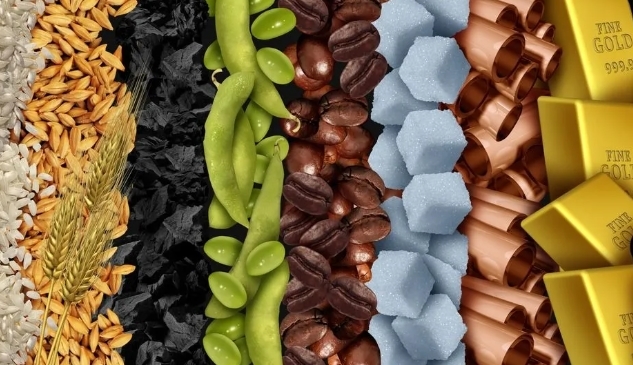
AsemconnectVietnam - Vietnam’s commodity markets on May 9, 2026, reflected a relatively stable overall landscape, with gold prices moving sideways and agricultural commodities showing mixed trends. Domestic coffee prices extended their mild upward trajectory, supported by global market movements, while rice and pepper markets remained largely stable. Meanwhile, durian continued to exhibit strong divergence across segments due to varying supply conditions and quality standards.
Gold prices remained unchanged across major brands
Domestic gold prices were broadly stable throughout the trading session.
As of 1:30 p.m., SJC gold bars at major dealers, including leading reference price systems in Hanoi, were quoted at 164.5–167.5 million dong per tael (buying – selling), unchanged from the previous day. The bid-ask spread remained at approximately 3 million dong per tael, equivalent to around 1.79%.
Major jewelry groups and retailers maintained similar pricing. DOJI listed SJC gold at 164.5–167.5 million dong per tael in both Hanoi and Ho Chi Minh City, while Bao Tin Minh Chau and Phu Quy also kept prices at the same levels.
PNJ and ASEAN Gold & Jewelry quoted identical ranges. Notably, Mi Hong adjusted its selling price downward by 500,000 dong per tael to 166 million dong per tael, while maintaining the buying price at 164.5 million dong per tael. This narrowed the spread to 1.5 million dong per tael, the tightest in the market.
Overall, the sideways movement reflected a temporary balance between domestic supply-demand conditions and global price signals.
Coffee prices rose modestly on global support
Domestic coffee prices in the Central Highlands extended gains for a third consecutive session since the beginning of the week.
Procurement prices ranged between 87,000 and 87,700 dong per kg, increasing by approximately 400 to 500 dong per kg compared to the previous day.
Dak Nong (Lam Dong area) led the market at 87,700 dong per kg after a 400 dong per kg increase. Dak Lak and Gia Lai rose by 500 dong per kg to 87,500 dong per kg.
The upward momentum was driven by the recovery of robusta prices on global markets, which improved sentiment among farmers following a period of volatility.
Internationally, market movements were mixed. On the London exchange, robusta coffee for July 2026 delivery increased by 19 USD per ton to 3,432 USD per ton, while the September contract rose to 3,321 USD per ton. This marked the third consecutive session of gains, supported by low global inventories and steady consumption demand.
Conversely, arabica prices on the New York exchange fell sharply to multi-month lows under strong selling pressure. The July 2026 contract declined by 10.6 US cents per pound to 273.25 US cents per pound, while the September contract dropped to 265.15 US cents per pound.
The decline was largely attributed to expectations of a bumper harvest in Brazil, which alleviated concerns over supply shortages.
Pepper prices remained high and stable
Domestic pepper prices continued to move sideways within a high range of 140,000 to 144,000 dong per kg.
Trading activity remained cautious, indicating a relatively balanced supply-demand situation. Enterprises and traders closely monitored export developments rather than engaging in aggressive transactions.
Dak Lak and Dak Nong (Lam Dong area) maintained the highest prices at 144,000 dong per kg. Ho Chi Minh City held at 142,500 dong per kg, Dong Nai at 142,000 dong per kg, and Gia Lai recorded the lowest level at 140,000 dong per kg.
On the global market, Indian pepper prices remained elevated and unchanged. Garbled black pepper was quoted at 71,400 USD per ton (equivalent to approximately 206,047 dong per kg), while Ungarbled pepper traded at 69,400 USD per ton (around 200,275 dong per kg). Gram/liter grade stood at 68,400 USD per ton, equivalent to about 197,389 dong per kg.
Market analysts expected pepper prices to continue fluctuating within a narrow range due to the absence of strong catalysts for a new upward trend.
Rice trading remained subdued
Rice markets in the Mekong Delta experienced limited activity as fresh paddy supply continued to decline.
In provinces such as Ca Mau, Can Tho, An Giang, Dong Thap, Tay Ninh, and Vinh Long, supply shortages led to reduced trading volumes. Traders primarily focused on newly harvested batches, resulting in relatively stable pricing.
According to local agricultural authorities in An Giang, OM 18 and Dai Thom 8 paddy were priced at 6,100–6,300 dong per kg. OM 5451 traded at 5,600–5,700 dong per kg, IR 50404 at 5,400–5,500 dong per kg, and OM 34 at 5,100–5,200 dong per kg.
Export rice prices remained stable across various segments. Jasmine rice was offered at 513–517 USD per ton, fragrant rice (5% broken) at 510–520 USD per ton, and 100% broken rice at 331–335 USD per ton.
Meanwhile, Thailand’s 5% broken rice rose slightly by 3 USD per ton to 396–400 USD per ton, while India’s equivalent grade declined by 1 USD per ton to 345–349 USD per ton.
Live hog prices increased nationwide
Live hog prices rose by approximately 1,000 dong per kg across all regions, signaling a positive recovery trend.
In the northern region, prices ranged between 66,000 and 68,000 dong per kg. Bac Ninh, Hanoi, and Hung Yen reached the highest level at 68,000 dong per kg, while Lai Chau remained stable at 66,000 dong per kg.
Central and Central Highlands regions recorded prices between 66,000 and 69,000 dong per kg. Lam Dong led at 69,000 dong per kg, followed by Dak Lak at 68,000 dong per kg. Thanh Hoa traded at 67,000 dong per kg, while provinces from Nghe An to Khanh Hoa were at 66,000 dong per kg.
In the south, Dong Nai continued to lead nationwide at 71,000 dong per kg. Ho Chi Minh City and Vinh Long reached 70,000 dong per kg, while Tay Ninh and Dong Thap traded at 69,000 dong per kg. The regional range stood between 68,000 and 71,000 dong per kg.
The broad-based increase supported expectations that elevated price levels could persist in the near term.
Durian prices showed strong segmentation
Durian markets continued to exhibit clear segmentation across regions and quality grades.
Premium durian varieties maintained strong price levels due to stable demand. Black Thorn grade A recorded the highest prices, ranging from 105,000 to 118,000 dong per kg in the Mekong Delta.
Musang King grade A was priced at 88,000–92,000 dong per kg in the Mekong Delta and 85,000–88,000 dong per kg in Binh Phuoc.
Thai VIP grade A durian ranged between 85,000 and 90,000 dong per kg in the Mekong Delta, while standard Thai grade A was priced at 80,000–85,000 dong per kg.
Ri6 durian showed signs of recovery, with grade A prices rising slightly. In Dong Nai, Ri6 grade A traded at 44,000–48,000 dong per kg, compared to 42,000–45,000 dong per kg in Tay Ninh.
Despite this improvement, lower-quality Thai and Ri6 durians in the southwestern region faced downward pressure due to slow consumption. In contrast, the southeastern region continued to record relatively strong purchasing activity and better price support.
Rubber prices improved globally while domestic market remained steady
Global rubber prices extended gains for a second consecutive session, with positive sentiment reflected across forward contracts on major exchanges.
On the Singapore exchange, TSR20 rubber for August 2026 delivery rose by 1.05% to 221.20 US cents per kg. The Shanghai exchange also recorded gains, with August 2026 contracts increasing by 0.85% to 17,980 yuan per ton.
The upward trend was supported by expectations of recovering industrial demand and weather-related supply disruptions.
However, Vietnam’s domestic rubber market remained cautious and largely unchanged. Procurement prices at major companies were stable.
Mang Yang Rubber Company maintained latex purchasing prices at 463 dong per TSC per kg. Phu Rieng held at 420 dong per TSC per kg, while Binh Long applied a rate of 432 dong per TSC per kg for factory purchases.
Overall market assessment
Vietnam’s commodity markets on May 9, 2026, reflected a balance between stability and selective growth.
Gold prices remained unchanged, while coffee and live hog prices showed gradual recovery. Pepper and rice maintained stable trading conditions, supported by steady export demand.
Durian stood out for its pronounced segmentation, highlighting the growing importance of quality differentiation and export standards. Meanwhile, rubber markets illustrated a divergence between global optimism and domestic caution.
Overall, the session underscored the critical role of supply dynamics, global market signals, and export competitiveness in shaping Vietnam’s commodity landscape.
Source: Vitic