


Vietnam's iron and steel imports fall in volume but surged in value in 4 months
Thursday, May 21,2026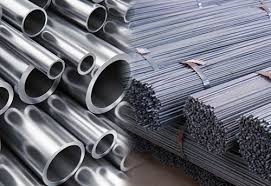
AsemconnectVietnam - According to calculations from the Vietnam Customs Department, in the first four months of 2026, Vietnam imported approximately 5.04 million tonnes of various types of iron and steel with a total value of US$3.61 billion.
Compared to the same period of 2025, import volume decreased by 1.45%, while value still increased slightly by 0.15%. The main reason was that the price of imported steel remained higher than the same period, causing the average import price to increase by 1.63%, to US$716.28/tonne. In addition, domestic import demand has not recovered uniformly, while supply from some major markets such as China and Japan has also impacted the total import volume.
In April of 2026 alone, Vietnam imported 1.42 million tonnes of various types of iron and steel, an increase of 14.85% compared to March of 2026 and 3.64% compared to the same period of 2025, the import value reached over US$1 billion, an increase of 13.08% compared to the previous month and 4.69% compared to the same period last year.
This increase mainly stems from the demand for additional raw materials to serve domestic production and construction activities as the market enters its peak construction phase, and also from businesses increasing imports in anticipation of fluctuations in world steel prices.
However, the average import price in April of 2026 was only US$706.82/tonne, a decrease of 1.54% compared to the previous month due to increased steel supply from the Asian region and stronger price competition among export markets. Nevertheless, this price is still 1.01% higher than the same period of 2025, reflecting the fact that global steel prices remain relatively high.
China continued to be the largest supplier of iron and steel to Vietnam in the first four months of 2026 with 2.25 million tonnes, worth of US$1.52 billion, accounting for 44.56% of the total volume and nearly 42% of the total import value. However, the imports from this market decreased sharply by 24.38% in volume and 19.08% in value compared to the same period last year. The main reason was that domestic businesses are increasing their diversification of supply sources from other markets such as India and Indonesia to reduce dependence on Chinese steel, while the recovery of domestic steel consumption demand has not been uniform, leading to a significant decline in imports from this market.
After China, Indonesia was Vietnam's second largest supplier of iron and steel, with 579,261 tonnes and a value of US$652.2 million, representing increases of 29.76% and 26.77% respectively. Notably, despite lower import volume than Japan, the value was significantly higher, indicating that steel imported from Indonesia is either more expensive or has a higher value.
Japan ranked third with nearly 646,980 tonnes, valued at US$433.2 million, a decrease of 22.65% in volume and 18.17% in value compared to the same period last year, accounting for 12.83% of the total volume and nearly 12% of the total value of iron and steel imports nationwide. This decline was mainly due to the slow recovery of domestic demand, while businesses are increasing imports from more competitive markets.
Meanwhile, South Korea supplied Vietnam with 524,876 tonnes of iron and steel, an increase of 8.18% in volume but a slight decrease of 1.28% in value compared to the same period last year. This indicates that the average import price from the South Korean market tends to decrease amidst increasing regional supply competition.
India was the market with the most significant growth among iron and steel suppliers to Vietnam in the first four months of 2026, with imports reaching over 601,479 tonnes and a value of US$308.1 million, an increase of over 12,000% in volume and over 2,000% in value compared to the same period last year. This breakthrough mainly stems from Vietnamese businesses increasing steel imports from India to diversify their supply sources amidst a sharp decline in imports from China, while also taking advantage of competitive prices and stable supply from the Indian market. As a result, India's share of steel imports increased to nearly 12% of the country's total imports, reflecting a clear shift in Vietnam's steel supply structure.
Besides the main markets, several countries recorded very high growth rates in iron and steel imports, although their scale remains small, such as Malaysia (up 646.59%), Belgium (up 761.64%), the Netherlands (up 860.45%), and Denmark (up over 8,400%) compared to the same period last year. This surge was mainly due to the low import volume in the same period last year, and domestic businesses expanding their supply sources from new markets to diversify imports and take advantage of competitive prices.
Conversely, the imports from Australia decreased by more than 51%, South Africa by over 93%, and Canada by more than 90%, reflecting a significant contraction from these supply sources.
In terms of market structure, Asia continued to dominate Vietnam's iron and steel imports. The six largest markets – China, Indonesia, Japan, South Korea, India, and Taiwan (China) – alone accounted for approximately 97.5% of the country's total imports. This indicates that Vietnam's steel supply remains heavily dependent on the Asian region, particularly East and South Asian countries.
Overall, Vietnam's iron and steel import activities in the first four months of 2026 showed a clear trend towards diversifying supply sources, with imports from China decreasing sharply, while markets such as Indonesia and especially India recorded high growth. Although import volume decreased slightly compared to the same period last year, the value remained stable thanks to higher average import prices, reflecting that world steel prices have not yet fallen significantly.
CK
Source: VITIC
Vietnamese rice export under pressure to improve quality
Agricultural export and challenge of maintaining market share and reputation
Vietnam's steel exports increased in 4 months of 2026
New pressure from markets and green barriers for agricultural exports
LG Energy Solution, Honda eye Vietnam’s e-motorbike market
Seminar on trade promotion in South American market to take place in Hanoi
Supporting industry infrastructure map launched to promote global supply chain integration
Ho Chi Minh City listed among global Top 100 startup ecosystems
Agricultural, forestry and fishery export in the first four months of 2026 reach over US$23 billion
Vietnam agricultural markets – May 19, 2026: Coffee and pepper prices plunged amid heavy selling pressure
Private economic sector poised for breakthrough growth
Vietnam showcases economic potential, investment opportunities in St. Petersburg
Smart city development crucial to Vietnam’s growth ambitions in digital era
Vietnam’s pepper exports to maintain positive growth in 2026

Public debt borrowing and repayment plan for 2026
Ensuring resources: Mobilizing sufficient and timely borrowed capital at reasonable costs and acceptable risks to meet expenditure needs ...Plan on implementation of high-tech law
Inter-sectoral legal support program for small and ...

Tourism destinations refresh offerings to welcome New ...
Across the Mekong Delta, many tourist sites have been busy upgrading their offerings. At the Con Son tourism site in Can Tho city, members ...Annual New Year festival shines in Da Nang
Phu Quoc emerging as a favourite global destination
Vietnam Airlines adds 270 flights to during 2026 New Year ...
