


Vietnamese rice export under pressure to improve quality
Wednesday, May 20,2026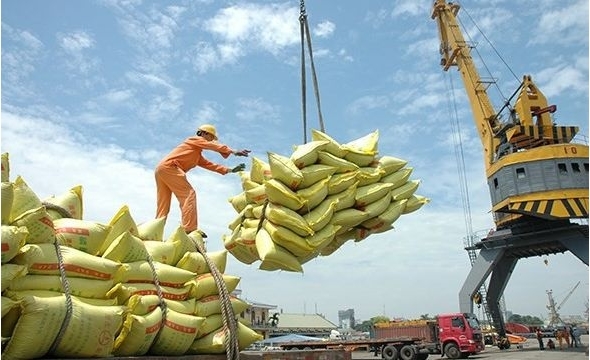
AsemconnectVietnam - Increased global rice production, climate change and geopolitical conflicts are putting significant pressure on the market. Vietnamese rice exports face the need to adapt quickly and improve quality.
Abundant supply but growing risks
Global rice market is presenting a paradox: supply continues to increase, but risks are also rapidly escalating. Report from United Nations Food and Agriculture Organization and World Meteorological Organization warn that extreme heat is becoming a direct threat to global food security, reducing crop yields and increasing the risk of drought, water shortages and wildfires.
Meanwhile, International Grains Council forecasts rice production for the 2026/27 crop year to remain at around 548 million tonnes, leading to increases in consumption, trade, and inventories. This indicates that supply remains relatively abundant, at least in the short term.
However, uncertainties are casting a shadow over the medium-term outlook. According to Reuters, possibility of El Niño occurring from mid-2026 could cause widespread drought in Asia – the world's key rice-producing region, including India, Southeast Asia and Australia. In addition, geopolitical tensions in the Middle East are leading to fluctuations in agricultural input costs, including rice.
Combined effect of extreme weather and fluctuating input costs could reduce rice yields, weaken the medium-term supply picture and increase risk of localized imbalances between regions.
Market is becoming more fragmented, and competitive pressure is increasing.
Faced with unpredictable fluctuations, importing countries are proactively taking risk mitigation measures. Malaysia has increased its national rice reserves to 300,000 tonnes, while maintaining a policy of ensuring sufficient supply for up to nine months of consumption, although it remains heavily dependent on imports. The Philippines has also increased imports, projected to reach a record 4.8 million tonnes in 2026 due to concerns about El Niño and rising production costs.
Conversely, Indonesia has emerged as a bright spot by accelerating its food self-sufficiency strategy. Thanks to a sharp increase in production and reserves exceeding 5 million tonnes, the country has not only ended imports but is also capable of participating in exports, demonstrating a notable shift in the regional rice trade balance.
Meanwhile, China is tightening import standards after discovering a shipment of Indian rice suspected of being GMO-contaminated, and is also strengthening controls on fertilizer exports to prioritize domestic supply.
In EU, European Commission (EC) is implementing ELAN digital system to replace paper-based certificates for agricultural imports, aiming to simplify and modernize trade. Initially, this will apply to certain items within tariff quotas, with rice temporarily retaining paper documentation.
This is seen as a step forward in digitalization of EU agricultural trade, in context of slowing trade in the 2025/26 crop year: imports decreased by 11.4% to 811,916 tonnes, and exports decreased by 6.65% to 177,647 tonnes (as of April 19, 2026). Main sources of supply are Myanmar, Cambodia, and India while the UK continues to be the EU's largest import market.
Regarding prices, global rice market saw mixed trends last week. In India, export price of 5% broken rice is around US$353/tonne, increasing weekly and monthly but still lower than the same period last year. Thailand maintains a price of around US$386/tonne, while Pakistan is at US$355/tonne with a downward trend to increase competitiveness. Conversely, Myanmar and Cambodia recorded price increases due to limited supply and high costs.
For Vietnam, rice exports maintained their scale but the value declined. As of mid-April 2026, Vietnam exported 2.8 million tonnes, earning approximately US$1.3 billion, a slight decrease in volume but a sharp decrease of 10.5% in value. The main reason is that the average export price only reached about US$469/tonne, a significant decrease compared to the same period last year.
Competitive pressure on the rice industry is increasing, while the market demands higher quality, traceability and sustainability standards. Sharing at the workshop “Connecting Production and Consumption in the Rice Industry,” Dr. Tran Minh Hai, Vice Rector of School of Public Policy and Rural Development, observed that Vietnamese agriculture still faces the paradox of “bumper harvest, falling prices” due to fragmented production, lack of linkages and failure to connect with market signals. Therefore, developing value chains with the participation of farmers, cooperatives, and businesses is considered an inevitable direction.
From a business perspective, Ho Quang Cua, creator of the ST25 rice brand, emphasized the importance of building and protecting rice brands, considering it a “shield” to protect products in the context of increasingly deep integration.
Source: Vitic/ congthuong.vn
Global rice market is presenting a paradox: supply continues to increase, but risks are also rapidly escalating. Report from United Nations Food and Agriculture Organization and World Meteorological Organization warn that extreme heat is becoming a direct threat to global food security, reducing crop yields and increasing the risk of drought, water shortages and wildfires.
Meanwhile, International Grains Council forecasts rice production for the 2026/27 crop year to remain at around 548 million tonnes, leading to increases in consumption, trade, and inventories. This indicates that supply remains relatively abundant, at least in the short term.
However, uncertainties are casting a shadow over the medium-term outlook. According to Reuters, possibility of El Niño occurring from mid-2026 could cause widespread drought in Asia – the world's key rice-producing region, including India, Southeast Asia and Australia. In addition, geopolitical tensions in the Middle East are leading to fluctuations in agricultural input costs, including rice.
Combined effect of extreme weather and fluctuating input costs could reduce rice yields, weaken the medium-term supply picture and increase risk of localized imbalances between regions.
Market is becoming more fragmented, and competitive pressure is increasing.
Faced with unpredictable fluctuations, importing countries are proactively taking risk mitigation measures. Malaysia has increased its national rice reserves to 300,000 tonnes, while maintaining a policy of ensuring sufficient supply for up to nine months of consumption, although it remains heavily dependent on imports. The Philippines has also increased imports, projected to reach a record 4.8 million tonnes in 2026 due to concerns about El Niño and rising production costs.
Conversely, Indonesia has emerged as a bright spot by accelerating its food self-sufficiency strategy. Thanks to a sharp increase in production and reserves exceeding 5 million tonnes, the country has not only ended imports but is also capable of participating in exports, demonstrating a notable shift in the regional rice trade balance.
Meanwhile, China is tightening import standards after discovering a shipment of Indian rice suspected of being GMO-contaminated, and is also strengthening controls on fertilizer exports to prioritize domestic supply.
In EU, European Commission (EC) is implementing ELAN digital system to replace paper-based certificates for agricultural imports, aiming to simplify and modernize trade. Initially, this will apply to certain items within tariff quotas, with rice temporarily retaining paper documentation.
This is seen as a step forward in digitalization of EU agricultural trade, in context of slowing trade in the 2025/26 crop year: imports decreased by 11.4% to 811,916 tonnes, and exports decreased by 6.65% to 177,647 tonnes (as of April 19, 2026). Main sources of supply are Myanmar, Cambodia, and India while the UK continues to be the EU's largest import market.
Regarding prices, global rice market saw mixed trends last week. In India, export price of 5% broken rice is around US$353/tonne, increasing weekly and monthly but still lower than the same period last year. Thailand maintains a price of around US$386/tonne, while Pakistan is at US$355/tonne with a downward trend to increase competitiveness. Conversely, Myanmar and Cambodia recorded price increases due to limited supply and high costs.
For Vietnam, rice exports maintained their scale but the value declined. As of mid-April 2026, Vietnam exported 2.8 million tonnes, earning approximately US$1.3 billion, a slight decrease in volume but a sharp decrease of 10.5% in value. The main reason is that the average export price only reached about US$469/tonne, a significant decrease compared to the same period last year.
Competitive pressure on the rice industry is increasing, while the market demands higher quality, traceability and sustainability standards. Sharing at the workshop “Connecting Production and Consumption in the Rice Industry,” Dr. Tran Minh Hai, Vice Rector of School of Public Policy and Rural Development, observed that Vietnamese agriculture still faces the paradox of “bumper harvest, falling prices” due to fragmented production, lack of linkages and failure to connect with market signals. Therefore, developing value chains with the participation of farmers, cooperatives, and businesses is considered an inevitable direction.
From a business perspective, Ho Quang Cua, creator of the ST25 rice brand, emphasized the importance of building and protecting rice brands, considering it a “shield” to protect products in the context of increasingly deep integration.
Source: Vitic/ congthuong.vn
Vietnam's steel exports increased in 4 months of 2026
New pressure from markets and green barriers for agricultural exports
LG Energy Solution, Honda eye Vietnam’s e-motorbike market
Seminar on trade promotion in South American market to take place in Hanoi
Supporting industry infrastructure map launched to promote global supply chain integration
Ho Chi Minh City listed among global Top 100 startup ecosystems
Agricultural, forestry and fishery export in the first four months of 2026 reach over US$23 billion
Vietnam agricultural markets – May 19, 2026: Coffee and pepper prices plunged amid heavy selling pressure
Private economic sector poised for breakthrough growth
Vietnam showcases economic potential, investment opportunities in St. Petersburg
Smart city development crucial to Vietnam’s growth ambitions in digital era
Vietnam’s pepper exports to maintain positive growth in 2026
Vietnam agricultural commodities morning brief – May 18, 2026
Energy sector seen as key pillar for Vietnam’s green, double-digit growth ambitions

Public debt borrowing and repayment plan for 2026
Ensuring resources: Mobilizing sufficient and timely borrowed capital at reasonable costs and acceptable risks to meet expenditure needs ...Plan on implementation of high-tech law
Inter-sectoral legal support program for small and ...

Tourism destinations refresh offerings to welcome New ...
Across the Mekong Delta, many tourist sites have been busy upgrading their offerings. At the Con Son tourism site in Can Tho city, members ...Annual New Year festival shines in Da Nang
Phu Quoc emerging as a favourite global destination
Vietnam Airlines adds 270 flights to during 2026 New Year ...
