


Agricultural, forestry and fishery export in the first four months of 2026 reach over US$23 billion
Tuesday, May 19,2026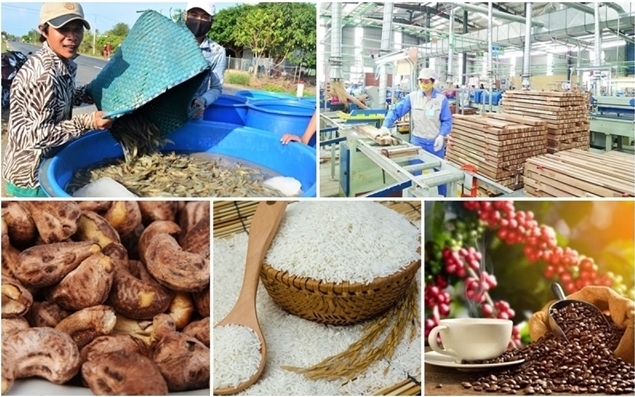
AsemconnectVietnam - In the first four months of 2026, agricultural, forestry and fishery export reached over US$23 billion, an increase of 5.4%. However, growth rate was uneven across markets and product categories.
Exports maintain growth, market differentiation is strong
According to a report by Ministry of Agriculture and Environment, estimated export turnover of agricultural, forestry and fishery products in April 2026 reached US$6.05 billion, a decrease of 3.8% compared to the previous month and a slight decrease of 0.8% compared to the same period last year. Despite signs of a short-term slowdown, overall export for the first four months of the year still reached US$23.04 billion, an increase of 5.4% compared to the same period in 2025.
In structure, agricultural product group continues to account for a large proportion with US$12.16 billion, an increase of 1.5%. Seafood export reached US$3.59 billion, an increase of 11.9%, making it one of the fastest-growing sectors. Forestry products reached US$5.82 billion, a slight increase of 0.8%, while livestock products recorded a dramatic increase of 45.5%, reaching US$245 million. Notably, production input group increased by 66.2%, reflecting strong increase in demand for raw materials for processing and export.
By market region, Asia continues to be the largest destination for Vietnamese agricultural, forestry and fisheries products, accounting for 44.1% of total export value and increasing by 11.5% year-on-year. Europe and Oceania maintained growth rates of 3.7% and 19.8% respectively. Conversely, exports to the Americas decreased by 3.5% and to Africa by a significant 26%, indicating certain difficulties in these markets.
At national level, China, the United States and Japan remain Vietnam's three largest export markets, accounting for 21.1%, 18.5% and 7% of market shares, respectively. China continues to be the driving force behind growth, with a strong 28.8% increase in export value. Japan saw a slight increase of 1.3%, while the United States experienced a 4.8% decrease, reflecting a shift in orders and uneven demand across markets.
Many key commodities are under price pressure.
The trends by commodity sector show a clear divergence, particularly between price and volume. Coffee is a prime example. In the first four months of the year, coffee exports reached 789,300 tonnes with a value of US$3.6 billion, a 15% increase in volume but a 7.8% decrease in value. The main reason is sharp decline in average export prices, nearly 20% lower than the same period last year. Traditional European markets such as Germany, Italy and Spain all recorded declines, while China experienced a surge in growth.
Similarly, rubber saw a slight increase in volume but a decrease in value due to a 3.8% drop in average export price. Rice even decreased in both volume and value, by 2.3% and 11.1% respectively, amidst a 9% drop in average export price. This reflects competitive pressure and price fluctuations in the international market.
Conversely, some commodities recorded positive growth. Fruits and vegetables reached US$2.06 billion, a 22.3% increase, continuing to be a bright spot thanks to high demand, especially in Chinese market – which accounts for 51% of the export value. Pepper also saw strong growth in both volume and value, by 29.2% and 20.9% respectively.
Cashew nuts maintained good export prices, increasing by 1.7% despite a decrease in volume, while tea continued to face difficulties with declines in both volume and value. Livestock products emerged as a new bright spot with a 45.5% growth, with exports of milk and dairy products more than doubling.
Seafood continued its recovery with a turnover of $3.59 billion, an increase of 11.9%. The main driving force came from Chinese market with an increase of over 50%. Conversely, exports to the United States decreased by 7.4%, indicating difficulties in demand and trade barriers.
For wood and wood products, import value reached US$5.42 billion, a slight increase of 0.4%. The United States remained the largest market but saw a decrease of over 8%, while China experienced strong growth, partially offsetting the decline.
Conversely, imports of agricultural, forestry and aquatic products continued to increase rapidly. According to Ministry of Agriculture and Environment's report, imports in April 2026 were estimated at US$5.06 billion, a 19% increase compared to the same period last year. The cumulative figure for the first four months reached US$17.65 billion, a 12% increase.
Most import categories increased, especially agricultural products (up 16.2%), livestock products (up 25.3%), and forestry products (up 24.1%). These are mainly items used for domestic processing and production, indicating that production activities are being maintained and expanded.
By market, Asia and the Americas were the two largest suppliers. The United States, China and Brazil are the three main sources of supply, with increases of 41.7%, 18.5%, and 15.3%, respectively.
A fact that imports are increasing faster than exports is putting pressure on the industry's trade balance. In context of continued market fragmentation and unfavorable price fluctuations for many key commodities, the requirement is to increase added value, diversify markets and reduce dependence on a few major partners.
In long term, this trend shows that agriculture, forestry, and fisheries sector is entering a deeper restructuring phase, in which the quality of growth, market adaptability, and supply chain control will play a decisive role.
Source: Vitic/ congthuong.vn
According to a report by Ministry of Agriculture and Environment, estimated export turnover of agricultural, forestry and fishery products in April 2026 reached US$6.05 billion, a decrease of 3.8% compared to the previous month and a slight decrease of 0.8% compared to the same period last year. Despite signs of a short-term slowdown, overall export for the first four months of the year still reached US$23.04 billion, an increase of 5.4% compared to the same period in 2025.
In structure, agricultural product group continues to account for a large proportion with US$12.16 billion, an increase of 1.5%. Seafood export reached US$3.59 billion, an increase of 11.9%, making it one of the fastest-growing sectors. Forestry products reached US$5.82 billion, a slight increase of 0.8%, while livestock products recorded a dramatic increase of 45.5%, reaching US$245 million. Notably, production input group increased by 66.2%, reflecting strong increase in demand for raw materials for processing and export.
By market region, Asia continues to be the largest destination for Vietnamese agricultural, forestry and fisheries products, accounting for 44.1% of total export value and increasing by 11.5% year-on-year. Europe and Oceania maintained growth rates of 3.7% and 19.8% respectively. Conversely, exports to the Americas decreased by 3.5% and to Africa by a significant 26%, indicating certain difficulties in these markets.
At national level, China, the United States and Japan remain Vietnam's three largest export markets, accounting for 21.1%, 18.5% and 7% of market shares, respectively. China continues to be the driving force behind growth, with a strong 28.8% increase in export value. Japan saw a slight increase of 1.3%, while the United States experienced a 4.8% decrease, reflecting a shift in orders and uneven demand across markets.
Many key commodities are under price pressure.
The trends by commodity sector show a clear divergence, particularly between price and volume. Coffee is a prime example. In the first four months of the year, coffee exports reached 789,300 tonnes with a value of US$3.6 billion, a 15% increase in volume but a 7.8% decrease in value. The main reason is sharp decline in average export prices, nearly 20% lower than the same period last year. Traditional European markets such as Germany, Italy and Spain all recorded declines, while China experienced a surge in growth.
Similarly, rubber saw a slight increase in volume but a decrease in value due to a 3.8% drop in average export price. Rice even decreased in both volume and value, by 2.3% and 11.1% respectively, amidst a 9% drop in average export price. This reflects competitive pressure and price fluctuations in the international market.
Conversely, some commodities recorded positive growth. Fruits and vegetables reached US$2.06 billion, a 22.3% increase, continuing to be a bright spot thanks to high demand, especially in Chinese market – which accounts for 51% of the export value. Pepper also saw strong growth in both volume and value, by 29.2% and 20.9% respectively.
Cashew nuts maintained good export prices, increasing by 1.7% despite a decrease in volume, while tea continued to face difficulties with declines in both volume and value. Livestock products emerged as a new bright spot with a 45.5% growth, with exports of milk and dairy products more than doubling.
Seafood continued its recovery with a turnover of $3.59 billion, an increase of 11.9%. The main driving force came from Chinese market with an increase of over 50%. Conversely, exports to the United States decreased by 7.4%, indicating difficulties in demand and trade barriers.
For wood and wood products, import value reached US$5.42 billion, a slight increase of 0.4%. The United States remained the largest market but saw a decrease of over 8%, while China experienced strong growth, partially offsetting the decline.
Conversely, imports of agricultural, forestry and aquatic products continued to increase rapidly. According to Ministry of Agriculture and Environment's report, imports in April 2026 were estimated at US$5.06 billion, a 19% increase compared to the same period last year. The cumulative figure for the first four months reached US$17.65 billion, a 12% increase.
Most import categories increased, especially agricultural products (up 16.2%), livestock products (up 25.3%), and forestry products (up 24.1%). These are mainly items used for domestic processing and production, indicating that production activities are being maintained and expanded.
By market, Asia and the Americas were the two largest suppliers. The United States, China and Brazil are the three main sources of supply, with increases of 41.7%, 18.5%, and 15.3%, respectively.
A fact that imports are increasing faster than exports is putting pressure on the industry's trade balance. In context of continued market fragmentation and unfavorable price fluctuations for many key commodities, the requirement is to increase added value, diversify markets and reduce dependence on a few major partners.
In long term, this trend shows that agriculture, forestry, and fisheries sector is entering a deeper restructuring phase, in which the quality of growth, market adaptability, and supply chain control will play a decisive role.
Source: Vitic/ congthuong.vn
Private economic sector poised for breakthrough growth
Vietnam showcases economic potential, investment opportunities in St. Petersburg
Smart city development crucial to Vietnam’s growth ambitions in digital era
Vietnam’s pepper exports to maintain positive growth in 2026
Vietnam agricultural commodities morning brief – May 18, 2026
Energy sector seen as key pillar for Vietnam’s green, double-digit growth ambitions
Vietnam accelerates drive to master EV technologies
Digital economy - driving force for double-digit growth
Vietnam industry: journey of building internal strength and elevating position
Seafood export accelerate, aiming for $12.3 billion
Vietnam commodity market on May 17: Gold fell sharply while rice exports surged
Vietnam agricultural commodities market – May 16, 2026: Coffee plunged, while durian and live hog prices remained firm
Vietnam and India have many opportunities to build a footwear supply chain
Plan to strengthen trade promotion for handicraft products approved


Public debt borrowing and repayment plan for 2026
Ensuring resources: Mobilizing sufficient and timely borrowed capital at reasonable costs and acceptable risks to meet expenditure needs ...Plan on implementation of high-tech law
Inter-sectoral legal support program for small and ...

Tourism destinations refresh offerings to welcome New ...
Across the Mekong Delta, many tourist sites have been busy upgrading their offerings. At the Con Son tourism site in Can Tho city, members ...Annual New Year festival shines in Da Nang
Phu Quoc emerging as a favourite global destination
Vietnam Airlines adds 270 flights to during 2026 New Year ...
