


Vietnam agricultural markets – May 19, 2026: Coffee and pepper prices plunged amid heavy selling pressure
Tuesday, May 19,2026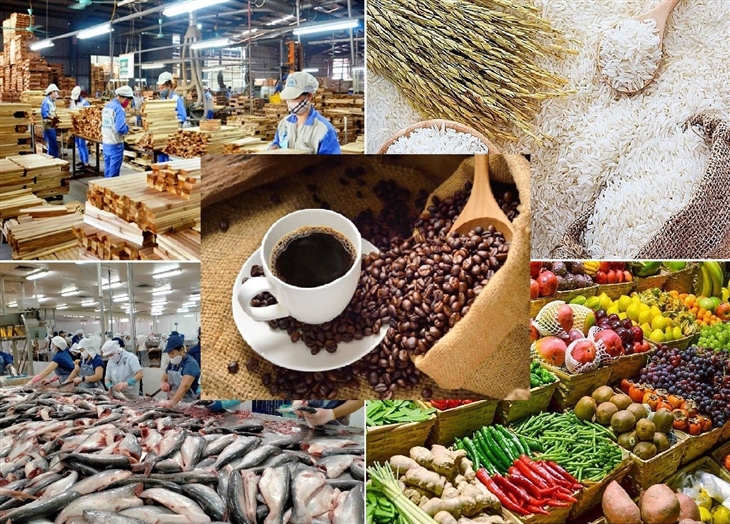
AsemconnectVietnam - In the morning trading session of May 19, 2026, Vietnam’s agricultural commodity markets witnessed a broad downturn in coffee and pepper prices, driven by intensified profit-taking and sell-offs. At the same time, the durian market showed sharp price divergence across quality segments due to stricter inspection barriers. Meanwhile, rice export prices maintained their competitive edge, supported by strong demand, while live hog prices remained elevated and domestic rubber prices stayed largely stable.
Domestic coffee prices fell significantly by 600–900 dong per kilogram, bringing the current trading range down to 86,200–87,200 dong per kg.
Dak Nong (Lam Dong) continued to record the highest purchase price nationwide at 87,200 dong per kg, despite a drop of 600 dong per kg. In parallel, Dak Lak and Gia Lai saw steeper declines of 700 dong per kg, pushing prices down to 87,000 dong per kg.
Market sentiment turned increasingly cautious as farmers accelerated selling activities in response to the sharp correction in global prices.
On the international front, coffee markets also experienced notable losses of over 3% across both major exchanges. On the London market, July 2026 Robusta futures dropped by USD122 per ton to settle at USD3,365 per ton, while forward contracts for September, November 2026, and January 2027 declined by USD123–127 per ton.
Similarly, Arabica futures on the New York exchange saw the July 2026 contract fall by 8.80 cents per pound to 266.90 cents per lb.
Analysts attributed the downturn primarily to aggressive profit-taking by investment funds following a prolonged rally. Additionally, favorable weather conditions in Brazil eased supply concerns, while a strong US dollar—supported by expectations that the Federal Reserve would maintain current interest rates—triggered capital outflows from agricultural commodities.
However, low certified stock levels and stable demand for instant coffee were expected to provide underlying support, potentially preventing deeper losses.
Pepper prices reversed course after reaching high levels
After holding firm at elevated levels, domestic pepper prices declined by 2,000–3,000 dong per kg due to increased selling pressure. Prices currently ranged between 139,000–142,000 dong per kg.
Binh Phuoc (Dong Nai) recorded the steepest drop of 3,000 dong per kg, falling to 140,000 dong per kg. Dak Lak and Dak Nong (Lam Dong) both decreased by 2,000 dong per kg to 142,000 dong per kg.
Ba Ria–Vung Tau (Ho Chi Minh City) also dropped by 2,000 dong per kg to 141,000 dong per kg, while Gia Lai posted the lowest regional price at 139,000 dong per kg after a 2,500 dong decline.
This correction clearly reflected profit-taking sentiment among traders and farmers.
In contrast, the international pepper market, particularly in India, remained relatively stable. Black pepper prices were reported at USD71,400 per ton for Garbled, USD69,400 per ton for Ungarbled, and USD68,400 per ton (per gram per liter standard).
Experts noted that the pepper market was entering a short-term adjustment phase and could remain volatile if selling pressure persisted.
Vietnam rice exports maintained competitive advantage
Rice prices in the Mekong Delta remained stable across both paddy and milled rice segments, supported by limited supply from the ongoing Summer–Autumn crop.
Fresh paddy prices were reported as follows:
· OM 18 and Dai Thom 8: 6,200–6,300 dong per kg
· OM 5451: 5,600–5,700 dong per kg
· IR 50404: 5,400–5,500 dong per kg
· Sticky rice IR 4625: 7,300–7,500 dong per kg
Export-grade milled rice prices also held firm, with OM 5451 at 9,500–9,600 dong per kg and Dai Thom 8 at 9,200–9,400 dong per kg.
The highlight remained Vietnam’s export market performance, where its rice continued to outperform competitors due to superior quality in the fragrant rice segment.
Vietnamese Jasmine rice was quoted at USD513–517 per ton, 5% broken rice at USD510–520 per ton, and 100% broken rice at USD331–335 per ton.
Notably, Vietnam’s 5% broken rice price remained significantly higher than Thailand’s (USD413–417 per ton) and India’s (USD344–348 per ton).
In the first four months of 2026, Vietnam exported over 3.3 million tons of rice, generating approximately USD 1.57 billion in revenue. The Philippines continued to be the largest buyer, accounting for nearly half of total export volume.
Durian market showed strong segmentation
Premium durian varieties meeting export standards continued to command strong demand, while lower-grade products saw sharp price declines.
Thai Monthong (VIP Grade A) increased by 2,000–6,000 dong per kg, reaching 82,000–86,000 dong per kg in the Mekong Delta. In contrast, Ri6 durian faced downward pressure. Prices in the Mekong Delta ranged between 45,000–50,000 dong per kg, while Tay Ninh reached 49,000 dong per kg, and Dong Nai traded at 47,000–50,000 dong per kg. In Binh Phuoc (Dong Nai), prices ranged from 48,000–52,000 dong per kg. At the ultra-premium segment, Black Thorn durian (Grade A) surged to 95,000–110,000 dong per kg, while Musang King ranged from 82,000–87,000 dong per kg, depending on region.
This widening price gap stemmed from stricter inspection measures by China, particularly regarding cadmium residues and Auramine O contamination, forcing traders to adopt more selective procurement practices.
Live hog prices remained stable at high levels
Live hog prices continued to hold steady within 66,000–70,000 dong per kg nationwide.
In the southern region, Dong Nai and Ho Chi Minh City led the market at 70,000 dong per kg, followed by Tay Ninh and Vinh Long at 69,000 dong per kg, while other Mekong Delta provinces hovered around 68,000 dong per kg.
Northern markets maintained a firm range of 67,000–69,000 dong per kg, with Bac Ninh, Hanoi, and Hung Yen reaching the upper level of 69,000 dong per kg.
In the central and Central Highlands regions, Lam Dong stood at 69,000 dong per kg, while coastal provinces remained stable at 66,000 dong per kg.
Domestic rubber prices remained stable
Domestic rubber companies maintained stable procurement policies to support farmers. Mang Yang Rubber Company held its purchase price for Grade 1 latex at 463 dong per TSC per kg, Phu Rieng Rubber at 420 dong per TSC per kg, and Binh Long Rubber at 432 dong per TSC per kg.
Globally, rubber markets showed mixed movements. Japan’s TOCOM exchange remained largely flat within JPY396–411 per kg, reflecting cautious investor sentiment. Shanghai markets fluctuated within a narrow range.
Singapore’s SGX was the only bright spot, with several TSR20 rubber contracts rising by around 1%, signaling a tentative return of investment flows, although overall market sentiment remained guarded.
Source: Vitic
Vietnam showcases economic potential, investment opportunities in St. Petersburg
Smart city development crucial to Vietnam’s growth ambitions in digital era
Vietnam’s pepper exports to maintain positive growth in 2026
Vietnam agricultural commodities morning brief – May 18, 2026
Energy sector seen as key pillar for Vietnam’s green, double-digit growth ambitions
Vietnam accelerates drive to master EV technologies
Digital economy - driving force for double-digit growth
Vietnam industry: journey of building internal strength and elevating position
Seafood export accelerate, aiming for $12.3 billion
Vietnam commodity market on May 17: Gold fell sharply while rice exports surged
Vietnam agricultural commodities market – May 16, 2026: Coffee plunged, while durian and live hog prices remained firm
Vietnam and India have many opportunities to build a footwear supply chain
Plan to strengthen trade promotion for handicraft products approved
Vietnam spent over $2.6 billion importing of corn, wheat, and soybeans
