


Vietnam agricultural commodities market – May 15, 2026: coffee rebounded
Friday, May 15,2026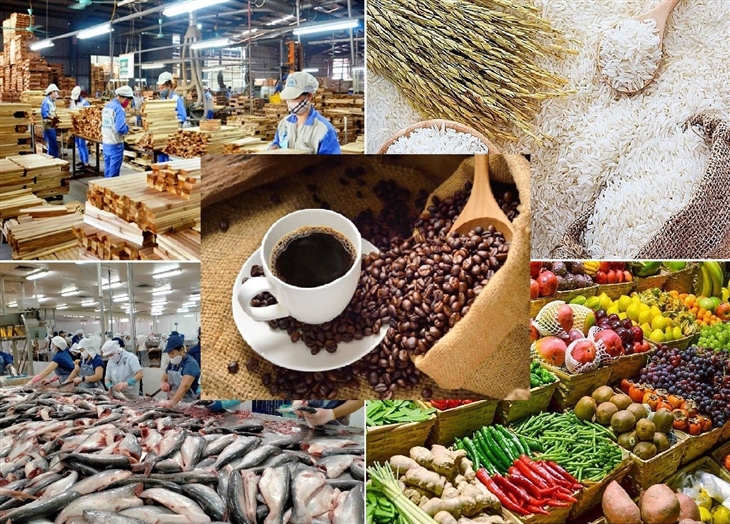
AsemconnectVietnam - During the morning trading session on May 15, Vietnam’s agricultural commodities market showed signs of recovery in coffee prices, which rose sharply toward the 90,000 dong per kg mark, supported by global market developments. Meanwhile, rice, durian and live hog prices remained broadly stable, with clear segmentation based on export quality standards.
Coffee prices rebounded strongly
Domestic coffee prices increased significantly following the previous session’s decline.
In the Central Highlands, procurement prices rose by around 1,000 dong per kg, bringing the average range to between 88,300 and 89,000 dong per kg.
Dak Nong (Lam Dong) continued to lead the market, reaching 89,000 dong per kg, the highest level nationwide. Dak Lak and Gia Lai followed closely at around 88,900 dong per kg.
The upward momentum in the domestic market was directly supported by positive movements on international exchanges.
On the London market, robusta coffee futures for July 2026 surged by 78 USD per ton to 3,560 USD per ton, marking a seven-week high. The September 2026 contract also gained 77 USD per ton to reach 3,440 USD per ton.
On the New York exchange, arabica futures for July delivery edged up by 0.6 US cent to 280.75 US cent per lb.
Analysts attributed the rally to concerns over tightening global supply due to extreme weather conditions, combined with declining robusta inventories on ICE, which fell to a two-year low of just 3,642 lots.
Pepper prices remained elevated
In contrast to coffee, domestic pepper prices continued to hold steady at high levels, ranging from 141,500 to 144,000 dong per kg.
Dak Lak and Dak Nong (Lam Dong) led the market at 144,000 dong per kg. Ho Chi Minh City and Dong Nai remained at 143,000 dong per kg, while Gia Lai recorded the lowest level at 141,500 dong per kg.
On the global market, Indonesian black pepper was priced at 7,050 USD per ton, while Brazil’s ASTA 570 grade stood at 6,250 USD per ton and Malaysia at 9,300 USD per ton.
Vietnam’s export black pepper prices remained stable at 6,100 to 6,200 USD per ton.
In terms of exports, Vietnam shipped 30,900 tons of pepper in April 2026, generating 193.88 million USD in revenue. The United States and Germany remained the two largest buyers.
Notably, Thailand emerged as a fast-growing market, with imports surging by 130.1% year-on-year, raising expectations that it could become Vietnam’s second-largest export destination in the near future.
Rice trading slowed, raw rice prices edged higher
In the Mekong Delta, rice trading activity remained subdued due to limited availability of fresh paddy.
According to the Department of Agriculture and Environment of An Giang Province, fresh paddy prices remained stable, with OM 18 and Dai Thom 8 ranging from 6,200 to 6,300 dong per kg.
Common varieties such as OM 5451 were priced at 5,600 to 5,700 dong per kg, while IR 50404 stood at 5,400 to 5,500 dong per kg.
However, raw rice prices saw slight increases in certain segments. OM 5451 rose by 300 dong per kg to 9,500–9,600 dong per kg, while CL 555 gained 100 dong per kg to reach 9,100–9,200 dong per kg.
On the export front, Vietnamese rice maintained a strong competitive position. Jasmine rice was offered at 513–517 USD per ton.
Five-percent broken rice was quoted at 510–520 USD per ton, significantly higher than Thai rice at 396–400 USD per ton and Indian rice at 345–349 USD per ton.
Durian prices showed strong segmentation under quality pressure
The durian market entered a phase of rising supply, limiting the potential for broad price surges.
Price differentiation became increasingly pronounced across segments, depending on quality and export standards.
High-end varieties continued to attract strong demand. Black Thorn reached 110,000 dong per kg for grade A fruit in the Mekong Delta.
Musang King ranged from 86,000 to 88,000 dong per kg depending on the region.
Among more common varieties, Thai durian (VIP grade A) in the Mekong Delta was traded at 80,000 dong per kg, while grade B dropped to 60,000 dong per kg.
Ri6 prices varied by province. Grade A fruit reached 52,000 dong per kg in Binh Phuoc, while the Mekong Delta and Dong Nai recorded around 48,000 dong per kg, and Tay Ninh stood at 47,000 dong per kg.
At present, visually appealing, export-grade fruit continued to be actively sought after, while lower-quality produce faced heavy downward pressure due to increasingly strict export requirements.
Live hog prices remained stable nationwide
Live hog prices showed no significant changes across all three regions.
The southern region remained the key price leader, with levels ranging from 68,000 to 71,000 dong per kg.
Dong Nai continued to hold the highest price at 71,000 dong per kg, followed by Ho Chi Minh City at 70,000 dong per kg.
In the north, prices remained stable between 67,000 and 69,000 dong per kg, with Hanoi, Bac Ninh and Hung Yen recording the highest levels.
Similarly, the central and Central Highlands regions maintained prices between 66,000 and 69,000 dong per kg, led by Lam Dong.
The sustained high price range reflected a relatively balanced domestic supply-demand situation.
Rubber market stable domestically, futures surged globally
The global rubber market saw strong upward momentum in long-term futures contracts.
In Japan, the October 2026 contract rose by 11.4 yen per kg to 422.9 yen per kg. On the Shanghai exchange, the September contract jumped by 500 yuan per ton to 18,325 yuan per ton.
These gains reflected investor optimism about a medium-term recovery in industrial production.
In contrast, domestic rubber companies maintained stable procurement policies to ensure consistent production activity.
Phu Rieng Company held latex prices at 420 dong per TSC, while Binh Long purchased latex at factory level at 505 dong per TSC per kg.
In Mang Yang, latex ranged from 458 to 463 dong per TSC, while Ba Ria maintained 420 dong per TSC per kg, ensuring stable income for rubber farmers.
Source: Vitic
Energy sector seen as key pillar for Vietnam’s green, double-digit growth ambitions
Vietnam accelerates drive to master EV technologies
Digital economy - driving force for double-digit growth
Vietnam industry: journey of building internal strength and elevating position
Seafood export accelerate, aiming for $12.3 billion
Vietnam commodity market on May 17: Gold fell sharply while rice exports surged
Vietnam agricultural commodities market – May 16, 2026: Coffee plunged, while durian and live hog prices remained firm
Vietnam and India have many opportunities to build a footwear supply chain
Plan to strengthen trade promotion for handicraft products approved
Vietnam spent over $2.6 billion importing of corn, wheat, and soybeans
Da Nang's import and export growth, trade surplus of 15 million USD
Vietnam-ASEAN trade exceeds US$90 billion after 31 years of membership
Agricultural exports: shift from "quantity" to "quality" for competitiveness
Plan to strengthen trade promotion for handicraft products approved


Public debt borrowing and repayment plan for 2026
Ensuring resources: Mobilizing sufficient and timely borrowed capital at reasonable costs and acceptable risks to meet expenditure needs ...Plan on implementation of high-tech law
Inter-sectoral legal support program for small and ...

Tourism destinations refresh offerings to welcome New ...
Across the Mekong Delta, many tourist sites have been busy upgrading their offerings. At the Con Son tourism site in Can Tho city, members ...Annual New Year festival shines in Da Nang
Phu Quoc emerging as a favourite global destination
Vietnam Airlines adds 270 flights to during 2026 New Year ...
