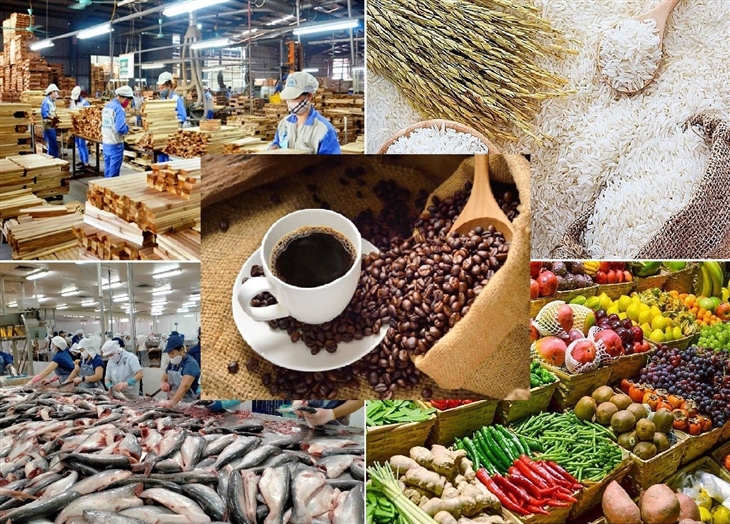
AsemconnectVietnam - Vietnam’s agricultural commodities market on May 16, 2026 presented a sharply diverging picture. While coffee prices came under heavy pressure from global market dynamics and recorded a steep decline, essential commodities such as live hogs and pepper continued to maintain elevated price levels. Notably, durian prices in several key growing regions increased significantly, offering a more optimistic outlook for farmers.
Coffee prices dropped sharply under currency pressure
Domestic coffee prices reversed course and fell markedly by 1,200 dong per kg compared to the previous morning, bringing the average price range in the Central Highlands down to between 87,100 and 87,800 dong per kg. Dak Nong (Lam Dong) recorded the highest procurement price at 87,800 dong per kg, followed closely by Dak Lak and Gia Lai at 87,700 dong per kg.
The domestic downturn was directly linked to negative developments in global markets, particularly as the US dollar surged to a two-week high. A stronger dollar typically exerts downward pressure on commodity prices by making them more expensive for holders of other currencies.
In addition, Brazil’s entry into the peak harvest season significantly boosted fresh supply, triggering selling pressure across major trading exchanges.
On the London exchange, the July 2026 robusta contract declined sharply by 122 USD per ton, settling at 3,365 USD per ton. Meanwhile, on the New York exchange, arabica futures for the same delivery month dropped by 8.80 cents per lb, closing at 260.10 cents per lb.
According to agricultural consultancy Safras & Mercado, Brazilian producers had sold 86% of their 2025–2026 crop as of mid-April, down from 96% in the same period last year.
After several months of decline, Brazil’s coffee exports have started to recover, supported by the beginning of a new bumper harvest.
Data from the Brazilian Coffee Exporters Council (Cecafé) showed that total coffee exports in April reached 3.12 million bags, up slightly by 0.6% year-on-year.
However, the outlook for green coffee remained negative, with exports falling by 1.3% to 2.76 million bags, driven entirely by a 15.9% decline in arabica shipments to 2.26 million bags.
In contrast, robusta exports rebounded strongly to 497,019 bags, nearly five times higher (+374.1%) than April 2025.
Processed coffee exports reached a record 364,389 bags, up 17.1% year-on-year, largely driven by soluble coffee.
Overall, total coffee exports in the first four months of 2026 remained significantly lower than the same period in 2025, totaling just over 11.6 million bags, down 16.1% year-on-year.
Pepper prices held firm at elevated levels
In contrast to coffee, domestic pepper prices remained stable over several consecutive sessions, ranging between 141,500 and 144,000 dong per kg.
Balanced supply-demand conditions and cautious trading sentiment helped sustain high price levels.
Dak Lak and Dak Nong (Lam Dong) continued to lead the market at 144,000 dong per kg. Ho Chi Minh City and Dong Nai maintained 143,000 dong per kg, while Gia Lai recorded the lowest level at 141,500 dong per kg.
On the global market, Indian export prices remained exceptionally high, with black pepper (garbled) quoted at 71,400 USD per ton.
Market analysts expected pepper prices to move sideways within a narrow range in the short term, as no major new drivers have emerged.
According to Vietnam’s Agency of Foreign Trade (Ministry of Industry and Trade), citing Thailand’s Ministry of Commerce, Thailand imported 3,368 tons of pepper worth 25.22 million USD in the first quarter of 2026, up 93.2% in volume and 75.9% in value compared to the same period in 2025.
The average import price in March 2026 reached 7,614 USD per ton, up 4.6% month-on-month but down 7.1% year-on-year. For the first quarter as a whole, the average stood at 7,490 USD per ton, down 9.0% year-on-year.
Vietnam remained Thailand’s largest supplier, accounting for 87.93% of total imports, followed by Indonesia with 10.69%.
Imports from Vietnam reached 2,962 tons, valued at 21.66 million USD, representing increases of 105.5% in volume and 84.7% in value year-on-year.
Rice trading slowed, but export prices stayed competitive
In the Mekong Delta, rice prices remained stable as supply entered the late harvest stage and became less abundant, resulting in subdued trading activity.
According to the Department of Agriculture and Environment of An Giang Province, fresh paddy prices for OM 18 and Dai Thom 8 held steady at 6,100–6,300 dong per kg.
For raw rice, CL 555 increased slightly by 100 dong per kg to 9,100–9,200 dong per kg.
Notably, by-products such as rice bran rose by 250 dong per kg, reaching 7,300–7,500 dong per kg.
On the export front, Vietnam’s 5% broken white rice maintained the highest price level in the region at 399–403 USD per ton, while fragrant rice stood at 510–520 USD per ton.
Across Asia, competition intensified. Indian rice prices remained at record lows due to a weakening rupee and capital outflows, while Thai rice prices climbed to around 415 USD per ton as domestic mills held back supply.
Nevertheless, Vietnamese exporters remained cautious amid reports that the Philippines might impose price caps on imported rice.
According to Inquirer, President Ferdinand Marcos Jr. signed Executive Order No. 118 on May 13, setting a temporary ceiling price of 50 pesos per kg for imported rice.
The measure would be effective nationwide for 30 days, unless lifted earlier upon recommendation by the National Price Coordinating Council (NPCC).
The government aimed to curb unreasonable price increases and prevent market abuse amid rising costs of essential goods linked to geopolitical tensions in the Middle East.
Durian prices rose strongly
Durian prices, including Thai Monthong, Musang King, and Ri6 varieties, increased by 2,000–5,000 dong per kg in the Southeast region.
Procurement prices showed strong segmentation depending on quality grades and regions.
Premium Thai durian (VIP grade) rose to 110,000–115,000 dong per kg in both the Southwest and Southeast regions.
Black Thorn durian (grade A) in the Southwest reached 108,000–110,000 dong per kg.
Musang King grade A ranged from 86,000 to 92,000 dong per kg, depending on location.
Ri6 grade A was widely traded at 44,000–52,000 dong per kg, with the highest levels recorded in Southeast collection hubs.
Rubber prices remained stable
Major Vietnamese companies maintained stable procurement prices.
Mang Yang Company purchased latex (grade 1) at 463 dong per TSC per kg. Ba Ria Company applied 442–452 dong per TSC per kg depending on concentration, while mixed latex ranged from 13,500 to 18,000 dong per kg.
At Binh Long, factory-gate prices for latex were fixed at 432 dong per TSC per kg.
Live hog prices stayed elevated
Live hog prices remained stable at high levels nationwide, fluctuating between 66,000 and 71,000 dong per kg.
The southern region continued to lead the market, with Dong Nai holding the highest level at 71,000 dong per kg, followed by Ho Chi Minh City at 70,000 dong per kg.
In the north, prices remained strong, with Bac Ninh, Hanoi, and Hung Yen reaching 69,000 dong per kg.
Central and Central Highlands provinces traded steadily within 66,000–69,000 dong per kg, led by Lam Dong.
In the short term, live hog prices were expected to remain firm, moving sideways at high levels with a potential for slight increases in the northern region due to limited supply growth.
Source: Vitic