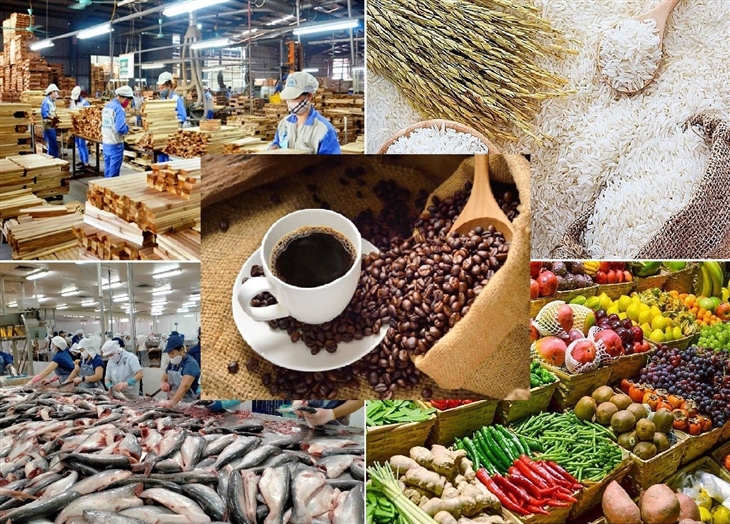
AsemconnectVietnam - Vietnam’s agricultural commodities market presented a mixed but largely stable picture on the morning of May 18, as gains in rice and pepper continued to be underpinned by firm demand, while coffee and rubber markets faced renewed downward pressure from global price movements. Meanwhile, domestic live hog prices remained elevated near recent peaks, and the durian market showed pronounced regional divergence, reflecting uneven supply-demand dynamics across key growing areas.
Domestic coffee market steadies as global prices declined
In Vietnam’s Central Highlands, the country’s main coffee-producing region, domestic prices remained broadly unchanged compared to the end of last week. Market sentiment remained cautious, with both traders and farmers adopting a wait-and-see approach amid uncertain signals from international markets.
Prices in Dak Nong (Lam Dong) were recorded at around 87,800 dong per kilogram, slightly higher than other localities, while Dak Lak and Gia Lai both reported levels of 87,700 dong/kg. Despite relatively attractive price levels, trading activity was subdued. Exporters limited purchases as they monitored global price trends, while farmers were reluctant to sell in large volumes, expecting potential rebounds or clearer market direction.
In contrast, global coffee markets experienced a sharp correction. On the London exchange, robusta futures for May 2026 delivery fell significantly by 94 USD per tonne, equivalent to a 2.55% decline, settling at 3,595 USD/tonne. Similarly, arabica futures on the New York exchange dropped by 3.35%, losing 9.85 cents per pound to reach 284.60 cents/lb.
Despite these international headwinds, Vietnam’s coffee export performance remained relatively resilient in volume terms. During the first four months of 2026, the country exported approximately 782,000 tonnes, generating 3.58 billion USD in revenue. This represented an increase of 11.7% in volume year-on-year, highlighting strong export capacity and sustained demand in key markets.
However, the decline in global prices significantly impacted export value. Total export revenue fell by 9.8% compared to the same period in 2025, underscoring the direct effect of lower price levels. Average export prices dropped to 4,575 USD per tonne, down 19.4% year-on-year.
April alone saw exports of 189,900 tonnes, worth 822.5 million USD, marking a month-on-month decline of 15.2% in volume and 17.5% in value. While volumes remained higher than the same period last year, the decrease in value clearly reflected weaker pricing conditions and slower demand from some major importing markets after strong purchases earlier in the year.
Rice exports maintained upward momentum
Vietnam’s rice market continued to show strong performance in export segments, supported by robust demand from Asia and Africa, particularly for fragrant rice varieties. Export prices remained competitive and significantly higher than those of key rivals such as Thailand and India.
Jasmine rice was quoted between 513 and 517 USD per tonne, while 5% broken fragrant rice ranged from 510 to 520 USD/tonne. These levels were notably higher than Thailand’s equivalent prices of 413–417 USD/tonne and India’s 344–348 USD/tonne, reinforcing Vietnam’s strong position in premium rice segments.
Domestically, paddy prices remained stable, with moderate trading activity. Farmers continued to hold back supply in anticipation of further price increases, contributing to limited market fluctuations. Key varieties such as OM 18 and Dai Thom 8 were traded at 6,200–6,300 dong/kg, while OM 5451 stood at 5,600–5,700 dong/kg. IR 50404 ranged from 5,400–5,500 dong/kg, and OM 34 was recorded at 5,100–5,200 dong/kg.
In the processed rice segment, prices for export-oriented fragrant rice remained high. OM 5451 rice reached 9,500–9,600 dong/kg, while Dai Thom 8 ranged from 9,200–9,400 dong/kg. Other varieties such as CL 555 were traded at 9,100–9,200 dong/kg, and OM 18 ranged between 8,700–8,850 dong/kg. IR 504 rice stood at 8,400–8,550 dong/kg, with finished products reaching approximately 10,750 dong/kg.
By-products such as broken rice and bran remained stable, with prices ranging from 7,500–7,600 dong/kg and 7,150–7,250 dong/kg, respectively.
In terms of exports, Vietnam shipped approximately 3.37 million tonnes of rice in the first four months of 2026, generating 1.58 billion USD. While export volumes remained strong, the average export price dropped to 468.4 USD/tonne, resulting in a 10.3% decline in export value year-on-year. This indicates that, similar to coffee, price pressures in the global market are weighing on overall export earnings despite solid demand.
Pepper prices rose on tightening supply
Vietnam’s pepper market continued its upward trajectory, driven primarily by tightening domestic supply following the harvest season. Prices increased by approximately 500 dong/kg in several regions, with current levels ranging between 141,500 and 144,000 dong/kg.
Dak Lak and Dak Nong recorded the highest prices at 144,000 dong/kg, maintaining their leading positions nationwide. Ho Chi Minh City and Dong Nai also saw notable increases, reaching 143,000 dong/kg, while Gia Lai edged up to 141,500 dong/kg.
Globally, pepper prices followed a similar upward trend. Indonesian black pepper rose by 95 USD per tonne to 7,050 USD/tonne, while Brazil’s ASTA 570 grade increased by 150 USD/tonne to 6,250 USD/tonne. Malaysian black pepper remained stable at 9,300 USD/tonne, and Indonesian white pepper (Muntok) gained 80 USD/tonne to reach 9,244 USD/tonne.
Vietnam’s export performance in pepper remained strong. In the first four months of 2026, total exports of pepper reached approximately 96,000 tonnes, generating 625 million USD. This represented a 30% increase in volume and a 22% increase in value year-on-year.
Exports to key markets showed particularly strong growth, with shipments to the United States rising by around 40%, while exports to China surged by over 200%, reflecting recovering demand and improved trade flows. Pepper remains a strategic export commodity for Vietnam, with black pepper accounting for approximately 66.3% of total export volume.
Durian market shows sharp regional divergence
Vietnam’s durian market displayed significant regional variation on May 18, with prices diverging notably between the Mekong Delta and southeastern provinces.
In the Mekong Delta, smaller warehouses reported slight price declines due to softer demand and localized supply conditions. In contrast, larger buyers in southeastern regions such as Dong Nai maintained stable or even higher purchase prices, supported by stronger demand and better quality supply.
Ri6 durian prices in the former Binh Phuoc area increased by 3,000 to 5,000 dong/kg, with Grade A fruit reaching 48,000–55,000 dong/kg, and Grade B ranging from 33,000–40,000 dong/kg. In the Mekong Delta, Grade A Ri6 was traded at 45,000–50,000 dong/kg, while Tay Ninh and Dong Nai recorded similar or slightly higher levels.
Thai durian maintained strong pricing, with Grade A fruit at around 80,000 dong/kg and Grade B at 60,000 dong/kg in the Mekong Delta.
Premium varieties continued to command high prices. Black Thorn durian reached 125,000 dong/kg for Grade A and 95,000 dong/kg for Grade B. Musang King was traded at 90,000–95,000 dong/kg, depending on region. Traditional domestic varieties such as Sau Huu and Chuong Bo were priced at 58,000 dong/kg and 45,000 dong/kg, respectively.
Live hog prices remained elevated
Vietnam’s live hog market remained stable, with prices holding near peak levels nationwide. Current prices ranged from 66,000 to 71,000 dong/kg, supported by balanced supply and steady demand.
The southern region continued to lead the market, with Dong Nai reaching 71,000 dong/kg, followed by Ho Chi Minh City at 70,000 dong/kg. Other provinces such as Tay Ninh and Vinh Long recorded 69,000 dong/kg, while Dong Thap, An Giang, Ca Mau, and Can Tho remained at 68,000 dong/kg.
In the north, prices ranged between 67,000 and 69,000 dong/kg, with Hanoi, Bac Ninh, and Hung Yen at the upper end. Central and Central Highlands regions recorded prices between 66,000 and 69,000 dong/kg, with Lam Dong at the highest level.
Stable supply conditions and cautious trading behavior contributed to maintaining price stability at elevated levels.
Rubber stable domestically
Vietnam’s domestic rubber market remained stable despite ongoing volatility in global markets. Major companies maintained unchanged procurement prices.
Latex prices ranged from 420 to 505 dong per TSC/kg, depending on quality and region. Rubber scrap prices were also stable, with variations across companies.
In the first four months of 2026, Vietnam’s rubber industry generated approximately 3.5 billion USD in export revenue, representing a 4.2% increase year-on-year. However, the growth was primarily driven by higher export volumes rather than price gains.
Natural rubber exports reached approximately 467,000 tonnes, up 3.2%, but export value declined by 0.7%, reflecting falling global prices and weakening demand.
The sector continues to face mounting challenges, including declining export prices, rising input costs, and stricter trade barriers. These factors are placing increasing pressure on the industry to restructure and enhance competitiveness in order to ensure sustainable growth in the coming years.
Source: Vitic