


Seafood export accelerate, aiming for $12.3 billion
Monday, May 18,2026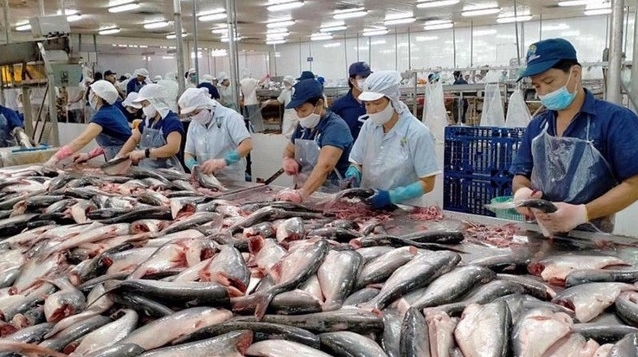
AsemconnectVietnam - Seafood export in the first four months of 2026 increased by nearly 12%, with expanding markets. Removing policy obstacles and proactively adapting will help the industry achieve its target of $12.3 billion in 2026.
Market impetus and widespread growth
According to a report by Ministry of Agriculture and Environment, value of seafood export in April 2026 is estimated at $947.8 million, bringing total export value for the first four months of the year to $3.59 billion, an increase of 11.9% compared to the same period in 2025. In context of volatile global trade, this result shows that Vietnam's seafood industry is maintaining a positive recovery momentum and gradually consolidating its growth foundation.
The three largest markets for Vietnamese seafood continue to be China, Japan and the United States, with market shares of 26.7%, 13.8% and 13% respectively. Among these, China stands out as the bright spot, showing the strongest growth among the top 15 key export markets.
At conference with industry associations to discuss measures to promote agricultural, forestry and aquatic product exports in 2026, Mr. Nguyen Hoai Nam, General Secretary of Vietnam Association of Seafood Processing and Export (VASEP), stated that China-Hong Kong region alone achieved over US$1 billion in exports after four months, an increase of over 16% compared to the same period last year, showing a clear recovery in consumption demand. Japan maintained a stable growth rate of 1.8%, contributing to overall growth of the industry.
Conversely, the US market decreased by about 6-7%, being only market in the large group to record a decline. However, this development is mainly short-term, stemming from technical barriers and policy adjustments, rather than a decline in demand.
According to Mr. Nguyen Hoai Nam, most seafood product groups recorded positive growth. Some key products such as shrimp and pangasius continue to play a pivotal role, while other marine products maintain stable production. Tuna, however, decreased by about 6%, reflecting pressure from the market and import regulations.
Proactive adaptation and enhanced competitiveness
Along with growth, seafood industry is facing increasingly stringent requirements from international markets. In particular, the two main markets, the United States and the European Union (EU), are continuously updating new regulations related to environment, traceability and social responsibility.
In EU, "due diligence" regulation requires businesses to self-assess their entire production chain according to sustainability criteria. This is an inevitable trend, forcing businesses to raise their governance standards while opening up opportunities for restructuring towards greater transparency and sustainability.
Meanwhile, in the United States, trade defense cases are putting significant pressure on the industry, especially shrimp. However, with close coordination between regulatory agencies, associations and businesses, many cases have yielded positive results, evidenced by a significant reduction in applied tariffs after protection process.
Besides pressures from export markets, internal bottlenecks are also being identified and addressed. Vietnam Association of Seafood Processing and Export (VASEP) has proposed two key groups of recommendations.
Firstly, improving mechanisms, policies and business environment, especially regarding administrative procedures. In context of rapidly changing international regulations, domestication is necessary, but it is crucial to ensure consistency and avoid unnecessary compliance costs for businesses.
In practice, some regulations between agricultural, financial and customs sectors lack uniformity, causing difficulties in implementation. For example, requirement to adjust documentation when there are minor losses in seafood shipments is not consistent with specific characteristics of the product and is currently being reviewed by relevant authorities for adjustment.
Secondly, it is necessary to strengthen policy dialogue between regulatory agencies and businesses. Proposal to hold regular dialogues twice a year is expected to help promptly identify obstacles, thereby providing faster and more practical solutions. In addition, the industry is also promoting solutions to enhance competitiveness, from perfecting traceability system to meet EU's IUU "yellow card" requirements, to investing in processing technology and supply chain management.
Regarding draft laws, including Environmental Protection Law, VASEP believes that further review is needed to reduce compliance costs for businesses. Currently, according to the plan, all factories must operate within industrial zones. However, even after connecting to centralized wastewater treatment system, businesses still have to invest in their own separate treatment systems to meet standards before discharging wastewater, which is then further treated by the industrial zone's system. This approach leads to increased investment and operating costs, which need to be considered for adjustment to ensure rationality and avoid duplication.
Amidst numerous intertwined challenges, prospects for fisheries sector remain positive. According to Mr. Nguyen Hoai Nam, if internal bottlenecks are effectively addressed and market demands are proactively adapted, export turnover in 2026 could increase by approximately US$1 billion.
It is projected that total export turnover for the year could reach approximately US$12.3 billion, higher than the US$11.3 billion of 2025. This is a realistic target, as growth drivers from the market are being strengthened, while policy solutions and business support are gradually proving effective.
Source: Vitic/ congthuong.vn
According to a report by Ministry of Agriculture and Environment, value of seafood export in April 2026 is estimated at $947.8 million, bringing total export value for the first four months of the year to $3.59 billion, an increase of 11.9% compared to the same period in 2025. In context of volatile global trade, this result shows that Vietnam's seafood industry is maintaining a positive recovery momentum and gradually consolidating its growth foundation.
The three largest markets for Vietnamese seafood continue to be China, Japan and the United States, with market shares of 26.7%, 13.8% and 13% respectively. Among these, China stands out as the bright spot, showing the strongest growth among the top 15 key export markets.
At conference with industry associations to discuss measures to promote agricultural, forestry and aquatic product exports in 2026, Mr. Nguyen Hoai Nam, General Secretary of Vietnam Association of Seafood Processing and Export (VASEP), stated that China-Hong Kong region alone achieved over US$1 billion in exports after four months, an increase of over 16% compared to the same period last year, showing a clear recovery in consumption demand. Japan maintained a stable growth rate of 1.8%, contributing to overall growth of the industry.
Conversely, the US market decreased by about 6-7%, being only market in the large group to record a decline. However, this development is mainly short-term, stemming from technical barriers and policy adjustments, rather than a decline in demand.
According to Mr. Nguyen Hoai Nam, most seafood product groups recorded positive growth. Some key products such as shrimp and pangasius continue to play a pivotal role, while other marine products maintain stable production. Tuna, however, decreased by about 6%, reflecting pressure from the market and import regulations.
Proactive adaptation and enhanced competitiveness
Along with growth, seafood industry is facing increasingly stringent requirements from international markets. In particular, the two main markets, the United States and the European Union (EU), are continuously updating new regulations related to environment, traceability and social responsibility.
In EU, "due diligence" regulation requires businesses to self-assess their entire production chain according to sustainability criteria. This is an inevitable trend, forcing businesses to raise their governance standards while opening up opportunities for restructuring towards greater transparency and sustainability.
Meanwhile, in the United States, trade defense cases are putting significant pressure on the industry, especially shrimp. However, with close coordination between regulatory agencies, associations and businesses, many cases have yielded positive results, evidenced by a significant reduction in applied tariffs after protection process.
Besides pressures from export markets, internal bottlenecks are also being identified and addressed. Vietnam Association of Seafood Processing and Export (VASEP) has proposed two key groups of recommendations.
Firstly, improving mechanisms, policies and business environment, especially regarding administrative procedures. In context of rapidly changing international regulations, domestication is necessary, but it is crucial to ensure consistency and avoid unnecessary compliance costs for businesses.
In practice, some regulations between agricultural, financial and customs sectors lack uniformity, causing difficulties in implementation. For example, requirement to adjust documentation when there are minor losses in seafood shipments is not consistent with specific characteristics of the product and is currently being reviewed by relevant authorities for adjustment.
Secondly, it is necessary to strengthen policy dialogue between regulatory agencies and businesses. Proposal to hold regular dialogues twice a year is expected to help promptly identify obstacles, thereby providing faster and more practical solutions. In addition, the industry is also promoting solutions to enhance competitiveness, from perfecting traceability system to meet EU's IUU "yellow card" requirements, to investing in processing technology and supply chain management.
Regarding draft laws, including Environmental Protection Law, VASEP believes that further review is needed to reduce compliance costs for businesses. Currently, according to the plan, all factories must operate within industrial zones. However, even after connecting to centralized wastewater treatment system, businesses still have to invest in their own separate treatment systems to meet standards before discharging wastewater, which is then further treated by the industrial zone's system. This approach leads to increased investment and operating costs, which need to be considered for adjustment to ensure rationality and avoid duplication.
Amidst numerous intertwined challenges, prospects for fisheries sector remain positive. According to Mr. Nguyen Hoai Nam, if internal bottlenecks are effectively addressed and market demands are proactively adapted, export turnover in 2026 could increase by approximately US$1 billion.
It is projected that total export turnover for the year could reach approximately US$12.3 billion, higher than the US$11.3 billion of 2025. This is a realistic target, as growth drivers from the market are being strengthened, while policy solutions and business support are gradually proving effective.
Source: Vitic/ congthuong.vn
Plan to strengthen trade promotion for handicraft products approved
Vietnam spent over $2.6 billion importing of corn, wheat, and soybeans
Da Nang's import and export growth, trade surplus of 15 million USD
Vietnam-ASEAN trade exceeds US$90 billion after 31 years of membership
Agricultural exports: shift from "quantity" to "quality" for competitiveness
Plan to strengthen trade promotion for handicraft products approved
Vietnam’s steel exports in first 4 months of 2026
Vietnam's growth challenge and transformation pressure
Promoting digital economy: driving force for growth
Industrial production in 4 months of 2026 increased
Vietnam introduces agricultural products at large-scale African trade forum
MoIT issues decision recognising Vietnam Logistics Day
Manufacturing remains main driver of industrial growth
Reference exchange rate rises slightly at week’s beginning

Public debt borrowing and repayment plan for 2026
Ensuring resources: Mobilizing sufficient and timely borrowed capital at reasonable costs and acceptable risks to meet expenditure needs ...Plan on implementation of high-tech law
Inter-sectoral legal support program for small and ...

Tourism destinations refresh offerings to welcome New ...
Across the Mekong Delta, many tourist sites have been busy upgrading their offerings. At the Con Son tourism site in Can Tho city, members ...Annual New Year festival shines in Da Nang
Phu Quoc emerging as a favourite global destination
Vietnam Airlines adds 270 flights to during 2026 New Year ...
