


Vietnam agricultural market wrap – May 6, 2026: Pepper and rice exports hold firm; coffee steady; durian slides on supply pressure
Wednesday, May 6,2026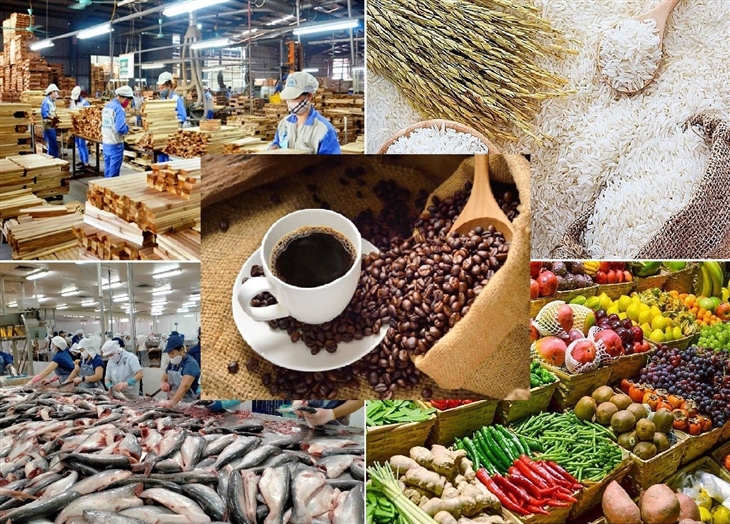
AsemconnectVietnam - Vietnam’s agricultural commodities markets showed a clear divergence on May 6, 2026, as pepper and rice maintained strong export momentum, while coffee prices stabilized after recent declines and durian prices fell sharply under mounting seasonal supply pressure. Meanwhile, the live hog market posted mixed movements across regions, and rubber prices remained largely flat amid subdued trading activity.
Coffee prices held steady amid weak demand
Domestic coffee prices were little changed across Vietnam’s Central Highlands, with farmgate prices ranging between VND 85,000 and VND 85,700 per kg. Dak Nong, part of Lam Dong province, recorded the highest level at VND 85,700 per kg, followed closely by Dak Lak and Gia Lai at around VND 85,600 per kg.
The sideways trend reflected subdued buying interest and a lack of fresh directional cues from global markets, following a period of consecutive declines. Traders remained cautious, with limited speculative activity.
On international markets, coffee prices were mixed. London robusta futures saw no new trades due to a public holiday in the UK, leaving July and September 2026 contracts unchanged at USD 3,364 per tonne and USD 3,275 per tonne, respectively. In New York, arabica futures showed marginal fluctuations: the July 2026 contract edged down 0.3% to 285.5 US cents per pound, while the September contract rose slightly to 276.2 cents per pound.
Analysts said the market continued to face pressure from a stronger U.S. dollar and expectations of a bumper crop in Brazil. Ample global supply outweighed concerns over potential disruptions linked to geopolitical tensions in the Middle East, keeping prices range-bound.
Pepper prices remained elevated on strong export performance
In contrast to coffee, Vietnam’s pepper market held firm at elevated levels, supported by robust export earnings. In the first four months of 2026, pepper export revenues exceeded USD 614 million, marking a sharp increase from a year earlier and reinforcing bullish sentiment.
Domestic pepper prices ranged from VND 140,000 to VND 144,000 per kg. Gia Lai was the only locality to record a slight decline of VND 500 per kg, easing to VND 140,000 per kg. Meanwhile, Dak Lak and Dak Nong (Lam Dong) maintained the highest levels at VND 144,000 per kg. Prices in Ho Chi Minh City stood at VND 142,500 per kg, while Dong Nai remained stable at around VND 142,000 per kg.
Globally, pepper prices moved sideways as tightening supply balanced steady demand. Vietnam’s black pepper export prices were quoted at USD 6,100–6,200 per tonne for 500 g/l and 550 g/l grades, broadly in line with Brazil’s ASTA 570 at USD 6,100 per tonne, but still below Indonesia’s levels at USD 6,966 per tonne.
In the white pepper segment, Vietnam’s export price held at USD 9,000 per tonne, compared with USD 9,178 per tonne for Indonesia’s Muntok grade and USD 12,200 per tonne for Malaysian white pepper.
Rice exports retained competitive edge despite slower domestic trading
The rice market in the Mekong Delta entered a quieter trading phase as fresh paddy supplies in farming households diminished. Transactions slowed across key provinces including Can Tho, Dong Thap, Vinh Long and Ca Mau, reflecting tighter availability and more cautious buying behavior.
According to the An Giang Department of Agriculture and Environment, prices of some fresh paddy varieties edged up by about VND 200 per kg. OM 18 and Dai Thom 8 were traded at VND 6,100–6,300 per kg. Other varieties remained stable, including OM 5451 at VND 5,600–5,700 per kg, IR 50404 at VND 5,400–5,500 per kg, and OM 34 at VND 5,100–5,200 per kg.
Export-grade rice prices were also steady. IR 504 was quoted at VND 8,600–8,700 per kg, CL 555 at VND 9,000–9,200 per kg, OM 18 at VND 8,700–8,850 per kg, and Dai Thom 8 at VND 9,200–9,400 per kg.
On the global stage, Vietnamese rice continued to command a premium. Vietnam’s 5% broken rice was priced at USD 490–500 per tonne, significantly higher than Thailand’s USD 390–394 per tonne and India’s USD 349–353 per tonne. Jasmine rice was offered at USD 496–500 per tonne, while 100% broken rice traded at USD 335–339 per tonne.
The strong pricing underscored sustained international demand and reflected improvements in quality and branding of Vietnamese rice exports.
Durian prices plunged amid peak harvest pressure
In contrast, Vietnam’s durian market faced a sharp downturn, with prices falling by VND 10,000–20,000 per kg at smaller collection points. The decline was driven primarily by a surge in supply as the Mekong Delta entered its peak harvest season, prompting sellers to offload inventory quickly.
Prices varied significantly by grade and variety. Thai durian VIP grade A dropped to around VND 116,000 per kg, while grade B ranged from VND 100,000–102,000 per kg and grade C from VND 80,000–82,000 per kg. Lower-grade selections saw grade A at VND 100,000–102,000 per kg, grade B at VND 80,000 per kg, and grade C falling to VND 60,000 per kg.
Ri6 durian prices were notably lower, with grade A at VND 42,000–43,000 per kg and grade B at VND 27,000–28,000 per kg. In the premium segment, Musang King grade A held at VND 90,000 per kg, while off-grade fruit declined to around VND 50,000 per kg. Black Thorn grade A was priced at VND 110,000 per kg, with grade B at VND 85,000–90,000 per kg.
In addition to supply pressure, stricter quality inspections and tighter controls on pesticide residues made traders more cautious, further weighing on prices in the near term.
Live hog prices showed mixed regional trends
Vietnam’s live hog market presented a mixed picture. In the north, stronger demand pushed prices up by about VND1,000 per kg in provinces such as Tuyen Quang, Thai Nguyen, Ninh Binh and Phu Tho. Regional prices ranged from VND64,000 to VND66,000 per kg, with Thai Nguyen and Hung Yen reaching the highest level at VND66,000 per kg.
In the central and Central Highlands regions, prices remained stable at VND64,000–69,000 per kg, reflecting a balance between supply and demand following the holiday period. Lam Dong and Dak Lak led the region at VND69,000 and VND68,000 per kg, respectively.
By contrast, southern markets saw slight corrections. Prices in Vinh Long and Can Tho fell by VND 1,000 per kg to around VND 68,000 per kg. Despite localized declines, the south continued to post the highest overall price range nationwide, at VND 68,000–70,000 per kg. Dong Nai, a key livestock hub, held steady at the peak level of VND 70,000 per kg.
Rubber market remained subdued with flat pricing
Rubber markets were largely quiet, with Asian exchanges showing limited movement. In Japan, the May 2026 contract held at 396 JPY per kg, while in Shanghai, the equivalent contract traded at around 17,340 CNY per tonne. On the SGX in Singapore, prices edged down slightly by less than 0.5% across several contracts, reflecting weak short-term demand.
Domestically, rubber producers maintained stable procurement prices to support supply chains. Mang Yang Rubber Company purchased latex at VND 463 and VND 458 per TSC kg for grades 1 and 2, respectively, while mixed coagulated rubber ranged from VND 404 to VND 459 per kg.
Phu Rieng Rubber Company held its buying price at VND 420 per TSC kg for latex and VND 390 per DRC kg for mixed rubber. In Ba Ria, latex prices ranged from VND 442 to VND 452 per TSC degree kg depending on quality, while mixed rubber was traded at VND 13,500–18,000 per kg.
Binh Long Rubber Company also maintained stable prices at VND 422–432 per TSC degree kg, highlighting efforts by domestic firms to stabilize the market amid external volatility.
Overview
Overall, Vietnam’s agricultural commodities market on May 6 reflected strong divergence across sectors. Rice and pepper remained key export pillars, benefiting from steady global demand and competitive pricing. Coffee prices stabilized but faced external pressures, while durian experienced a sharp correction due to seasonal oversupply. Meanwhile, live hog and rubber markets showed relative stability, with only modest regional fluctuations.
The near-term outlook suggests continued divergence, with export-driven commodities likely to remain resilient, while products exposed to seasonal supply cycles may face further volatility.
Source: Vitic
Vietnam’s cement and clinker exports totaled 9.99 million tonnes in first quarter of 2026
Consolidated document on conditions for assembling and importing automobiles issued
Exports of cassava and cassava products increased in first quarter of 2026
Vietnam’s petroleum imports increased by 76.74% in first quarter of 2026
CPI up 0.84% in April on rising energy, dining costs
Imports of computers, electronics, and components increased in first quarter of 2026
Hanoi's supporting industries face challenges to get double-digit growth
Technology bolsters growth confidence among Vietnam’s small businesses
Vietnam's industry spearheads transition to circular economy
Vietnam ranks 18th among world’s top exporters in 2025
Leading LNG import markets in first quarter of 2026
Vietnam-Singapore trade exchange increased strongly
Vietnam’s property market buoyed by domestic strength, infrastructure push
Vietnam’s Q1 e-commerce revenue jumps 47% to 5.7 billion USD on Shopee, TikTok Shop, Lazada


Public debt borrowing and repayment plan for 2026
Ensuring resources: Mobilizing sufficient and timely borrowed capital at reasonable costs and acceptable risks to meet expenditure needs ...Plan on implementation of high-tech law
Inter-sectoral legal support program for small and ...

Tourism destinations refresh offerings to welcome New ...
Across the Mekong Delta, many tourist sites have been busy upgrading their offerings. At the Con Son tourism site in Can Tho city, members ...Annual New Year festival shines in Da Nang
Phu Quoc emerging as a favourite global destination
Vietnam Airlines adds 270 flights to during 2026 New Year ...
