


Increasing localization rate and opening up growth potential for mechanical engineering industry
Friday, April 24,2026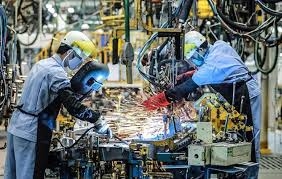
AsemconnectVietnam -
The mechanical engineering industry is growing rapidly, but its added value remains limited. Increasing the localization rate is considered the "key" to expanding growth potential, increasing competitiveness, and participating more deeply in the global value chain.
Rapid growth, but not yet a breakthrough
According to the Department of Industry (Ministry of Industry and Trade), mechanical engineering is one of the key industries of the economy, playing an important role in supplying raw materials and equipment for many other manufacturing sectors such as construction, automotive, electronics, energy, aviation, and many others. In Vietnam, over the past years, the mechanical engineering industry has made significant strides in growth, both in scale and product output, not only meeting domestic demand but also exporting.
According to a report by the Department of Industry, there are currently approximately 3,100 manufacturing enterprises nationwide with 53,000 production facilities, accounting for nearly 30% of the total number of manufacturing enterprises in Vietnam. The domestic mechanical engineering, machinery, and equipment industry has gradually mastered and participated in the production and supply chains for several large enterprises such as Toyota, Thaco, and Thanh Cong, creating momentum to promote the development of other industries and the economy.
Currently, Vietnam's mechanical engineering industry is focusing on three key areas: motorcycles and parts; tools and household mechanical products; and automobiles and automotive components. These three account for approximately 70% of domestic production value. This demonstrates that these are sectors with high domestic demand and stable growth.
Despite achieving many positive results, the Vietnam Association of Mechanical Engineering Enterprises (VAMI) believes that, despite the strong impacts of the Fourth Industrial Revolution, the level of mechanical engineering, especially precision engineering – the pillar of industrial production – remains backward compared to many other countries. Businesses face numerous challenges in technological innovation, keeping up with trends, improving labor skills, and enhancing infrastructure quality, etc. in order to participate in global supply chains and cope with intense competition from countries in the region and around the world.
According to economist Dinh Trong Thinh, despite many supportive policies, the Vietnamese mechanical engineering industry still mainly focuses on producing components, household goods, tools, and spare parts for automobiles. Domestically produced mechanical products currently only account for about 7% of the market.
Promoting technological innovation to increase localization
According to experts, to participate more deeply in the global value chain, domestic mechanical engineering enterprises need to change their investment mindset, especially in supporting mechanical engineering technology, shifting from scattered to specialized, from processing to innovation such as: product and process specialization, especially strategic components for automobiles, motorcycles, and electrical equipment; linking enterprises - research institutes - industrial parks, forming closed domestic production clusters; automating and digitizing production processes to meet international standards.
To overcome these barriers, the application of new technologies is no longer an option but a necessity. Integrating technologies such as CNC machining, robotic automation, modular systems, and digital design tools not only increases the domestic added value but also improves product quality and reduces costs.
Experts propose establishing a Mechanical Engineering and Manufacturing Technology Innovation Fund to support businesses investing in automation equipment, industrial robots, and production management software; and building specialized supporting industrial clusters based on Thailand's "Metal Valley" model. Simultaneously, they suggest encouraging technology transfer from FDI enterprises, promoting cooperation in training engineers and technicians; training high-quality human resources, and linking vocational training programs with the needs of modern industry.
On the local level, Ho Chi Minh City recently issued Plan No. 136/KH-UBND on implementing tasks and solutions to support the development of businesses and products in the mechanical engineering and automation industry in the city by 2026.
The plan aims to support the development of the mechanical engineering and automation industry, a key industry playing a driving role in promoting modernization and economic growth. Enhancing competitiveness, developing key and potential products, increasing the localization rate, and increasing the contribution of key industries to the city's economic growth, etc.
Specifically, Ho Chi Minh City will develop a list of “key industrial product groups and potential industrial product groups of the city for the period 2026 - 2030”. This will focus on increasing the proportion of precision mechanical products, industrial robots, and automation equipment.
According to Deputy Director of the Industry Department Nguyen Ngoc Thanh, the Ministry of Industry and Trade will continue to strongly develop downstream industries, including several sectors such as the energy industry, precision mechanical industries, and some manufacturing industries to ensure that supporting industries have the conditions to develop. This will attract multinational corporations to invest in large-scale projects in Vietnam. By promoting the production and assembly of finished products, the market for domestic supporting industries will be maintained and expanded, creating a foundation for domestic mechanical engineering enterprises to become suppliers and participate in the supply chains of enterprises producing and assembling final products.
CK
Source: VITIC/congthuong.vn
Seafood imports declined slightly in first quarter of 2026
Seafood exports increased in three months of 2026
Technology bolsters growth confidence among Vietnam’s small businesses
Hai Phong waives port infrastructure fees for liquid cargo through end-2026
Electronic fishing logbooks boost transparency, modernise fisheries management in Ho Chi Minh City
Vietnam’s property market buoyed by domestic strength, infrastructure push
Reference exchange rate drops 2 VND on April 22
Imports accelerate, powering exports, public revenues
Agricultural commodities market on April 22: Coffee surged on global momentum
Iron and steel imports in first quarter of 2026
Wood and wood product export markets in first quarter of 2026
Agricultural market update – April 21, 2026
Vietnam's industry spearheads transition to circular economy
National branding seen as strategic lever to elevate Vietnam’s global value chain position
