


Gia Lai wood industry: Overcoming challenges, achieving impressive growth
Thursday, April 16,2026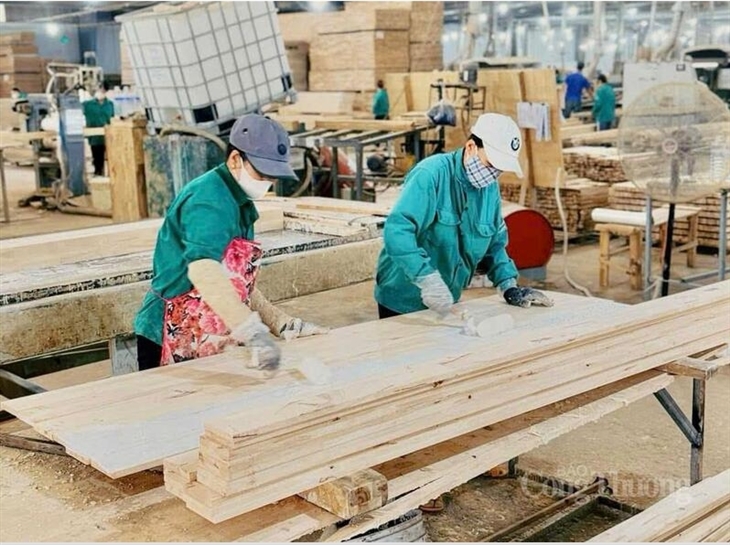
AsemconnectVietnam - Amidst a sluggish export environment, Gia Lai's wood industry continues to maintain positive growth, shifting towards high-value products and playing a pivotal role in the province's industrial development.
Bright spots from value shift
In the first quarter of 2026, Gia Lai's export turnover is estimated at approximately US$1.067 billion, a decrease of 3.3% compared to the same period last year. Overall picture shows a slowdown as western region experienced a sharp decline, while eastern region maintained relatively strong growth.
In this context, wood processing and wood products industry continues to emerge as an important "pillar." Not only contributing about 16% of the province's total industrial production value, this industry also demonstrates a clear transformation in quality of its growth.
Instead of relying on volume, many businesses have focused on high value-added product lines. In the first quarter of 2026, production of wooden furniture increased by 6.09% and export turnover increased by 19.6%. Notably, wicker furniture product group recorded outstanding growth, increasing by 33.08% in production and 40.5% in export turnover.
This result shows a structural shift: from simple processing to deep processing, from price competition to competition based on quality and design. This is also the "key" to helping the Gia Lai wood industry maintain its growth momentum in a volatile market.
Growth momentum in the early part of the year mainly came from the completion of orders signed at the end of the previous year. In addition, adjustments to tax policies in some major markets helped Vietnamese goods maintain their competitive advantage, limiting the risk of order cancellations, especially for large-scale businesses with stable supply chains.
In raw materials segment, wood chips and pellets continue to grow, however, profit margins are under pressure due to rising input costs. Nevertheless, the export market for wood pellets to Japan and South Korea remains relatively stable, helping to maintain production for businesses.
Currently, the province has dozens of wood chip and pellet processing plants with a large total capacity, providing a foundation for the industry's development. The future direction is to gradually reduce the proportion of raw material exports and increase the proportion of refined products and high-value furniture.
Enhancing adaptability
Global trade landscape is posing many new challenges. Fluctuations in tax policies, logistics costs and geopolitical situations are making wood exports more unpredictable.
Potential for sharply increased transportation costs, along with extended delivery times, is putting considerable pressure on businesses. Not only are input costs rising, but market forecasting is also becoming more difficult as the global supply chain is fraught with risks.
According to many businesses, current difficulties lie not only in pricing but also in market uncertainty. Supply of shipping vessels is unstable, logistics costs fluctuate, while customers are becoming increasingly cautious in placing orders and sensitive to price.
In light of this situation, many businesses have proactively adjusted their strategies, from diversifying markets to repositioning products. Markets such as North America, Europe, and some Asian countries continue to be prioritized, especially in segments requiring high quality and sustainability.
Mr. Le Anh Vu, Director of New Sun Import-Export Trading and Manufacturing Company Limited, believes that despite difficulties, there are still many opportunities if businesses proactively adapt. “We are determined not to wait for the market to recover but to improve ourselves, from improving production to expanding our customer base. Current orders, although smaller, are more stable and have higher demands, forcing businesses to change in a more professional direction,” Mr. Vu shared.
According to Mr. Vu, the company is actively investing in upgrading its production lines, optimizing costs and enhancing product design to increase value. Simultaneously, expanding into markets with stable demand such as Europe, Japan, and South Korea is considered a long-term strategy.
From a management perspective, Mr. Nguyen Dinh Kha, Deputy Director of Gia Lai Department of Industry and Trade, stated: Transportation costs may increase by 15-25% compared to before, goods have to remain longer at transit ports, incurring additional warehousing costs and affecting delivery schedules. These factors directly impact product prices and competitiveness, while purchasing power in many markets has not yet fully recovered. Therefore, decisive factor lies in the internal capacity of the enterprise, from product quality, production standards, traceability to meeting emission reduction requirements.
"We encourage businesses to enhance their internal capabilities, from production standards and traceability to meeting emission reduction requirements. At the same time, leveraging trade promotion systems and programs is also considered a crucial solution for expanding orders," Mr. Kha emphasized.
Source: Vitic/ congthuong.vn
In the first quarter of 2026, Gia Lai's export turnover is estimated at approximately US$1.067 billion, a decrease of 3.3% compared to the same period last year. Overall picture shows a slowdown as western region experienced a sharp decline, while eastern region maintained relatively strong growth.
In this context, wood processing and wood products industry continues to emerge as an important "pillar." Not only contributing about 16% of the province's total industrial production value, this industry also demonstrates a clear transformation in quality of its growth.
Instead of relying on volume, many businesses have focused on high value-added product lines. In the first quarter of 2026, production of wooden furniture increased by 6.09% and export turnover increased by 19.6%. Notably, wicker furniture product group recorded outstanding growth, increasing by 33.08% in production and 40.5% in export turnover.
This result shows a structural shift: from simple processing to deep processing, from price competition to competition based on quality and design. This is also the "key" to helping the Gia Lai wood industry maintain its growth momentum in a volatile market.
Growth momentum in the early part of the year mainly came from the completion of orders signed at the end of the previous year. In addition, adjustments to tax policies in some major markets helped Vietnamese goods maintain their competitive advantage, limiting the risk of order cancellations, especially for large-scale businesses with stable supply chains.
In raw materials segment, wood chips and pellets continue to grow, however, profit margins are under pressure due to rising input costs. Nevertheless, the export market for wood pellets to Japan and South Korea remains relatively stable, helping to maintain production for businesses.
Currently, the province has dozens of wood chip and pellet processing plants with a large total capacity, providing a foundation for the industry's development. The future direction is to gradually reduce the proportion of raw material exports and increase the proportion of refined products and high-value furniture.
Enhancing adaptability
Global trade landscape is posing many new challenges. Fluctuations in tax policies, logistics costs and geopolitical situations are making wood exports more unpredictable.
Potential for sharply increased transportation costs, along with extended delivery times, is putting considerable pressure on businesses. Not only are input costs rising, but market forecasting is also becoming more difficult as the global supply chain is fraught with risks.
According to many businesses, current difficulties lie not only in pricing but also in market uncertainty. Supply of shipping vessels is unstable, logistics costs fluctuate, while customers are becoming increasingly cautious in placing orders and sensitive to price.
In light of this situation, many businesses have proactively adjusted their strategies, from diversifying markets to repositioning products. Markets such as North America, Europe, and some Asian countries continue to be prioritized, especially in segments requiring high quality and sustainability.
Mr. Le Anh Vu, Director of New Sun Import-Export Trading and Manufacturing Company Limited, believes that despite difficulties, there are still many opportunities if businesses proactively adapt. “We are determined not to wait for the market to recover but to improve ourselves, from improving production to expanding our customer base. Current orders, although smaller, are more stable and have higher demands, forcing businesses to change in a more professional direction,” Mr. Vu shared.
According to Mr. Vu, the company is actively investing in upgrading its production lines, optimizing costs and enhancing product design to increase value. Simultaneously, expanding into markets with stable demand such as Europe, Japan, and South Korea is considered a long-term strategy.
From a management perspective, Mr. Nguyen Dinh Kha, Deputy Director of Gia Lai Department of Industry and Trade, stated: Transportation costs may increase by 15-25% compared to before, goods have to remain longer at transit ports, incurring additional warehousing costs and affecting delivery schedules. These factors directly impact product prices and competitiveness, while purchasing power in many markets has not yet fully recovered. Therefore, decisive factor lies in the internal capacity of the enterprise, from product quality, production standards, traceability to meeting emission reduction requirements.
"We encourage businesses to enhance their internal capabilities, from production standards and traceability to meeting emission reduction requirements. At the same time, leveraging trade promotion systems and programs is also considered a crucial solution for expanding orders," Mr. Kha emphasized.
Source: Vitic/ congthuong.vn
Vietnam’s long-term investment appeal remains intact: EuroCham
Commercial apartment supply shrinks, social housing gathers pace
Construction sector striving for high-growth target
Fuel taxes cut to 0% from April 16
Administrative import-export amended and supplemented
Industrial production increased by 9%, many key sectors achieved breakthroughs
Import and export 2026: expectation of accelerated growth from Q1 foundation
April 15, 2026 – Vietnam Agricultural Commodities Morning Brief
E-commerce boom shadowed by surge in counterfeit goods
State Treasury raises 3 bln USD worth of Government bonds in Q1
Import and export procedures to be simplified
Highlights of imports and exports in first quarter of 2026
Standardizing production, Gia Lai aims for $3.05 billion in export
What policies are needed for footwear industry in face of pressure of 90% of its production for export?


Public debt borrowing and repayment plan for 2026
Ensuring resources: Mobilizing sufficient and timely borrowed capital at reasonable costs and acceptable risks to meet expenditure needs ...Plan on implementation of high-tech law
Inter-sectoral legal support program for small and ...

Tourism destinations refresh offerings to welcome New ...
Across the Mekong Delta, many tourist sites have been busy upgrading their offerings. At the Con Son tourism site in Can Tho city, members ...Annual New Year festival shines in Da Nang
Phu Quoc emerging as a favourite global destination
Vietnam Airlines adds 270 flights to during 2026 New Year ...
