


April 15, 2026 – Vietnam Agricultural Commodities Morning Brief
Wednesday, April 15,2026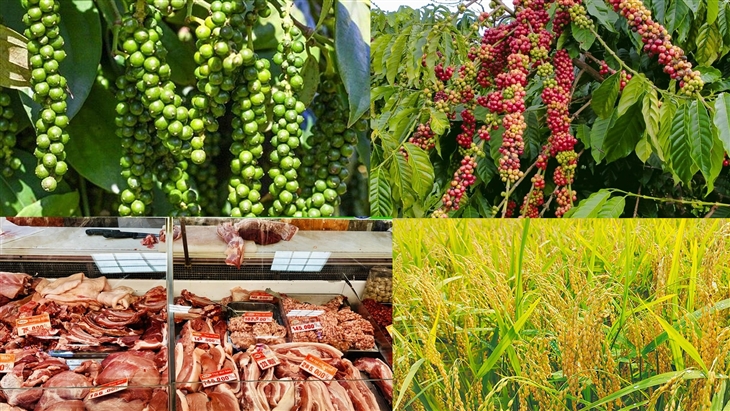
AsemconnectVietnam - Vietnam’s agricultural commodity markets opened firmer on Wednesday, with coffee and pepper prices climbing toward fresh highs amid tightening supply conditions, while durian prices showed a clear divergence between premium and lower-grade segments. At the same time, live hog prices extended modest gains across all regions, reflecting continued recovery in the livestock sector.
Coffee prices set a new benchmark both domestically and internationally. In Vietnam’s Central Highlands, the country’s main coffee-growing region, farmgate prices rose by between 500 and 600 dong per kilogram compared with the previous trading session. This pushed the overall price range to between 86,000 and 86,600 dong per kg, marking one of the highest levels recorded in recent weeks.
Dak Nong province, now administratively merged into Lam Dong, posted the strongest increase, with prices reaching 86,600 dong per kg. Other key producing areas, including Dak Lak and Gia Lai, followed closely, with prices climbing to around 86,500 dong per kg. Market participants attributed the upward movement primarily to tightening domestic supply and steady export demand.
On the global stage, robusta coffee futures traded on the London exchange also moved higher. The May 2026 contract rose by $27 per metric ton, or approximately 0.81%, to settle at $3,351 per ton. Meanwhile, the July contract gained $15 to reach $3,254 per ton. Arabica coffee futures on the New York exchange showed a similar upward trend, with the May contract increasing to 300.85 US cents per pound, marking its highest level in roughly two weeks. The rise suggested improving demand sentiment after a period of relative softness.
Pepper prices in Vietnam mirrored the positive trend seen in coffee markets. Domestic prices increased by between 500 and 1,000 dong per kg, bringing the trading range to between 138,500 and 140,000 dong per kg. The upper threshold of 140,000 dong per kg was recorded in Dak Nong (Lam Dong) and Dak Lak, while Gia Lai saw prices reach 139,000 dong per kg. In the southern consumption hubs of Ho Chi Minh City and Dong Nai, prices remained steady at around 138,500 dong per kg.
In export markets, however, Vietnamese black pepper prices remained largely unchanged, holding within the range of $6,100 to $6,200 per ton. Globally, the pepper market showed mixed but generally stable movements. Indonesian black pepper prices edged down slightly to $7,070 per ton, while Brazil maintained its price at $6,150 per ton. Malaysia continued to command a premium at $9,300 per ton. In the white pepper segment, Vietnamese and Malaysian prices held steady at $9,000 and $12,200 per ton respectively, while Indonesian white pepper prices softened marginally. Overall, the global pepper market appeared to lack strong upward momentum but also showed no signs of significant downward pressure.
Vietnam’s rice export sector continued to post gains despite subdued domestic trading activity in the Mekong Delta. Export prices for Vietnam’s 5% broken rice rose to between $460 and $465 per ton, up by $20 per ton compared with the previous week. Jasmine rice also edged higher, increasing by $2 to trade within the range of $454 to $458 per ton.
By contrast, competing exporters showed mixed trends. Thailand’s 5% broken rice prices declined slightly to between $378 and $382 per ton, while India maintained stable pricing at around $336 to $340 per ton. The widening price gap highlighted Vietnam’s strong positioning in higher-quality rice segments, supported by consistent demand from key import markets.
In the domestic market, paddy prices in the Mekong Delta remained relatively stable. According to data from the An Giang Department of Agriculture and Environment, fresh OM 18 and Dai Thom 8 paddy varieties were traded at around 5,800 to 6,100 dong per kg. OM 5451 was priced between 5,500 and 5,600 dong per kg, while IR 50404 ranged from 5,400 to 5,600 dong per kg. Trading activity was described as slow, with limited fluctuations in price levels.
Durian prices presented a more complex picture, with sharp divergence across different quality grades and varieties. In the Mekong Delta, premium Thai durian (Grade A) maintained very high price levels, ranging from 160,000 to 165,000 dong per kg. However, lower-grade products experienced noticeable declines, with Grade B falling to between 115,000 and 130,000 dong per kg, and Grade C dropping further to around 80,000 to 90,000 dong per kg.
The Ri6 durian segment showed signs of a modest recovery. Grade A Ri6 was traded at between 90,000 and 105,000 dong per kg, while Grade B ranged from 75,000 to 90,000 dong per kg. Grade C prices hovered between 55,000 and 65,000 dong per kg. Meanwhile, high-end varieties such as Musang King continued to dominate the premium segment, with Grade A prices reaching between 135,000 and 142,000 dong per kg. Chuong Bo durian (Grade A) was recorded at around 85,000 to 95,000 dong per kg.
In the rubber sector, global prices showed mixed movements, while the domestic market remained relatively stable. In Vietnam, major rubber producers maintained steady procurement prices. Mang Yang Rubber Company quoted latex prices at 463 per TSC kg, while Phu Rieng Rubber Company held at 420 dong per TSC kg. Prices in Binh Long ranged from 422 to 432 dong per TSC kg.
Internationally, rubber futures displayed divergent trends across major exchanges. On Japan’s TOCOM exchange, RSS3 rubber futures for May 2026 delivery declined by 1.20% to 376.40 yen per kg. Similarly, futures on the Shanghai exchange weakened across multiple contracts, reflecting subdued demand in China’s industrial sector. In contrast, the Singapore Exchange (SGX) saw gains, with TSR20 rubber futures for June 2026 rising to 202.60 US cents per kg. Market participants noted that global rubber prices were likely to remain range-bound in the near term, pending clearer signals from industrial demand.
Live hog prices across Vietnam continued their upward trajectory, albeit at a moderate pace. Prices increased by approximately 1,000 dong per kg in several localities, pushing the national peak to 69,000 dong per kg.
In northern Vietnam, provinces such as Ninh Binh and Lao Cai recorded prices of around 64,000 dong per kg, while Hanoi, Bac Ninh, and Hung Yen maintained higher levels at approximately 65,000 dong per kg. In the central and Central Highlands regions, prices in Thanh Hoa, Nghe An, Quang Ngai, and Gia Lai rose to around 64,000 dong per kg. Dak Lak and Lam Dong continued to lead the region with prices reaching 68,000 dong per kg.
Southern markets also saw incremental gains. An Giang, Can Tho, and Tay Ninh all reported price increases, with Tay Ninh, Dong Nai, and Ho Chi Minh City recording the highest levels nationwide at 69,000 dong per kg. The steady rise in hog prices underscored improving supply-demand balance and ongoing recovery in the livestock sector after previous periods of volatility.
Overall, Vietnam’s agricultural markets on April 15 reflected a broadly positive tone, with key commodities such as coffee, pepper, and rice supported by firm demand and tightening supply. However, divergence in products like durian highlighted underlying segmentation within the market. Analysts expected prices to remain relatively firm in the near term, though global demand trends and macroeconomic conditions would continue to play a decisive role.
Source: Vitic/Nongthonviet
State Treasury raises 3 bln USD worth of Government bonds in Q1
Import and export procedures to be simplified
Highlights of imports and exports in first quarter of 2026
Standardizing production, Gia Lai aims for $3.05 billion in export
What policies are needed for footwear industry in face of pressure of 90% of its production for export?
AI technology and sustainable solutions for Vietnam's textile and garment industry
Vietnam agricultural markets in morning trade April 14: Coffee and durian edged higher
Japan - Vietnam's important shrimp market
Program for expanding into international markets in 2026–2030 period approved
Goods import and export in Q1 2026 increased by 23%, reaching $250 billion
Seafood export accelerate in Q1, businesses shift market focus
Rice export in Q1/2026 are expected to decrease in value, increasing pressure for restructuring
Coffee export expected to exceed US$8 billion
VinFast EV sales jump 127%, cementing market dominance
