


AI technology and sustainable solutions for Vietnam's textile and garment industry
Tuesday, April 14,2026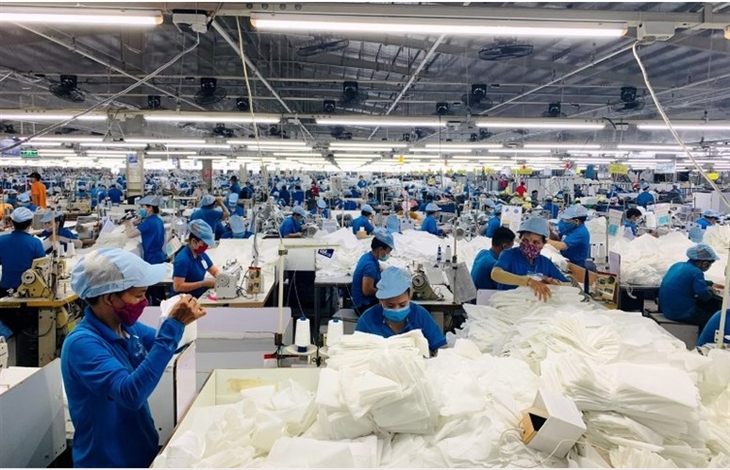
AsemconnectVietnam - Application of artificial intelligence (AI) and green production is becoming a decisive factor in competitiveness of Vietnam's textile and garment industry.
Trends in AI technology and sustainable solutions for textile and garment industry
In the first quarter of 2026, total import and export turnover is estimated at US$249.5 billion, an increase of 23% compared to the same period last year, of which exports reached US$122.93 billion, an increase of 19.1% compared to the same period. This is a relatively high growth rate in current context.
Conflicts in the Middle East in recent months have created far-reaching impacts on global supply chains, most notably energy and logistics. Many shipping companies, instead of going through Strait of Hormuz, now have to detour around Cape of Good Hope (South Africa), which has extended shipping times and increased fuel, insurance and freight costs. This directly impacts production costs and the competitiveness of exported goods, especially in the textile, footwear and agricultural and aquatic product sectors.
Currently, conflict in the Middle East shows no signs of abating. According to Mr. Nguyen Anh Son, Director of Import-Export Department (Ministry of Industry and Trade), import and export activities in the coming quarters will continue to face many difficulties, especially if geopolitical conflict in the Middle East persists.
Mr. Vu Duc Giang, Chairman of Vietnam Textile and Garment Association (VITAS), added that textile and garment businesses are entering a new phase, with orders requiring faster delivery times, more competitive prices and especially higher quality.
In this general context, trend of technological innovation, optimizing production through digitalization, automation and operational support technologies, especially application of artificial intelligence (AI), is becoming a mandatory requirement to optimize costs, increase productivity and meet sustainable production standards.
“Businesses need to focus on investing in factory infrastructure that meets international standards, investing in technology, automation, robotics and even applying AI in production”, Mr. Vu Duc Giang emphasized.
According to Chairman of VITAS, investing in modern, energy-saving and environmentally friendly production solutions will be the "key" for businesses to adapt to new development trends.
Optimizing production through digitalization, automation and operational support technologies
In an interview with a reporter from Industry and Trade Newspaper at International Exhibition of Textile and Garment Industry, Equipment - Raw Materials and Fabrics 2026 (SaigonTex 2026 - SaigonFabric 2026), Mr. Nguyen Van Tiep, Deputy General Director of Phon Thinh - Tae Gwang Co., Ltd., said that textile and garment businesses have already converted about 30-40% of their equipment to new technologies. This has improved productivity, stabilized quality and reduced reliance on labor.
According to Mr. Tiep, automation trend is comprehensive, encompassing cutting, sewing, finishing, packaging and factory operations. At the exhibition, the company showcased a synchronized ecosystem of solutions, focusing on optimizing production through digitalization, robotics and operational support technologies.
Solutions such as robots, automatic sewing machines, autonomous vehicles, fabric cutting and spreading systems and energy-saving equipment not only improve production efficiency but also contribute to "greening" the factory. Notably, many technologies have reasonable costs and a quick return on investment, approximately 8-10 months.
From perspective of manufacturing company, Mr. Than Duc Viet, General Director of May 10 Corporation, stated that automation and greening in production and textile products are strategic factors, not only for May 10 but for the entire Vietnamese textile industry.
According to Mr. Viet, many customers from international markets are now demanding an increased proportion of recycled materials in products, so businesses must adapt to meet customer requirements. In addition, May 10 is also increasing its use of technology that requires less fuel, especially in context of rising global oil prices. Simultaneously, it is increasing use of renewable energy such as solar power systems to meet green production standards.
“Technological innovation and a focus on ‘greening’ are becoming inevitable trends for manufacturing businesses, and textile and garment businesses cannot afford to be left out if they want to keep up with future trends”, Mr. Viet emphasized.
According to Mr. Dang Duy Quang, Director of Phong Phu International Factory - Long An Branch, “For our industry, automation is very important, especially in the context of a volatile labor market. Automation not only helps increase productivity but also creates a competitive advantage and enhances our reputation with customers”, Mr. Quang said.
Based on his experience working with businesses, Mr. Ham Kwan Sooh, International Business Director of Phon Thinh - Tae Gwang Co., Ltd., assessed that the biggest obstacle for textile and garment businesses lies not only in initial investment cost but also in the pressure to change and the adaptability of the factory's operating staff.
“Although many businesses understand necessity and benefits of new technologies, in practical implementation process, they face difficulties such as a shortage of technical personnel capable of adopting new technologies, workers unfamiliar with new operating methods and concerns about potential impacts on product quality during the initial transition period. At the same time, many businesses are also wondering whether investment in new technologies will truly be effective and suitable for actual operating conditions of each factory”, said Mr. Ham Kwan Sooh.
Mr. Kieu Van Hung, Business Director of Phon Thinh - Tae Gwang Co., Ltd., stated that to help businesses find solutions for transformation that suit their financial capabilities and reduce cost pressure, instead of focusing solely on the latest technologies, Phon Thinh - Tae Gwang chooses an approach that aligns with practical operations of each business.
“Every year, we conduct on-site surveys at our clients' businesses and advise on suitable solutions. Principle is to increase productivity to increase profits, while utilizing existing equipment and matching financial capacity of each factory. In addition, we have a team of technicians and experts always on standby to provide technical support and technology transfer, helping businesses operate their equipment efficiently”, Mr. Hung said.
Mr. Wu Liang Jie, Chairman of Hikari (Shanghai), stated that in recent years, more and more garment companies worldwide have successfully transformed and upgraded with help of comprehensive smart solutions.
In Vietnamese market, Hikari's products have provided a wide range of equipment for various stages of production, meeting innovation needs of Vietnamese businesses, including many large-scale enterprises such as May 10, Young One Nam Dinh, Phong Phu, etc.
“Currently, Vietnamese textile and garment industry is facing new challenges such as rising labor costs and labor shortages, but this is an inevitable trend that any country will encounter when developing to a certain stage. In fact, core competitive advantage of Vietnamese textile and garment industry has already been established. The next stage will be integration of more advanced technologies, more modern equipment, more efficient management methods and new operational thinking, thereby both addressing challenges and opening up a new phase of development,” said Mr. Wu Liang Jie.
Mr. Nguyen Anh Son, Director of Import-Export Department (Ministry of Industry and Trade), stated that in addition to closely monitoring developments and providing timely warnings and forecasts, it is necessary to maximize use of 17 existing free trade agreements and seek additional trading partners and regions that need Vietnamese goods through alliances such as the Eurasian Economic Union, as this does not depend on transportation through the Middle East – it can be done by sea and air.
These are very practical solutions that Ministry of Industry and Trade and other ministries and agencies can offer to support businesses. “We shouldn't be overly perfectionist and sign new free trade agreements; we can sign agreements with potential markets with relatively similar conditions for Vietnamese goods, such as Pakistan, Egypt, Algeria and South American countries…”, Mr. Son added.
Chairman of Vietnam Textile and Garment Association, Vu Duc Giang, further affirmed that association will continue to support businesses in technological transformation process by connecting resources, providing market information and assisting in accessing new technological trends.
According to Mr. Giang, Vietnam Textile and Garment Association is continuing to promote businesses based on three major pillars. The first pillar is continued diversification: diversifying markets, diversifying business partners and diversifying production lines.
Secondly, it is building solutions to link supply chains between businesses, aiming to form a development strategy that is not overly dependent on a single market, while still ensuring diversification. Currently, Vietnam exports to approximately 137-138 markets globally, showing that we are no longer overly dependent on any single market.
Third pillar is that association always advises businesses to develop with both heart and mind, with a strategy suitable for each business. That strategy needs to adapt to general trends and meet market demands, especially green development, sustainable development, emission reduction and energy saving.
“Only by doing so can the Vietnamese textile and garment industry stand firm in a context of both competition and cost reduction. At that point, trends such as automation, robotics, and AI applications will become important driving forces”, Mr. Giang emphasized.
In addition, association is also developing action programs and organizing in-depth training courses to help businesses gain more information to refine their development strategies.
Source: Vitic/ congthuong.vn
In the first quarter of 2026, total import and export turnover is estimated at US$249.5 billion, an increase of 23% compared to the same period last year, of which exports reached US$122.93 billion, an increase of 19.1% compared to the same period. This is a relatively high growth rate in current context.
Conflicts in the Middle East in recent months have created far-reaching impacts on global supply chains, most notably energy and logistics. Many shipping companies, instead of going through Strait of Hormuz, now have to detour around Cape of Good Hope (South Africa), which has extended shipping times and increased fuel, insurance and freight costs. This directly impacts production costs and the competitiveness of exported goods, especially in the textile, footwear and agricultural and aquatic product sectors.
Currently, conflict in the Middle East shows no signs of abating. According to Mr. Nguyen Anh Son, Director of Import-Export Department (Ministry of Industry and Trade), import and export activities in the coming quarters will continue to face many difficulties, especially if geopolitical conflict in the Middle East persists.
Mr. Vu Duc Giang, Chairman of Vietnam Textile and Garment Association (VITAS), added that textile and garment businesses are entering a new phase, with orders requiring faster delivery times, more competitive prices and especially higher quality.
In this general context, trend of technological innovation, optimizing production through digitalization, automation and operational support technologies, especially application of artificial intelligence (AI), is becoming a mandatory requirement to optimize costs, increase productivity and meet sustainable production standards.
“Businesses need to focus on investing in factory infrastructure that meets international standards, investing in technology, automation, robotics and even applying AI in production”, Mr. Vu Duc Giang emphasized.
According to Chairman of VITAS, investing in modern, energy-saving and environmentally friendly production solutions will be the "key" for businesses to adapt to new development trends.
Optimizing production through digitalization, automation and operational support technologies
In an interview with a reporter from Industry and Trade Newspaper at International Exhibition of Textile and Garment Industry, Equipment - Raw Materials and Fabrics 2026 (SaigonTex 2026 - SaigonFabric 2026), Mr. Nguyen Van Tiep, Deputy General Director of Phon Thinh - Tae Gwang Co., Ltd., said that textile and garment businesses have already converted about 30-40% of their equipment to new technologies. This has improved productivity, stabilized quality and reduced reliance on labor.
According to Mr. Tiep, automation trend is comprehensive, encompassing cutting, sewing, finishing, packaging and factory operations. At the exhibition, the company showcased a synchronized ecosystem of solutions, focusing on optimizing production through digitalization, robotics and operational support technologies.
Solutions such as robots, automatic sewing machines, autonomous vehicles, fabric cutting and spreading systems and energy-saving equipment not only improve production efficiency but also contribute to "greening" the factory. Notably, many technologies have reasonable costs and a quick return on investment, approximately 8-10 months.
From perspective of manufacturing company, Mr. Than Duc Viet, General Director of May 10 Corporation, stated that automation and greening in production and textile products are strategic factors, not only for May 10 but for the entire Vietnamese textile industry.
According to Mr. Viet, many customers from international markets are now demanding an increased proportion of recycled materials in products, so businesses must adapt to meet customer requirements. In addition, May 10 is also increasing its use of technology that requires less fuel, especially in context of rising global oil prices. Simultaneously, it is increasing use of renewable energy such as solar power systems to meet green production standards.
“Technological innovation and a focus on ‘greening’ are becoming inevitable trends for manufacturing businesses, and textile and garment businesses cannot afford to be left out if they want to keep up with future trends”, Mr. Viet emphasized.
According to Mr. Dang Duy Quang, Director of Phong Phu International Factory - Long An Branch, “For our industry, automation is very important, especially in the context of a volatile labor market. Automation not only helps increase productivity but also creates a competitive advantage and enhances our reputation with customers”, Mr. Quang said.
Based on his experience working with businesses, Mr. Ham Kwan Sooh, International Business Director of Phon Thinh - Tae Gwang Co., Ltd., assessed that the biggest obstacle for textile and garment businesses lies not only in initial investment cost but also in the pressure to change and the adaptability of the factory's operating staff.
“Although many businesses understand necessity and benefits of new technologies, in practical implementation process, they face difficulties such as a shortage of technical personnel capable of adopting new technologies, workers unfamiliar with new operating methods and concerns about potential impacts on product quality during the initial transition period. At the same time, many businesses are also wondering whether investment in new technologies will truly be effective and suitable for actual operating conditions of each factory”, said Mr. Ham Kwan Sooh.
Mr. Kieu Van Hung, Business Director of Phon Thinh - Tae Gwang Co., Ltd., stated that to help businesses find solutions for transformation that suit their financial capabilities and reduce cost pressure, instead of focusing solely on the latest technologies, Phon Thinh - Tae Gwang chooses an approach that aligns with practical operations of each business.
“Every year, we conduct on-site surveys at our clients' businesses and advise on suitable solutions. Principle is to increase productivity to increase profits, while utilizing existing equipment and matching financial capacity of each factory. In addition, we have a team of technicians and experts always on standby to provide technical support and technology transfer, helping businesses operate their equipment efficiently”, Mr. Hung said.
Mr. Wu Liang Jie, Chairman of Hikari (Shanghai), stated that in recent years, more and more garment companies worldwide have successfully transformed and upgraded with help of comprehensive smart solutions.
In Vietnamese market, Hikari's products have provided a wide range of equipment for various stages of production, meeting innovation needs of Vietnamese businesses, including many large-scale enterprises such as May 10, Young One Nam Dinh, Phong Phu, etc.
“Currently, Vietnamese textile and garment industry is facing new challenges such as rising labor costs and labor shortages, but this is an inevitable trend that any country will encounter when developing to a certain stage. In fact, core competitive advantage of Vietnamese textile and garment industry has already been established. The next stage will be integration of more advanced technologies, more modern equipment, more efficient management methods and new operational thinking, thereby both addressing challenges and opening up a new phase of development,” said Mr. Wu Liang Jie.
Mr. Nguyen Anh Son, Director of Import-Export Department (Ministry of Industry and Trade), stated that in addition to closely monitoring developments and providing timely warnings and forecasts, it is necessary to maximize use of 17 existing free trade agreements and seek additional trading partners and regions that need Vietnamese goods through alliances such as the Eurasian Economic Union, as this does not depend on transportation through the Middle East – it can be done by sea and air.
These are very practical solutions that Ministry of Industry and Trade and other ministries and agencies can offer to support businesses. “We shouldn't be overly perfectionist and sign new free trade agreements; we can sign agreements with potential markets with relatively similar conditions for Vietnamese goods, such as Pakistan, Egypt, Algeria and South American countries…”, Mr. Son added.
Chairman of Vietnam Textile and Garment Association, Vu Duc Giang, further affirmed that association will continue to support businesses in technological transformation process by connecting resources, providing market information and assisting in accessing new technological trends.
According to Mr. Giang, Vietnam Textile and Garment Association is continuing to promote businesses based on three major pillars. The first pillar is continued diversification: diversifying markets, diversifying business partners and diversifying production lines.
Secondly, it is building solutions to link supply chains between businesses, aiming to form a development strategy that is not overly dependent on a single market, while still ensuring diversification. Currently, Vietnam exports to approximately 137-138 markets globally, showing that we are no longer overly dependent on any single market.
Third pillar is that association always advises businesses to develop with both heart and mind, with a strategy suitable for each business. That strategy needs to adapt to general trends and meet market demands, especially green development, sustainable development, emission reduction and energy saving.
“Only by doing so can the Vietnamese textile and garment industry stand firm in a context of both competition and cost reduction. At that point, trends such as automation, robotics, and AI applications will become important driving forces”, Mr. Giang emphasized.
In addition, association is also developing action programs and organizing in-depth training courses to help businesses gain more information to refine their development strategies.
Source: Vitic/ congthuong.vn
Japan - Vietnam's important shrimp market
Program for expanding into international markets in 2026–2030 period approved
Goods import and export in Q1 2026 increased by 23%, reaching $250 billion
Seafood export accelerate in Q1, businesses shift market focus
Rice export in Q1/2026 are expected to decrease in value, increasing pressure for restructuring
Coffee export expected to exceed US$8 billion
VinFast EV sales jump 127%, cementing market dominance
Vietnam’s key industries to be boosted
Vietnam's industrial sector and new opportunity
Maintaining export momentum towards double-digit growth
Fuel price surge puts mounting pressure on CPI: NSO
Dong Nai leads in banana exports with a production volume exceeding 700,000 tonnes per year
Vietnam's tilapia exports accelerated, requiring long-term strategy
Vietnam’s cassava exports saw positive growth in first quarter of 2026
