


Maintaining export momentum towards double-digit growth
Friday, April 10,2026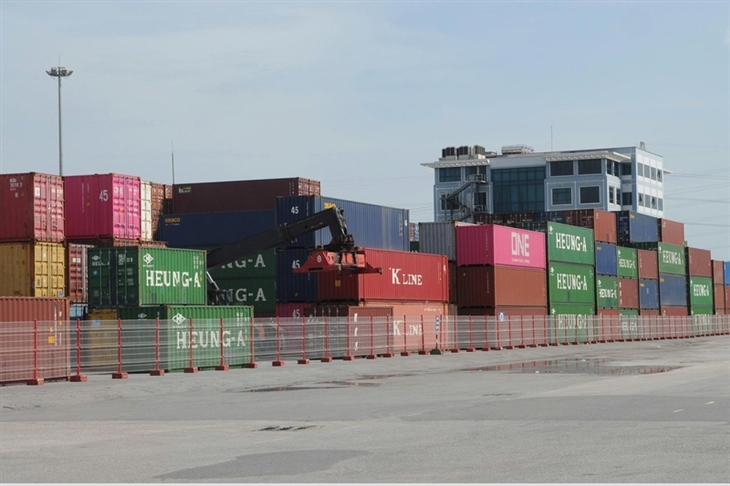
AsemconnectVietnam - In context of a volatile global market, maintaining export momentum is a key requirement to achieve double-digit growth.
Export and import activity rebounds, production gets on track
The first quarter of 2026 saw a positive start to import and export activities, with total turnover reaching nearly US$250 billion, a 23% increase compared to the same period last year. Export reached US$122.93 billion, a 19.1% increase; import reached US$126.57 billion, a 27% increase. Notably, in March alone, turnover exceeded US$93 billion, a strong increase compared to the previous month, showing that trade flows have truly become vibrant again.
Structure of import and export continues to show role of manufacturing sector. Export mainly come from processed industrial goods, while imports focus on production materials, directly serving production and export activities.
This development clearly reflects the trend of businesses increasing input imports to prepare for orders in the coming months. Production is therefore being accelerated right from the beginning of the year. Growth in the first quarter is not only reflected in numbers, but also shows that production and trade activities have resumed.
However, in current context, challenge is not just about growth. Conclusion of the 2nd Plenum of the 14th Central Committee clearly stated that in a period of 2026-2030, global situation will continue to change rapidly, strongly and unpredictably. Under these conditions, goal of "double-digit" growth requires not only an increase in quantity, but also an improvement in quality and resilience of economy.
Therefore, exports and imports not only play a role in driving growth, but also demonstrate the economy's ability to adapt to external fluctuations. Speaking to reporters from Industry and Trade Newspaper, Mr. Nguyen Anh Son, Director of Import-Export Department (Ministry of Industry and Trade), stated that current geopolitical fluctuations are directly impacting global supply chains.
“Even if conflict ends soon, supply chain disruptions, empty container shortages and transit bottlenecks may persist for some time. Transportation costs are unlikely to decrease immediately, affecting import and export activities not only in Vietnam but globally,” Mr. Nguyen Anh Son said.
Maintaining export momentum to achieve double-digit growth targets
Conclusions of the 2nd Plenum of the 14th Central Committee not only set targets but also clearly demanded an approach: proactive, flexible, and realistic. For import and export, this requirement is primarily reflected in forecasting capabilities.
In a rapidly changing market, slow information leads to missed opportunities and inaccurate forecasts cost orders. Therefore, improving forecast quality is no longer just a technical task, but a condition for effective management. “It is necessary to grasp information promptly and improve forecast quality to be closer to reality in order to have appropriate solutions for each industry and sector. On that basis, management agencies can be more proactive in managing and responding to market fluctuations,” Mr. Nguyen Anh Son emphasized.
Along with that is requirement to regulate pace of import and export appropriately, ensuring a smooth flow of goods. When logistics costs increase and delivery times lengthen, if not managed well, it will lead to goods congestion, increased costs and reduced competitiveness of businesses.
On a broader level, conclusions of the 2nd Central Committee Conference set out requirement to diversify markets, effectively utilize free trade agreements, and expand into new markets. This is not just a short-term solution, but a long-term direction to reduce dependence and increase resilience.
A key point is need to shift growth model. Exports can no longer rely on low-cost advantages; instead, they must compete on quality, standards, and added value. Requirements for greening, traceability and environmental and social standards are becoming mandatory, no longer optional.
Simultaneously, domestic market is identified as a crucial support. When external market fluctuates, domestic consumption not only helps maintain production but also creates room for businesses to adjust their strategies.
Source: Vitic/ congthuong.vn
The first quarter of 2026 saw a positive start to import and export activities, with total turnover reaching nearly US$250 billion, a 23% increase compared to the same period last year. Export reached US$122.93 billion, a 19.1% increase; import reached US$126.57 billion, a 27% increase. Notably, in March alone, turnover exceeded US$93 billion, a strong increase compared to the previous month, showing that trade flows have truly become vibrant again.
Structure of import and export continues to show role of manufacturing sector. Export mainly come from processed industrial goods, while imports focus on production materials, directly serving production and export activities.
This development clearly reflects the trend of businesses increasing input imports to prepare for orders in the coming months. Production is therefore being accelerated right from the beginning of the year. Growth in the first quarter is not only reflected in numbers, but also shows that production and trade activities have resumed.
However, in current context, challenge is not just about growth. Conclusion of the 2nd Plenum of the 14th Central Committee clearly stated that in a period of 2026-2030, global situation will continue to change rapidly, strongly and unpredictably. Under these conditions, goal of "double-digit" growth requires not only an increase in quantity, but also an improvement in quality and resilience of economy.
Therefore, exports and imports not only play a role in driving growth, but also demonstrate the economy's ability to adapt to external fluctuations. Speaking to reporters from Industry and Trade Newspaper, Mr. Nguyen Anh Son, Director of Import-Export Department (Ministry of Industry and Trade), stated that current geopolitical fluctuations are directly impacting global supply chains.
“Even if conflict ends soon, supply chain disruptions, empty container shortages and transit bottlenecks may persist for some time. Transportation costs are unlikely to decrease immediately, affecting import and export activities not only in Vietnam but globally,” Mr. Nguyen Anh Son said.
Maintaining export momentum to achieve double-digit growth targets
Conclusions of the 2nd Plenum of the 14th Central Committee not only set targets but also clearly demanded an approach: proactive, flexible, and realistic. For import and export, this requirement is primarily reflected in forecasting capabilities.
In a rapidly changing market, slow information leads to missed opportunities and inaccurate forecasts cost orders. Therefore, improving forecast quality is no longer just a technical task, but a condition for effective management. “It is necessary to grasp information promptly and improve forecast quality to be closer to reality in order to have appropriate solutions for each industry and sector. On that basis, management agencies can be more proactive in managing and responding to market fluctuations,” Mr. Nguyen Anh Son emphasized.
Along with that is requirement to regulate pace of import and export appropriately, ensuring a smooth flow of goods. When logistics costs increase and delivery times lengthen, if not managed well, it will lead to goods congestion, increased costs and reduced competitiveness of businesses.
On a broader level, conclusions of the 2nd Central Committee Conference set out requirement to diversify markets, effectively utilize free trade agreements, and expand into new markets. This is not just a short-term solution, but a long-term direction to reduce dependence and increase resilience.
A key point is need to shift growth model. Exports can no longer rely on low-cost advantages; instead, they must compete on quality, standards, and added value. Requirements for greening, traceability and environmental and social standards are becoming mandatory, no longer optional.
Simultaneously, domestic market is identified as a crucial support. When external market fluctuates, domestic consumption not only helps maintain production but also creates room for businesses to adjust their strategies.
Source: Vitic/ congthuong.vn
Dong Nai leads in banana exports with a production volume exceeding 700,000 tonnes per year
Vietnam's tilapia exports accelerated, requiring long-term strategy
Vietnam’s cassava exports saw positive growth in first quarter of 2026
Vietnam’s agricultural markets on April 9
QR, mobile payments on the rise, ATM usage declines
Vietnam sees ample opportunities in AI-powered economy
Vietnam’s seafood exports increased in first quarter of 2026
Vietnam advised to build sustainable linkages for bioethanol production
Vietnam's main economic indexes in March of 2026
Textile industry expo gathers over 1,000 firms
Domestic Seafood Market – March 2026
Vietnam Commodities Morning Update – April 8
Vietnam's agricultural, forestry, and fisheries exports in first quarter of 2026
Vietnam's trade deficit reached US$3.64 billion in first quarter of 2026

Public debt borrowing and repayment plan for 2026
Ensuring resources: Mobilizing sufficient and timely borrowed capital at reasonable costs and acceptable risks to meet expenditure needs ...Plan on implementation of high-tech law
Inter-sectoral legal support program for small and ...

Tourism destinations refresh offerings to welcome New ...
Across the Mekong Delta, many tourist sites have been busy upgrading their offerings. At the Con Son tourism site in Can Tho city, members ...Annual New Year festival shines in Da Nang
Phu Quoc emerging as a favourite global destination
Vietnam Airlines adds 270 flights to during 2026 New Year ...
