


Vietnam advised to build sustainable linkages for bioethanol production
Thursday, April 9,2026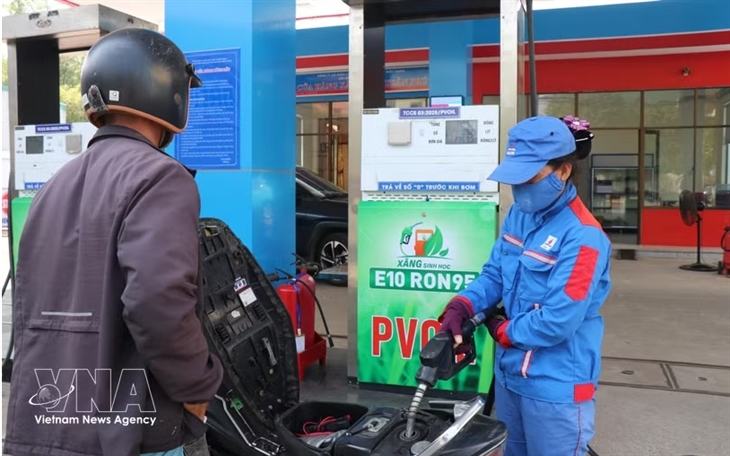
AsemconnectVietnam - According to the Vietnam Biofuels Association, the country currently operates six fuel ethanol plants with a combined designed capacity of approximately 600,000 cubic metres per year. At full capacity, these facilities could meet around 40% of the demand for E10 RON95 blending. However, securing sufficient feedstock to operate at full capacity continues to face considerable difficulties.
As demand for blending E10 RON95 biofuel continues to rise, ensuring a stable supply of input materials such as cassava and maize for ethanol production remains a significant challenge, requiring coordinated and comprehensive solutions.
Feedstock supply remains unstable
According to the Vietnam Biofuels Association, the country currently operates six fuel ethanol plants with a combined designed capacity of approximately 600,000 cubic metres per year. At full capacity, these facilities could meet around 40% of the demand for E10 RON95 blending. However, securing sufficient feedstock to operate at full capacity continues to face considerable difficulties.
In practice, most domestically produced ethanol is derived from cassava, a feedstock with limited availability and relatively low efficiency, leading to higher production costs.
Associate Prof. Dr. Chu Tien Quang, former head of the rural development policy department at the Institute for Policy and Strategy Studies, noted that local cassava cultivation areas have been shrinking due to declining yields, rapid soil degradation and environmental impacts. In addition, fragmented farming and limited mechanisation have kept productivity low and harvesting costs high. Farmers also lack incentives to cultivate cassava due to low purchase prices and the absence of stable off-take contracts.
Sharing a similar view, Nguyen Tri Ngoc, Vice Chairman and General Secretary of the Vietnam General Council of Agriculture and Rural Development, said that cassava cultivation linked to ethanol feedstock supply has been promoted for years. However, ensuring sustainability requires appropriate policies and technical processes, as cassava is both a valuable raw material for biofuel production and a potential source of environmental overexploitation.
From a business perspective, Pham Van Tuan, Director of the Nha Xanh Vietnam One-Member Ltd. Co., stated that his firm’s ethanol feedstock is primarily sourced from cassava and maize. Cassava is entirely procured domestically, while maize is sourced both locally and imported from South American markets such as Argentina and Brazil, as well as from the US.
He added that maize offers a more stable supply and consistent quality in terms of starch content, impurities and technical specifications for ethanol production. By contrast, cassava is highly seasonal, with abundant supply and low prices during harvest periods, followed by sharp price increases in the off-season.
Developing integrated value chains
To ensure the sustainable development of feedstock areas, it is essential to build strong linkages between farmers, cooperatives and processing enterprises. In particular, companies must guarantee off-take agreements and offer sufficiently attractive purchase prices to sustain raw material zones, Quang underlined.
Alongside value chain development, better utilisation of existing agricultural by-products, such as bran, straw and corn cobs, should also be considered a key solution for ensuring feedstock supply for ethanol production. This approach would help reduce environmental pollution, minimise waste and prove far more cost-effective than establishing new cultivation zones, he added.
Similarly, Ngoc proposed that farmers should be placed at the centre of feedstock development, with mechanisms ensuring stable income per unit of land.
According to Do Van Tuan, Chairman of the Vietnam Biofuels Association, it takes several years to develop an ethanol production industry. In Vietnam, stronger linkages within the ethanol supply chain will be a key driver for expanding production.
Drawing on industry experience, Tuan stressed that additional policy support is needed to foster the sustainable development of the biofuels sector. This includes clearly zoning off key cultivation areas for maize and cassava to supply ethanol plants, alongside investment in transport and irrigation infrastructure to reduce logistics and procurement costs.
Furthermore, the Government should consider granting corporate income tax exemptions or reductions for a period of 5–10 years for ethanol production projects in order to encourage long-term investment. With the current import tariff on ethanol set at 5%, businesses have called for this level to be maintained to provide reasonable protection for domestic production./.
Source: VNA
Textile industry expo gathers over 1,000 firms
Domestic Seafood Market – March 2026
Vietnam Commodities Morning Update – April 8
Vietnam's agricultural, forestry, and fisheries exports in first quarter of 2026
Vietnam's trade deficit reached US$3.64 billion in first quarter of 2026
Domestic rice market in March 2026: price stable
Agricultural Commodities Update – April 7, 2026 (Morning Session)
Dong Thap intensifies action to tackle IUU fishing
Imports of several agricultural products reached billion USD in Q1
Industrial production increased by 9%, many key sectors achieved breakthroughs
Retail, service sectors show optimistic signals in Q1
Agricultural Market Report April 6th: Durian and Coffee Prices Drop Sharply Under Supply Pressure
Ministry proposes advance mechanism for fuel price stabilisation fund
Vietnamese online exporters rewrite the rules of the game


Public debt borrowing and repayment plan for 2026
Ensuring resources: Mobilizing sufficient and timely borrowed capital at reasonable costs and acceptable risks to meet expenditure needs ...Plan on implementation of high-tech law
Inter-sectoral legal support program for small and ...

Tourism destinations refresh offerings to welcome New ...
Across the Mekong Delta, many tourist sites have been busy upgrading their offerings. At the Con Son tourism site in Can Tho city, members ...Annual New Year festival shines in Da Nang
Phu Quoc emerging as a favourite global destination
Vietnam Airlines adds 270 flights to during 2026 New Year ...
