


Vietnam Commodities Morning Update – April 8
Wednesday, April 8,2026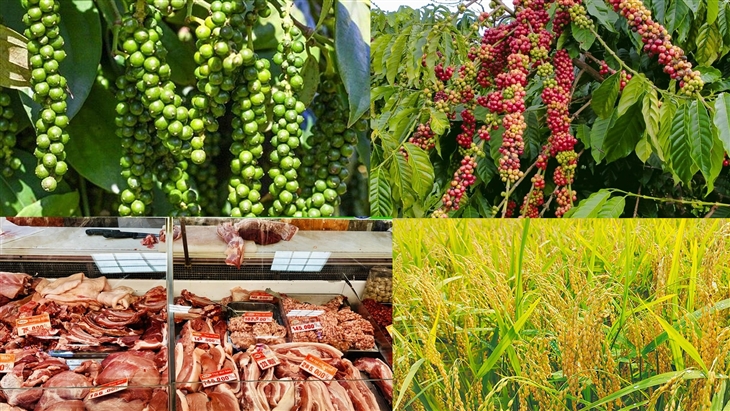
AsemconnectVietnam - Vietnam’s domestic agricultural markets presented a broadly stable to firmer tone on Wednesday morning, with gains in southern live hog prices leading the upward momentum, while key commodities including coffee, rice and durian largely held steady at relatively high levels. Market participants remained cautious, with most sectors lacking a clear directional breakout amid balanced supply-demand conditions and subdued trading activity.
Vietnam’s coffee market moved sideways after a recent period of correction, as buying and selling interests appeared evenly matched. Domestic prices were reported steady at an average of around 89,200 dong per kg, reflecting a wait-and-see attitude among farmers and traders.
Vietnam’s domestic pepper market recorded a modest recovery, with prices rising by approximately 500 dong per kg across major growing regions. This uptick helped the market move out of a prolonged consolidation phase that had persisted in recent weeks.
Durian continued to be one of the strongest-performing agricultural commodities in Vietnam, with prices holding firm at elevated levels, particularly in the Mekong Delta region. Premium varieties remained in high demand, supported by strong export interest and limited high-quality supply.
Rice trading activity in the Mekong Delta remained subdued, as limited supply and slow demand kept transactions at a modest pace. Despite the overall quiet market, some categories of export-grade rice recorded slight price increases.
Natural rubber markets displayed mixed performance across major trading hubs. In Tokyo, rubber futures gained support, with the April 2026 contract rising 1.76% to 386.7 yen per kg, driven by technical buying and currency movements.
Vietnam’s live hog market continued its upward trajectory, with the southern region leading the gains. Dong Nai emerged as the focal point, with prices rising to 69,000 dong per kg, the highest level recorded nationwide.
Overall, Vietnam’s agricultural commodity markets on April 8 reflected a stable yet cautious environment. While certain sectors such as live hogs and pepper showed signs of recovery, most commodities remained range-bound due to balanced fundamentals and a lack of strong external catalysts.
Vietnam's trade deficit reached US$3.64 billion in first quarter of 2026
Domestic rice market in March 2026: price stable
Agricultural Commodities Update – April 7, 2026 (Morning Session)
Dong Thap intensifies action to tackle IUU fishing
Imports of several agricultural products reached billion USD in Q1
Industrial production increased by 9%, many key sectors achieved breakthroughs
Retail, service sectors show optimistic signals in Q1
Agricultural Market Report April 6th: Durian and Coffee Prices Drop Sharply Under Supply Pressure
Ministry proposes advance mechanism for fuel price stabilisation fund
Vietnamese online exporters rewrite the rules of the game
Vietnam’s exports in maintained growth in Q1
Vietnam’s manufacturing PMI fell in March
Agricultural market April 5th: Coffee prices reversed downward, export rice prices increased by $30/ton
Vietnam agricultural markets April 3: Coffee and live hog prices rebounded, durian diverged sharply at the open


Public debt borrowing and repayment plan for 2026
Ensuring resources: Mobilizing sufficient and timely borrowed capital at reasonable costs and acceptable risks to meet expenditure needs ...Plan on implementation of high-tech law
Inter-sectoral legal support program for small and ...

Tourism destinations refresh offerings to welcome New ...
Across the Mekong Delta, many tourist sites have been busy upgrading their offerings. At the Con Son tourism site in Can Tho city, members ...Annual New Year festival shines in Da Nang
Phu Quoc emerging as a favourite global destination
Vietnam Airlines adds 270 flights to during 2026 New Year ...
