


Vietnam agricultural markets April 3: Coffee and live hog prices rebounded, durian diverged sharply at the open
Friday, April 3,2026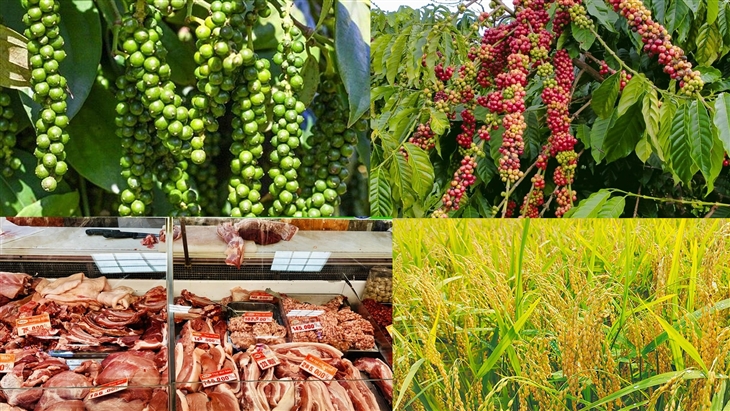
AsemconnectVietnam - Vietnam’s agricultural markets presented a mixed picture in early trading on Friday, as coffee and live hog prices rebounded after a period of weakness, while durian prices declined sharply across several segments. Rice, pepper, and rubber markets remained broadly stable, with only modest fluctuations recorded both domestically and on international exchanges.
Coffee prices in the Central Highlands opened higher, extending a recovery trend that had begun in the previous session. Traders reported stronger buying interest emerging after a series of declines, supporting prices across key producing provinces.
Dak Nong led the upward movement, with prices rising by 700 dong per kilogram to 90,200 dong, marking the highest level in the region. In Dak Lak and Gia Lai, coffee prices increased by 800 dong per kilogram, reclaiming the psychologically important threshold of 90,000 dong per kilogram after several consecutive sessions of losses.
Overall, domestic coffee prices were quoted between 89,700 dong and 90,200 dong per kilogram at the opening, reflecting what market participants described as a technical rebound amid improving demand sentiment.
On international markets, price movements remained mixed between the two major coffee varieties. On the London exchange, robusta coffee futures for May 2026 delivery rose by 0.8%, or 28 U.S. dollars per tonne, to 3,521 dollars per tonne. The July contract also advanced by 23 dollars to 3,428 dollars per tonne.
In contrast, arabica coffee futures on the New York exchange edged lower. The May 2026 contract fell by 0.55 U.S. cents per pound to 297.8 cents per pound, while the July contract posted a slight gain, indicating ongoing volatility and divergence in market expectations.
Pepper prices in the domestic market remained steady at elevated levels during the morning session, with key producing regions showing little change from previous levels. Dak Lak and Dak Nong continued to anchor the market at 139,000 dong per kilogram, supported by tightening supply conditions.
Prices in Ba Ria–Vung Tau were reported at 138,500 dong per kilogram, while Gia Lai and Dong Nai maintained levels around 138,000 dong per kilogram.
Globally, pepper prices showed mixed trends. According to data from the International Pepper Community, Indonesian black pepper prices declined slightly to 7,120 dollars per tonne. Meanwhile, Brazil’s ASTA 570 black pepper rose by 50 dollars per tonne to 6,150 dollars per tonne.
Malaysian black pepper prices remained unchanged at 9,300 dollars per tonne. Vietnam’s export prices for black pepper were stable in the range of 6,000 to 6,100 dollars per tonne for grades 500 g/l and 550 g/l, reflecting cautious sentiment among exporters.
In the white pepper segment, Indonesia’s Muntok white pepper declined slightly to 9,381 dollars per tonne. Malaysia and Vietnam maintained prices at 12,200 dollars and 8,900 dollars per tonne, respectively.
Durian prices, by contrast, experienced significant volatility at the opening, with a downward trend dominating most segments, particularly for Thai durian and Ri6 varieties.
In the Mekong Delta, Thai durian VIP grade A was quoted between 150,000 and 160,000 dong per kilogram, while grade B ranged from 130,000 to 145,000 dong and grade C from 115,000 to 125,000 dong per kilogram.
Lower-quality Thai durian categories recorded sharper declines. Grade A “sample” fruit was priced between 110,000 and 120,000 dong per kilogram, while grade B ranged from 88,000 to 100,000 dong and grade C from 75,000 to 90,000 dong. Lower-grade and surplus fruit traded between 55,000 and 70,000 dong per kilogram, depending on quality.
Ri6 durian prices were also under pressure. Grade A fruit in the Mekong Delta was purchased at 80,000 to 86,000 dong per kilogram, while grade B ranged from 65,000 to 71,000 dong and grade C from 60,000 to 65,000 dong. Lower grades traded at 50,000 to 55,000 dong, while defective fruit was quoted at around 65,000 dong per kilogram.
In higher-end segments, Musang King durian maintained relatively firm prices, with grade A ranging from 133,000 to 140,000 dong per kilogram depending on quality and storage conditions, while grade B was priced between 110,000 and 113,000 dong. Chuong Bo durian was traded at 70,000 to 85,000 dong per kilogram for grade A and 55,000 to 70,000 dong for grade B.
Rice markets in the Mekong Delta showed mixed movements, with paddy prices edging higher while milled rice remained largely unchanged. Trading activity improved compared with previous sessions, although price movements were limited.
In Long An province, Winter-Spring paddy prices continued to decline, and most buyers suspended new purchases amid falling rice prices. In An Giang, late-harvest paddy saw limited transactions, as most output had already been contracted. Dong Thap reported slow trading, with farmers offering small volumes.
According to local agricultural authorities, fresh paddy prices increased slightly. OM 18 rose by 50 dong per kilogram to 5,700–5,800 dong, while IR 50404 increased by 200 dong to 5,400–5,500 dong. OM 5451 gained 100 dong to 5,400–5,600 dong per kilogram.
Other varieties, including Dai Thom 8 and OM 4218, remained relatively stable within previously recorded ranges.
Rice prices, however, showed little change. In An Giang, trading remained slow, with limited buying interest from warehouses. At Sa Dec market, trading activity was largely suspended, while in Tien Giang province, only small volumes of rice were traded, with prices declining slightly for lower-quality grades.
Across the Mekong Delta, prices for key rice varieties such as OM 5451, OM 18 and IR 50404 held steady compared with the previous session. Retail rice prices at traditional markets also remained unchanged, with premium varieties commanding higher prices.
By-products showed mixed trends, with broken rice prices increasing slightly, while bran prices declined.
On export markets, Vietnam’s rice prices remained competitive compared with Thailand and India, although exporters faced mounting challenges from global market volatility and rising logistics costs.
According to the Thai Rice Exporters Association, Thailand’s 5% broken rice price increased by 10 dollars per tonne to 384 dollars per tonne. Vietnam’s equivalent grade rose by 9 dollars to between 361 and 365 dollars per tonne, while jasmine rice increased by 12 dollars to 431–435 dollars per tonne.
In contrast, Pakistan’s 5% broken rice price declined slightly by 2 dollars per tonne, while India’s prices for both white and parboiled rice fell by between 3 and 6 dollars per tonne.
Market participants said that although export volumes had increased, total export value had declined, reflecting pressure from global price fluctuations and higher transportation costs.
Meanwhile, data from the Philippine Statistics Authority showed that the country’s rice stockpiles reached 1.88 million tonnes in early March, up 16.5% year-on-year. The increase was driven primarily by government reserves, which rose sharply, while household and commercial inventories also expanded.
Analysts said the data underscored efforts by the Philippine government to stabilize food supply amid growing food security concerns, which could have implications for regional rice demand in the coming months.
Overall, the morning session reflected a cautiously balanced market, with selective rebounds in some commodities offset by continued weakness in others. Traders said price movements at the open were likely to remain sensitive to both domestic supply conditions and global market developments.
Source: Vitic
Fourth livestream to bring safe food to consumers
Vietnam Airlines maintains 12 direct routes linking Vietnam, Europe
State budget revenue up 10.2% in Q1
Vietnam to proactively response to Middle East conflicts and stabilize agricultural supply chains
Agricultural, forestry and fishery exports and imports showed positive growth in Q1
Vietnam Report names top construction material firms for 2026
Toyota sales in Vietnam double in March
Energy security push gains urgency as global risks rise
Vietnam Commodities Market Update – April 2, 2026 (Thursday Morning)
Input costs surge, manufacturing growth slows in March: report
Opportunities and challenges of Vietnamese tilapia in US market
Australia: potential market for Vietnamese shrimp amidst global trade fluctuations
Vietnam’s agricultural commodity markets – April 1, 2026
Seafood businesses seek oportunities in Brazil amid Middle East turmoil
