


Italian scholar praises Vietnam’s energy security strategy
Tuesday, March 31,2026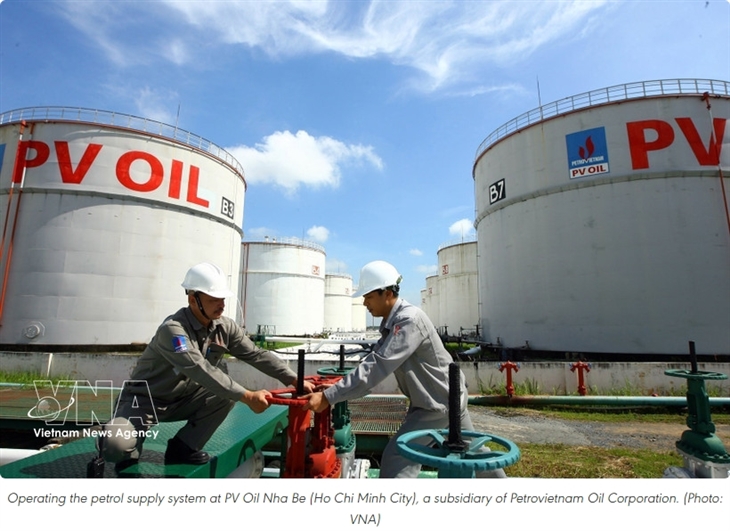
AsemconnectVietnam - Like other Asia-Pacific economies, Vietnam is closely monitoring developments in the Gulf region. Despite possessing considerable oil and gas reserves, rapid industrialisation has made the country a net importer of both gas and oil.
Andrea Fais, Editor-in-Chief of Scenari Internazionali magazine based in Perugia, Italy, has praised Vietnam’s energy security strategy, highlighting its shift from a supply-focused mindset toward a proactive, diversified and sustainable model.
He noted that Vietnam is promoting renewable energy, improving efficiency, and developing a competitive and transparent energy market to support rapid growth and deeper global integration.
Like other Asia-Pacific economies, Vietnam is closely monitoring developments in the Gulf region. Despite possessing considerable oil and gas reserves, rapid industrialisation has made the country a net importer of both gas and oil.
Fais noted that Vietnam’s goal of becoming a high-income economy by 2045 will require sustained per capita GDP growth of around 6% annually over the next two decades, driven by higher productivity and a transition towards innovation-based and sustainable development models, alongside energy and ecological transformation.
Vietnam’s Environmental Industry Development Programme for 2025–2030 outlines measures supporting wastewater and emissions treatment, solid and hazardous waste management, and environmental monitoring systems.
In the long term, optimising the energy mix through efficient national distribution infrastructure will be crucial. While reducing external dependency risks remains important, Fais stressed that no country can achieve complete energy independence in an interconnected world. Regional initiatives such as the ASEAN Power Grid and the ASEAN Plan of Action for Energy Cooperation 2026–2030 will therefore play an important role in enhancing supply resilience and accelerating energy transition.
The scholar also shared Italy’s experience in responding to energy shocks while maintaining long-term strategies, noting the country’s measures to control domestic fuel prices and international cooperation efforts to strengthen energy ties with partners.
Global crises, especially in Eastern Europe and the Middle East, he said, have prompted Italy to reassess its long-term energy security strategy. With installed renewable capacity reaching about 83.5 GW, renewables accounted for 41% of Italy’s electricity demand in 2025, according to grid operator Terna, though fossil fuels continue to play an essential role.
Fais noted that economic globalisation has deepened interdependence in energy markets, requiring more pragtical and proactive diplomatic approaches from Europe in addressing international crises./.
Source: en.vietnamplus.vn/italian-scholar-praises-vietnams-energy-security-strategy-post340152.vnp
He noted that Vietnam is promoting renewable energy, improving efficiency, and developing a competitive and transparent energy market to support rapid growth and deeper global integration.
Like other Asia-Pacific economies, Vietnam is closely monitoring developments in the Gulf region. Despite possessing considerable oil and gas reserves, rapid industrialisation has made the country a net importer of both gas and oil.
Fais noted that Vietnam’s goal of becoming a high-income economy by 2045 will require sustained per capita GDP growth of around 6% annually over the next two decades, driven by higher productivity and a transition towards innovation-based and sustainable development models, alongside energy and ecological transformation.
Vietnam’s Environmental Industry Development Programme for 2025–2030 outlines measures supporting wastewater and emissions treatment, solid and hazardous waste management, and environmental monitoring systems.
In the long term, optimising the energy mix through efficient national distribution infrastructure will be crucial. While reducing external dependency risks remains important, Fais stressed that no country can achieve complete energy independence in an interconnected world. Regional initiatives such as the ASEAN Power Grid and the ASEAN Plan of Action for Energy Cooperation 2026–2030 will therefore play an important role in enhancing supply resilience and accelerating energy transition.
The scholar also shared Italy’s experience in responding to energy shocks while maintaining long-term strategies, noting the country’s measures to control domestic fuel prices and international cooperation efforts to strengthen energy ties with partners.
Global crises, especially in Eastern Europe and the Middle East, he said, have prompted Italy to reassess its long-term energy security strategy. With installed renewable capacity reaching about 83.5 GW, renewables accounted for 41% of Italy’s electricity demand in 2025, according to grid operator Terna, though fossil fuels continue to play an essential role.
Fais noted that economic globalisation has deepened interdependence in energy markets, requiring more pragtical and proactive diplomatic approaches from Europe in addressing international crises./.
Source: en.vietnamplus.vn/italian-scholar-praises-vietnams-energy-security-strategy-post340152.vnp
Deputy PM’s visit to US sparks strong interest in Vietnam int’l financial centre
US firms eye expanding fintech investment in Vietnam
Vietnam pledges partnership to develop resilient, green supply chains: Party leader
ASEAN opens new export momentum for Vietnam
PM attends Vietnam – Russian Federation Business Forum in Moscow
Vietnamese mission in Geneva discusses new developments in US tariff policy
Vietnam, Russia expand room for, elevate trade cooperation
Vietnam, Australia boost cooperation in agriculture, food sectors
Vietnam, US forge new growth momentum in technology era
Phu Tho, Thailand boost investment cooperation, business connectivity
Vietnam, Switzerland push to accelerate Vietnam – EFTA FTA talks
Measures sought to help Vietnamese firms expand investment in Indonesia
Upcoming general election signals political stability, stronger parliamentary diplomacy: ambassador
Upcoming general election sparks expectations for new development phase
