


Bringing Vietnam-Japan fisheries cooperation to level of regional value chain linkage
Monday, March 16,2026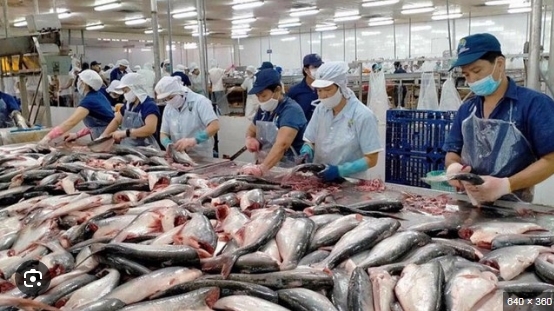
AsemconnectVietnam - Fisheries cooperation between Vietnam and Japan is moving beyond purely commercial frameworks, gradually forming a two-way value chain linking production, processing, technology and sustainable development.
A sustainable pillar in bilateral economic cooperation
Fisheries cooperation between Vietnam and Japan is one of the deepest, most stable and sustainable bilateral economic links over the past decades. In overall picture of bilateral trade cooperation, fisheries sector stands out as a particularly important pillar, representing both significant import and export turnover and acting as a "stepping stone" to promote upgrading of production and processing capabilities in Vietnam's fisheries industry.
Not only is Japan an important consumer market, but it also has a profound influence on formation of standards, quality management methods and supply chain structure of Vietnam's current fisheries industry.
For many years, Japan has consistently been among the top three largest seafood import markets for Vietnam, with turnover remaining stable at around US$1.5–1.7 billion per year. Key export items such as shrimp, squid, octopus, tuna and various types of marine fish are all product groups requiring high standards of food safety, residue control, traceability and quality consistency.
Maintaining market share in Japan over a long period clearly reflects ability of Vietnamese businesses to meet stringent requirements and also demonstrates increasing trust of Japanese partners in the Vietnamese seafood supply chain.
Conversely, Japan is also among the top four largest seafood suppliers to Vietnam, with import turnover remaining above US$300 million in 2025. Items such as scallops, salmon, snapper, mackerel, anchovies, tuna, etc., not only serve domestic consumption but are also important raw materials for deep processing and re-export.
This shows that Vietnam-Japan seafood relationship is not simply a one-way "buy-sell" relationship, but has developed into a closely intertwined two-way trade structure in consumption, processing and distribution in both economies.
In fact, seafood supply chain between two countries is increasingly interconnected. Vietnam exports its key products from aquaculture and fishing to Japan, while importing high-quality seafood raw materials from Japan for domestic processing and re-export to third markets. Both sides participate in a regional value chain, where roles of businesses are mutually supportive.
Notably, in over 30 years of cooperation, Japanese businesses have not only provided a consumer market but also contributed to upgrading overall operational capacity of Vietnam's seafood industry through transfer of quality management standards, food safety procedures, cold storage technology and advanced processing technology. Many of Vietnam's modern processing plants are now designed and operated according to technical requirements from Japanese partners, creating an important foundation for expansion into other high-end markets.
Road for expanding cooperation in seafood value chain
Vietnam Association of Seafood Processing and Export assesses that, based on this existing cooperation foundation, there is still significant room for Japanese businesses to continue investing and participating more deeply in seafood value chain in Vietnam. This includes areas such as high-tech aquaculture and breeding technology, automation in processing, cold chain logistics systems and smart cold storage – which are currently some of the "bottlenecks" in Vietnam's seafood industry. In addition, there are new areas such as digital traceability, ESG-standard management, emission reduction and sustainable development – areas where Japanese businesses have clear strengths and Vietnam has a great need.
With Japan's increasing reliance on imported seafood and increasingly stringent requirements for sustainability and supply security, Vietnam has opportunity to become one of long-term strategic pillars for seafood supply to Japanese market.
Vietnam's advantages lie not only in its production scale and stable supply capacity, but also in its large processing enterprise system, its flexibility in adapting to market standards, and its long-standing cooperation with Japanese partners. With further support in sustainable aquaculture technology, cold chain logistics and supply chain management, Vietnam can completely elevate its position from "supplier" to "strategic partner" in Japan's seafood food security structure.
"Seafood is one of very few sectors where the Vietnam-Japan relationship has developed into a relatively complete two-way value chain, from trade, investment, technology to quality standards. If further cooperation in technology, logistics and sustainable development is promoted, this could become a model Vietnam-Japan food supply chain, which can be replicated in many other sectors in the future", Vietnam Association of Seafood Processing and Export stated.
Source: Vitic/ congthuong.vn
Fisheries cooperation between Vietnam and Japan is one of the deepest, most stable and sustainable bilateral economic links over the past decades. In overall picture of bilateral trade cooperation, fisheries sector stands out as a particularly important pillar, representing both significant import and export turnover and acting as a "stepping stone" to promote upgrading of production and processing capabilities in Vietnam's fisheries industry.
Not only is Japan an important consumer market, but it also has a profound influence on formation of standards, quality management methods and supply chain structure of Vietnam's current fisheries industry.
For many years, Japan has consistently been among the top three largest seafood import markets for Vietnam, with turnover remaining stable at around US$1.5–1.7 billion per year. Key export items such as shrimp, squid, octopus, tuna and various types of marine fish are all product groups requiring high standards of food safety, residue control, traceability and quality consistency.
Maintaining market share in Japan over a long period clearly reflects ability of Vietnamese businesses to meet stringent requirements and also demonstrates increasing trust of Japanese partners in the Vietnamese seafood supply chain.
Conversely, Japan is also among the top four largest seafood suppliers to Vietnam, with import turnover remaining above US$300 million in 2025. Items such as scallops, salmon, snapper, mackerel, anchovies, tuna, etc., not only serve domestic consumption but are also important raw materials for deep processing and re-export.
This shows that Vietnam-Japan seafood relationship is not simply a one-way "buy-sell" relationship, but has developed into a closely intertwined two-way trade structure in consumption, processing and distribution in both economies.
In fact, seafood supply chain between two countries is increasingly interconnected. Vietnam exports its key products from aquaculture and fishing to Japan, while importing high-quality seafood raw materials from Japan for domestic processing and re-export to third markets. Both sides participate in a regional value chain, where roles of businesses are mutually supportive.
Notably, in over 30 years of cooperation, Japanese businesses have not only provided a consumer market but also contributed to upgrading overall operational capacity of Vietnam's seafood industry through transfer of quality management standards, food safety procedures, cold storage technology and advanced processing technology. Many of Vietnam's modern processing plants are now designed and operated according to technical requirements from Japanese partners, creating an important foundation for expansion into other high-end markets.
Road for expanding cooperation in seafood value chain
Vietnam Association of Seafood Processing and Export assesses that, based on this existing cooperation foundation, there is still significant room for Japanese businesses to continue investing and participating more deeply in seafood value chain in Vietnam. This includes areas such as high-tech aquaculture and breeding technology, automation in processing, cold chain logistics systems and smart cold storage – which are currently some of the "bottlenecks" in Vietnam's seafood industry. In addition, there are new areas such as digital traceability, ESG-standard management, emission reduction and sustainable development – areas where Japanese businesses have clear strengths and Vietnam has a great need.
With Japan's increasing reliance on imported seafood and increasingly stringent requirements for sustainability and supply security, Vietnam has opportunity to become one of long-term strategic pillars for seafood supply to Japanese market.
Vietnam's advantages lie not only in its production scale and stable supply capacity, but also in its large processing enterprise system, its flexibility in adapting to market standards, and its long-standing cooperation with Japanese partners. With further support in sustainable aquaculture technology, cold chain logistics and supply chain management, Vietnam can completely elevate its position from "supplier" to "strategic partner" in Japan's seafood food security structure.
"Seafood is one of very few sectors where the Vietnam-Japan relationship has developed into a relatively complete two-way value chain, from trade, investment, technology to quality standards. If further cooperation in technology, logistics and sustainable development is promoted, this could become a model Vietnam-Japan food supply chain, which can be replicated in many other sectors in the future", Vietnam Association of Seafood Processing and Export stated.
Source: Vitic/ congthuong.vn
An Giang accelerates export shift to meet green consumption trends
World-standard workforce crucial to building int’l financial centre
Vietnamese businesses ride wave of investment in green manufacturing
Seafood exports slowed in February and expected to recover in March
Agricultural exports maintain growth momentum in 2 months
Vietnam Agricultural Markets – March 15: Pepper rose on harvest demand while coffee and durian plunged
Tea export increased by nearly 30%: An opportunity to reposition Vietnamese tea brands
Fruit and vegetable export to EU set a new record
Vietnam's canned tuna export in 2026 and market opening opportunities
E5 RON92 biofuel price falls in latest adjustment
Vietnam rice market quiet on March 13 as fresh paddy holds firm
Vietnam's import-export outlook 2026: Great opportunities in US and EU markets
Vietnam pepper prices fell sharply on the morning of March 13; Global Market Mostly Steady
Positive signals from market: Shrimp export accelerate in early 2026

Public debt borrowing and repayment plan for 2026
Ensuring resources: Mobilizing sufficient and timely borrowed capital at reasonable costs and acceptable risks to meet expenditure needs ...Plan on implementation of high-tech law
Inter-sectoral legal support program for small and ...

Tourism destinations refresh offerings to welcome New ...
Across the Mekong Delta, many tourist sites have been busy upgrading their offerings. At the Con Son tourism site in Can Tho city, members ...Annual New Year festival shines in Da Nang
Phu Quoc emerging as a favourite global destination
Vietnam Airlines adds 270 flights to during 2026 New Year ...
