


Positive signals from market: Shrimp export accelerate in early 2026
Friday, March 13,2026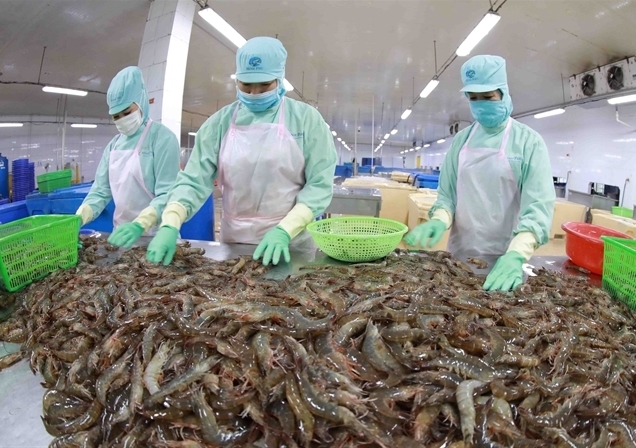
AsemconnectVietnam - Results of anti-dumping duty review in the US, surge in lobster consumption in China and new developments from the EU are opening up opportunities for Vietnamese shrimp industry in 2026.
Positive signals from import markets
2025 ended with a record milestone as Vietnam's shrimp export turnover reached US$4.6 billion, a 19% increase compared to 2024, the highest level ever. In overall picture of US$11.3 billion for entire seafood industry, shrimp continues to play a pivotal role, accounting for a large proportion and making a significant contribution to overall growth.
Entering 2026, in the first month alone, shrimp export reached US$331 million, a 6.4% increase compared to the same period last year, accounting for 39% of the total seafood turnover. These figures show that momentum is still being maintained, but market landscape is changing rapidly, requiring businesses to proactively adapt.
According to information from Vietnam Association of Seafood Processing and Export (VASEP), on February 17, 2026, US Department of Commerce (DOC) announced final results of the 19th administrative review (POR19) of anti-dumping duty order on frozen warmwater shrimp from Vietnam, covering the period February 1, 2023 - January 31, 2024.
Two mandatory respondents, STAPIMEX and Thong Thuan/TTCR, were subject to a total AFA with a margin of 25.76%, and a deposit rate of 25.46% after deducting 0.3% export subsidy offset. However, it is noteworthy that the group of businesses eligible for the separate tariff rate but not subject to mandatory inspection will be subject to a rate of 4.58%, corresponding to a deposit of 4.28%, significantly lower than the previous preliminary rate of 35.29%.
Sharp reduction in deposit rate helps to "cool down" risk when signing contracts. At 4.28%, Vietnamese businesses have more favorable conditions to bid and sign contracts under program or seasonal contracts, thereby maintaining a stable supply for the US market.
In 2025, shrimp export to the US are expected to reach $796 million, an increase of 5.4% and accounting for 17.2% of total export value. However, towards the end of the year, many US importers proactively reduced their purchases to manage inventory and mitigate policy risks. When trade defense costs fluctuate, they often tighten risk-sharing terms, delivery schedules and prices.
Chinese market offers strong growth momentum, especially for Vietnamese lobster. According to customs data, in 2025, Vietnam's lobster exports to China and Hong Kong (China) are expected to reach US$1.3 billion, a 55% increase. Green lobster alone is projected to reach US$840 million, a remarkable 131% increase – becoming a prominent growth driver.
Notably, "supply map" for lobster to China has reversed. While Canada held number one position in 2024, Vietnam is expected to take a lead in 2025 with over 24,000 tonnes, accounting for approximately 34.5% of the market share, while Canada's export are expected to decline sharply due to China's imposition of an additional 25% tariff from March 2025.
Vietnam's advantage lies in its geographical proximity, fast delivery times and flexibility in handling live and fresh shipments – key factors for high-end segment. However, from March 1, 2026, when 25% tariff on Canadian lobster is removed, competition will enter a "new round". Canada will be motivated to regain market share in the high-end restaurant and gift channels, while Australia will also increase its presence.
Amidst divergence of Chinese consumption, high-end segment still has purchasing power, but consumers are more cautious about price. Vietnamese businesses wanting to maintain momentum need to standardize specifications, optimize logistics for live seafood and increase direct connections with modern distribution systems.
Strengthening supply chain is key to maintaining market share.
Besides positive results, according to businesses in the industry, global lobster race is becoming increasingly fierce. VASEP reports that Ecuador continues to consolidate its position as the world's number one exporter with a turnover of US$7.47 billion in 2025, an increase of over 23%. Its three main markets – China, Europe and the United States – account for over 90% of its exports. India is also accelerating its exports. In the first 11 months of 2025, Vietnam exported more than 734,000 tonnes of shrimp, worth US$5.23 billion. Notably, export to the EU increased by 38%. Completion of FTA negotiations between India and the EU at the end of January 2026 opens up prospects for tariff reductions, creating a significant competitive advantage.
According to Mr. Ho Quoc Luc, former Chairman of VASEP, in EU, Vietnamese shrimp currently ranks third after Ecuador and India. India's rise partly reflects the trend of countries reallocating export markets due to tariff risks.
EU is also a leading market with stringent supply chain requirements. Businesses must not only comply with labor regulations but also meet high demands regarding animal welfare, environmental protection, resource conservation, use of renewable energy and circular economy. Packaging must increase proportion of recycled materials; traceability must be transparent.
One notable bottleneck is that percentage of ASC-certified shrimp from Vietnam is still low compared to Ecuador (30-40%). This is a "bottleneck" in accessing high-end distribution systems in Europe.
Besides compliance, the cost issue has also emerged. Rising input costs for shrimp farming are eroding farmers' profits, driving up product prices and impacting competitiveness. Meanwhile, Ecuador and India maintain economies of scale and cost advantages. Alongside tax issue, compliance requirements in the United States are also increasing. The U.S. Food and Drug Administration (FDA) has announced its 2026 priority list for Human Food Program (HFP), emphasizing enhanced monitoring of imported shrimp.
Three main priorities include: promoting management cooperation with major exporting countries such as India and Ecuador; strengthening monitoring sampling; and building whole-genome sequencing capacity for traceability. FDA also proposed empowering Vietnamese businesses to destroy substandard shipments. This means that, in addition to tax risks, pressure regarding food safety, traceability and supply chain transparency will increasingly grow for Vietnamese businesses.
In a competitive landscape where price is no longer the only factor, direction for Vietnamese shrimp is to increase proportion of deeply processed products, reduce reliance on frozen raw materials and invest heavily in ESG (Environmental, Social, and Governance), traceability and "green" certification.
In an interview with Vietnam Industry and Trade Newspaper, Ms. Le Hang, Deputy General Secretary of VASEP, stated that the most important thing is for businesses to improve their adaptability and proactively secure raw materials to be ready when the market recovers. Ministry of Agriculture and Environment also believes that there is still room for growth in 2026 thanks to industry restructuring, development of deep processing and circular economy, with approximately 1 million tonnes of by-products produced annually.
Target of $11.5 billion in seafood export for the entire industry in 2026 is challenging but achievable if businesses simultaneously control costs, improve the supply chain and meet international standards.
Source: Vitic/ congthuong.vn
2025 ended with a record milestone as Vietnam's shrimp export turnover reached US$4.6 billion, a 19% increase compared to 2024, the highest level ever. In overall picture of US$11.3 billion for entire seafood industry, shrimp continues to play a pivotal role, accounting for a large proportion and making a significant contribution to overall growth.
Entering 2026, in the first month alone, shrimp export reached US$331 million, a 6.4% increase compared to the same period last year, accounting for 39% of the total seafood turnover. These figures show that momentum is still being maintained, but market landscape is changing rapidly, requiring businesses to proactively adapt.
According to information from Vietnam Association of Seafood Processing and Export (VASEP), on February 17, 2026, US Department of Commerce (DOC) announced final results of the 19th administrative review (POR19) of anti-dumping duty order on frozen warmwater shrimp from Vietnam, covering the period February 1, 2023 - January 31, 2024.
Two mandatory respondents, STAPIMEX and Thong Thuan/TTCR, were subject to a total AFA with a margin of 25.76%, and a deposit rate of 25.46% after deducting 0.3% export subsidy offset. However, it is noteworthy that the group of businesses eligible for the separate tariff rate but not subject to mandatory inspection will be subject to a rate of 4.58%, corresponding to a deposit of 4.28%, significantly lower than the previous preliminary rate of 35.29%.
Sharp reduction in deposit rate helps to "cool down" risk when signing contracts. At 4.28%, Vietnamese businesses have more favorable conditions to bid and sign contracts under program or seasonal contracts, thereby maintaining a stable supply for the US market.
In 2025, shrimp export to the US are expected to reach $796 million, an increase of 5.4% and accounting for 17.2% of total export value. However, towards the end of the year, many US importers proactively reduced their purchases to manage inventory and mitigate policy risks. When trade defense costs fluctuate, they often tighten risk-sharing terms, delivery schedules and prices.
Chinese market offers strong growth momentum, especially for Vietnamese lobster. According to customs data, in 2025, Vietnam's lobster exports to China and Hong Kong (China) are expected to reach US$1.3 billion, a 55% increase. Green lobster alone is projected to reach US$840 million, a remarkable 131% increase – becoming a prominent growth driver.
Notably, "supply map" for lobster to China has reversed. While Canada held number one position in 2024, Vietnam is expected to take a lead in 2025 with over 24,000 tonnes, accounting for approximately 34.5% of the market share, while Canada's export are expected to decline sharply due to China's imposition of an additional 25% tariff from March 2025.
Vietnam's advantage lies in its geographical proximity, fast delivery times and flexibility in handling live and fresh shipments – key factors for high-end segment. However, from March 1, 2026, when 25% tariff on Canadian lobster is removed, competition will enter a "new round". Canada will be motivated to regain market share in the high-end restaurant and gift channels, while Australia will also increase its presence.
Amidst divergence of Chinese consumption, high-end segment still has purchasing power, but consumers are more cautious about price. Vietnamese businesses wanting to maintain momentum need to standardize specifications, optimize logistics for live seafood and increase direct connections with modern distribution systems.
Strengthening supply chain is key to maintaining market share.
Besides positive results, according to businesses in the industry, global lobster race is becoming increasingly fierce. VASEP reports that Ecuador continues to consolidate its position as the world's number one exporter with a turnover of US$7.47 billion in 2025, an increase of over 23%. Its three main markets – China, Europe and the United States – account for over 90% of its exports. India is also accelerating its exports. In the first 11 months of 2025, Vietnam exported more than 734,000 tonnes of shrimp, worth US$5.23 billion. Notably, export to the EU increased by 38%. Completion of FTA negotiations between India and the EU at the end of January 2026 opens up prospects for tariff reductions, creating a significant competitive advantage.
According to Mr. Ho Quoc Luc, former Chairman of VASEP, in EU, Vietnamese shrimp currently ranks third after Ecuador and India. India's rise partly reflects the trend of countries reallocating export markets due to tariff risks.
EU is also a leading market with stringent supply chain requirements. Businesses must not only comply with labor regulations but also meet high demands regarding animal welfare, environmental protection, resource conservation, use of renewable energy and circular economy. Packaging must increase proportion of recycled materials; traceability must be transparent.
One notable bottleneck is that percentage of ASC-certified shrimp from Vietnam is still low compared to Ecuador (30-40%). This is a "bottleneck" in accessing high-end distribution systems in Europe.
Besides compliance, the cost issue has also emerged. Rising input costs for shrimp farming are eroding farmers' profits, driving up product prices and impacting competitiveness. Meanwhile, Ecuador and India maintain economies of scale and cost advantages. Alongside tax issue, compliance requirements in the United States are also increasing. The U.S. Food and Drug Administration (FDA) has announced its 2026 priority list for Human Food Program (HFP), emphasizing enhanced monitoring of imported shrimp.
Three main priorities include: promoting management cooperation with major exporting countries such as India and Ecuador; strengthening monitoring sampling; and building whole-genome sequencing capacity for traceability. FDA also proposed empowering Vietnamese businesses to destroy substandard shipments. This means that, in addition to tax risks, pressure regarding food safety, traceability and supply chain transparency will increasingly grow for Vietnamese businesses.
In a competitive landscape where price is no longer the only factor, direction for Vietnamese shrimp is to increase proportion of deeply processed products, reduce reliance on frozen raw materials and invest heavily in ESG (Environmental, Social, and Governance), traceability and "green" certification.
In an interview with Vietnam Industry and Trade Newspaper, Ms. Le Hang, Deputy General Secretary of VASEP, stated that the most important thing is for businesses to improve their adaptability and proactively secure raw materials to be ready when the market recovers. Ministry of Agriculture and Environment also believes that there is still room for growth in 2026 thanks to industry restructuring, development of deep processing and circular economy, with approximately 1 million tonnes of by-products produced annually.
Target of $11.5 billion in seafood export for the entire industry in 2026 is challenging but achievable if businesses simultaneously control costs, improve the supply chain and meet international standards.
Source: Vitic/ congthuong.vn
Textile and footwear export in 2026: maintaining key markets
Vietnam’s exports in Q1: expectations for continued growth
Vietnam’s economic indexes in February of 2026
Vietnam rice prices stable as Philippines boosts imports on March 12
Domestic coffee prices fall on Brazil crop outlook on March 12
Vietnam pepper prices edged lower on March 12
PM highlights 'silver economy' as sustainable growth driver
Cinnamon exports increased in first 2 months
Middle East conflict and affects on Vietnam's seafood exports
Hanoi maintains stable supply of petrol, LPG
Import and export and need for reshaping development strategy
China increases spending on high-end segment, Vietnamese shrimp export benefit
Industrial production increased by 10.4% in 2 months of 2026
Pangasius industry aims for sustainable growth in 2026


Public debt borrowing and repayment plan for 2026
Ensuring resources: Mobilizing sufficient and timely borrowed capital at reasonable costs and acceptable risks to meet expenditure needs ...Plan on implementation of high-tech law
Inter-sectoral legal support program for small and ...

Tourism destinations refresh offerings to welcome New ...
Across the Mekong Delta, many tourist sites have been busy upgrading their offerings. At the Con Son tourism site in Can Tho city, members ...Annual New Year festival shines in Da Nang
Phu Quoc emerging as a favourite global destination
Vietnam Airlines adds 270 flights to during 2026 New Year ...
