


Textile and footwear export in 2026: maintaining key markets
Friday, March 13,2026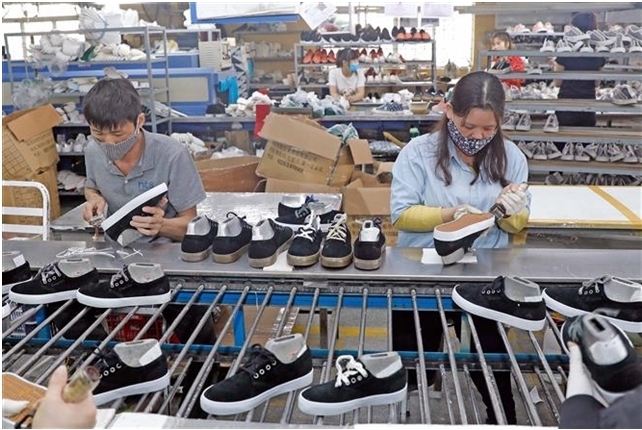
AsemconnectVietnam - In 2026, maintaining key export markets will be a decisive factor for the textile and footwear industries to sustain their growth momentum.
Maintaining momentum in major markets
Textile and garment export picture in 2026 is predicted to be less bright than in previous periods, although global demand continues to increase. A notable point is the slowing recovery rate, leaving less room for expanding orders compared to the post-pandemic years.
According to enterprises in the industry, global textile and garment demand continues to rise but growth will be modest. Forecasts show demand increasing by about 3% in 2026, significantly lower than approximately 6% increase in 2025. As market size no longer expands rapidly, competition among exporting countries will shift to a market share battle rather than mutual growth.
In export market structure, the US continues to be the biggest support for Vietnam's textile and garment industry. Export to this market maintain over 37% of total industry turnover, with many businesses even depending on it at a higher level. However, US tax policies and spending pressures are making retailers more cautious in placing orders, leading to demands for price reductions and cost sharing with suppliers.
As purchasing power in the US shows signs of slowing down, global flow of goods is beginning to shift. Many major exporting countries are increasing their penetration into traditional markets such as European Union (EU), Japan, and South Korea. This is turning previously stable markets into more fiercely competitive areas than ever before.
In EU, Vietnamese businesses face pressure from both sides. Bangladesh maintains its advantage of preferential tax rates, while China is boosting exports to Europe while facing difficulties in the US.
Japan continues to be a stable market with textile and garment imports of approximately US$17-20 billion annually. However, this market is characterized by slow growth, high demands and little volatility, making a significant breakthrough in export value difficult to expect. Meanwhile, South Korea still faces economic and geopolitical instability, meaning that consumer demand for fashion has not yet clearly recovered.
These rapid market changes are reflected in production activities. Order confirmation times are increasingly shortened and pricing remains a challenging issue. Nevertheless, Vietnamese textile and garment industry still has a solid foundation thanks to its position in global supply chain. Investing in digital transformation, improving productivity and enhancing management capabilities are becoming crucial directions for businesses to maintain their presence in key export markets amidst increasingly fierce competition.
Market expansion and rebalancing
Compared to textiles, footwear industry enters 2026 with a more stable foundation thanks to positive growth results of the previous year. Despite uneven recovery in global market and rising production costs, the industry maintains its role as one of export pillars of the economy.
2025 saw many positive signs, with strong growth in footwear and handbag exports in final months of the year, helping to maintain a high trade surplus. This shows that production capacity and reliability of Vietnamese businesses are still positively assessed by international partners.
Regarding markets, export structure in 2026 is expected to continue revolving around traditional markets but with a more flexible distribution. The United States remains the largest market with export value exceeding $11 billion, playing a leading role in consuming Vietnamese footwear products. EU ranks second with nearly $6.9 billion and is also the market with the highest requirements for environmental, labor and social responsibility standards.
A noteworthy point is increasingly important role of logistics centers in Europe such as the Netherlands, Belgium and Germany. These are not only consumer markets but also gateways for distributing goods throughout the region, demonstrating that Vietnam's footwear supply chain is becoming more deeply integrated into the global trade system.
Simultaneously, markets within Comprehensive and Progressive Trans-Pacific Partnership (CPTPP) continue to open up new growth opportunities. Japan, Canada, Mexico and Australia are becoming important destinations, contributing to market diversification and reducing dependence on a few major partners. Effectively leveraging free trade agreements is gradually becoming a crucial competitive advantage for the industry.
Another noteworthy trend is the shift from a processing model to one focused on increasing added value. Domestic businesses, although smaller in scale than FDI companies, have recorded high growth rates, reflecting efforts to expand market share and improve production capacity.
However, footwear industry still faces many long-term challenges. Price competition from imports, especially from China, continues to exert significant pressure. At the same time, increasingly stringent requirements for traceability, green production, and environmental standards are forcing businesses to invest more in technology and management.
To achieve export targets in 2026, footwear industry is advised to simultaneously address several bottlenecks, such as increasing localization rate, developing supporting industries and improving policies to support businesses in meeting international standards. Therefore, shifting to a sustainable production model is no longer an option but a mandatory condition for maintaining market share.
2026 is predicted to be a challenging period for both textiles and footwear. Key export markets will remain central, but the trade environment has significantly changed with competition no longer primarily based on production scale but on adaptability and supply chain quality.
In context of volatile global trade, advantage of Vietnamese businesses lies in their flexibility, ability to maintain reputation and long-term adaptability. Maintaining market share is difficult but maintaining it through quality, sustainability and reliability is the foundation for continued success in textile and footwear exports in 2026.
Source: Vitic/ congthuong.vn
Textile and garment export picture in 2026 is predicted to be less bright than in previous periods, although global demand continues to increase. A notable point is the slowing recovery rate, leaving less room for expanding orders compared to the post-pandemic years.
According to enterprises in the industry, global textile and garment demand continues to rise but growth will be modest. Forecasts show demand increasing by about 3% in 2026, significantly lower than approximately 6% increase in 2025. As market size no longer expands rapidly, competition among exporting countries will shift to a market share battle rather than mutual growth.
In export market structure, the US continues to be the biggest support for Vietnam's textile and garment industry. Export to this market maintain over 37% of total industry turnover, with many businesses even depending on it at a higher level. However, US tax policies and spending pressures are making retailers more cautious in placing orders, leading to demands for price reductions and cost sharing with suppliers.
As purchasing power in the US shows signs of slowing down, global flow of goods is beginning to shift. Many major exporting countries are increasing their penetration into traditional markets such as European Union (EU), Japan, and South Korea. This is turning previously stable markets into more fiercely competitive areas than ever before.
In EU, Vietnamese businesses face pressure from both sides. Bangladesh maintains its advantage of preferential tax rates, while China is boosting exports to Europe while facing difficulties in the US.
Japan continues to be a stable market with textile and garment imports of approximately US$17-20 billion annually. However, this market is characterized by slow growth, high demands and little volatility, making a significant breakthrough in export value difficult to expect. Meanwhile, South Korea still faces economic and geopolitical instability, meaning that consumer demand for fashion has not yet clearly recovered.
These rapid market changes are reflected in production activities. Order confirmation times are increasingly shortened and pricing remains a challenging issue. Nevertheless, Vietnamese textile and garment industry still has a solid foundation thanks to its position in global supply chain. Investing in digital transformation, improving productivity and enhancing management capabilities are becoming crucial directions for businesses to maintain their presence in key export markets amidst increasingly fierce competition.
Market expansion and rebalancing
Compared to textiles, footwear industry enters 2026 with a more stable foundation thanks to positive growth results of the previous year. Despite uneven recovery in global market and rising production costs, the industry maintains its role as one of export pillars of the economy.
2025 saw many positive signs, with strong growth in footwear and handbag exports in final months of the year, helping to maintain a high trade surplus. This shows that production capacity and reliability of Vietnamese businesses are still positively assessed by international partners.
Regarding markets, export structure in 2026 is expected to continue revolving around traditional markets but with a more flexible distribution. The United States remains the largest market with export value exceeding $11 billion, playing a leading role in consuming Vietnamese footwear products. EU ranks second with nearly $6.9 billion and is also the market with the highest requirements for environmental, labor and social responsibility standards.
A noteworthy point is increasingly important role of logistics centers in Europe such as the Netherlands, Belgium and Germany. These are not only consumer markets but also gateways for distributing goods throughout the region, demonstrating that Vietnam's footwear supply chain is becoming more deeply integrated into the global trade system.
Simultaneously, markets within Comprehensive and Progressive Trans-Pacific Partnership (CPTPP) continue to open up new growth opportunities. Japan, Canada, Mexico and Australia are becoming important destinations, contributing to market diversification and reducing dependence on a few major partners. Effectively leveraging free trade agreements is gradually becoming a crucial competitive advantage for the industry.
Another noteworthy trend is the shift from a processing model to one focused on increasing added value. Domestic businesses, although smaller in scale than FDI companies, have recorded high growth rates, reflecting efforts to expand market share and improve production capacity.
However, footwear industry still faces many long-term challenges. Price competition from imports, especially from China, continues to exert significant pressure. At the same time, increasingly stringent requirements for traceability, green production, and environmental standards are forcing businesses to invest more in technology and management.
To achieve export targets in 2026, footwear industry is advised to simultaneously address several bottlenecks, such as increasing localization rate, developing supporting industries and improving policies to support businesses in meeting international standards. Therefore, shifting to a sustainable production model is no longer an option but a mandatory condition for maintaining market share.
2026 is predicted to be a challenging period for both textiles and footwear. Key export markets will remain central, but the trade environment has significantly changed with competition no longer primarily based on production scale but on adaptability and supply chain quality.
In context of volatile global trade, advantage of Vietnamese businesses lies in their flexibility, ability to maintain reputation and long-term adaptability. Maintaining market share is difficult but maintaining it through quality, sustainability and reliability is the foundation for continued success in textile and footwear exports in 2026.
Source: Vitic/ congthuong.vn
Vietnam’s economic indexes in February of 2026
Vietnam rice prices stable as Philippines boosts imports on March 12
Domestic coffee prices fall on Brazil crop outlook on March 12
Vietnam pepper prices edged lower on March 12
PM highlights 'silver economy' as sustainable growth driver
Cinnamon exports increased in first 2 months
Middle East conflict and affects on Vietnam's seafood exports
Hanoi maintains stable supply of petrol, LPG
Import and export and need for reshaping development strategy
China increases spending on high-end segment, Vietnamese shrimp export benefit
Industrial production increased by 10.4% in 2 months of 2026
Pangasius industry aims for sustainable growth in 2026
National technical standard for liquid milk products issued
Vietnam farm commodities steady on March 11,2026


Public debt borrowing and repayment plan for 2026
Ensuring resources: Mobilizing sufficient and timely borrowed capital at reasonable costs and acceptable risks to meet expenditure needs ...Plan on implementation of high-tech law
Inter-sectoral legal support program for small and ...

Tourism destinations refresh offerings to welcome New ...
Across the Mekong Delta, many tourist sites have been busy upgrading their offerings. At the Con Son tourism site in Can Tho city, members ...Annual New Year festival shines in Da Nang
Phu Quoc emerging as a favourite global destination
Vietnam Airlines adds 270 flights to during 2026 New Year ...
