


Vietnam pepper prices edged lower on March 12
Thursday, March 12,2026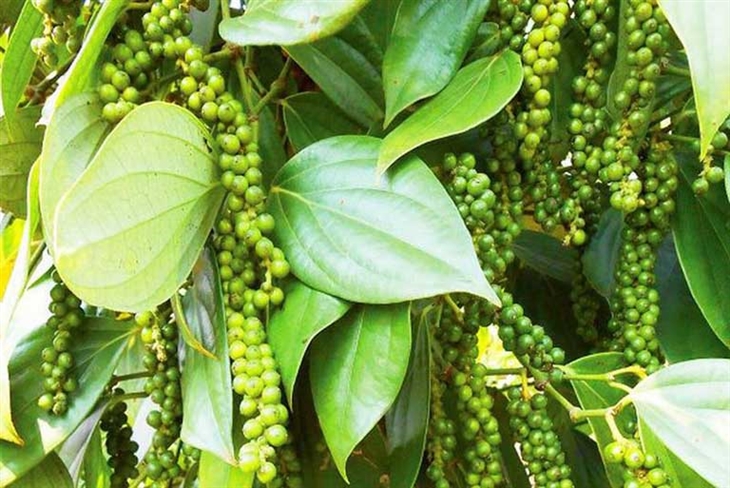
AsemconnectVietnam - Vietnam’s domestic pepper prices edged lower on Thursday, while export prices also declined amid softer market sentiment.
Farmgate prices in Vietnam were quoted at 144,000–146,500 dong ($5.53–$5.62) per kg, with slight declines reported in several producing areas.
Prices in Gia Lai and Dong Nai fell by 500 dong per kg to 144,000 dong, the lowest level among major producing provinces. Meanwhile, prices in Dak Lak and Dak Nong held steady at 146,500 dong per kg, while Ba Ria–Vung Tau remained unchanged at 145,000 dong per kg.
On the export market, Vietnamese black pepper prices fell by about $100 per tonne, according to data from the International Pepper Community (IPC).
Vietnamese black pepper 500 g/l and 550 g/l grades were quoted at $6,300–$6,400 per tonne, down from the previous session.
In contrast, Indonesian Lampung black pepper rose slightly by $5 per tonne to $7,042 per tonne. Brazil ASTA 570 black pepper was steady at $6,100 per tonne, while Malaysian Kuching ASTA black pepper remained unchanged at $9,100 per tonne.
White pepper prices showed a similar trend. Indonesian Muntok white pepper increased by $6 per tonne to $9,323 per tonne, while Vietnamese white pepper declined by $100 per tonne to $9,050 per tonne. Malaysian white pepper held steady at $12,100 per tonne.
Meanwhile, pepper harvesting is underway across major growing areas in southern Vietnam following the Lunar New Year holiday.
Farmers in key pepper-growing communes have begun harvesting ripe pepper berries, often laying nets across plantations to collect falling fruit and reduce labour costs.
Some growers reported strong profits despite mixed production results. A farmer in Ba Ria–Vung Tau province said his 0.5-hectare farm could yield around 3 tonnes this season, up from last year, potentially generating profits of about 100 million dong ($3,840) after costs.
Others reported lower yields due to weather conditions but still benefited from high prices. One grower in the same region estimated output of about 6 tonnes per hectare, down from the previous year, yet still expected profits of more than 300 million dong.
According to local agricultural authorities, the pepper-growing area in the region stands at about 10,776 hectares in the 2025–26 crop year, slightly higher than the previous season, with more than 10,600 hectares currently in production.
Despite strong prices, officials have urged farmers not to expand planting rapidly, instead focusing on improving quality, sustainable cultivation and traceability to increase value in export markets.
Harvesting in most pepper plantations is expected to be largely completed by late March 2026.
Vietnam’s pepper export earnings in 2026 are expected to surpass the record level in 2025 thanks to persistently high prices, promising better incomes for farmers and stronger profits for exporters despite a tightening supply.
At this time of the year, farmers in major pepper-growing regions across the country are entering the harvest season for the 2026 crop. With farm-gate prices remaining high, the sector is optimistic that export turnover will continue to grow.
The recent Lunar New Year (Year of the Horse) was considered a big win for farmers in the Central Highlands, where many key crops such as coffee and durian have fetched high prices. As coffee harvesting ended, farmers quickly moved into the main pepper harvest, opening up another promising season.
Le Thi Thom, a farmer in Quang Phu commune in Dak Lak province, said her family cultivates nearly one hectare of coffee intercropped with pepper, along with about 0.5 ha of durian. Before the Lunar New Year festival 2026, coffee prices stood at around 102,000 VND (3.88 USD) per kg, while durian remained above 70,000 VND per kg, bringing high profits. After the holiday, her family started harvesting pepper, with early-season prices exceeding 150,000 VND per kg.
In Tan Hoi hamlet of Tan Tien border commune in the southern province of Dong Nai, Le Van Den has been growing pepper for more than two decades. His family currently maintains over 3,000 mature pepper vines and planted another 600 at the start of the 2025 rainy season.
Den said that in earlier years, when pepper prices were high, his farm had more than 4,000 vines. However, during the period when prices plunged, the family removed many plants. The situation began improving in 2024 when they harvested four tonnes of pepper and sold at about 160,000 VND per kg, earning around 500 million VND after costs. Despite years of fluctuating prices and disease effect, Den said the family’s perseverance has finally paid off.
According to Le Viet Anh, Secretary General of the Vietnam Pepper and Spice Association (VPSA), with domestic supply tightening, Vietnamese exporters have had to increase imports of pepper from other countries. Domestic stockpiles from 2022 and 2023 have already been exhausted.
In 2025, Vietnam imported 42,688 tonnes of pepper to meet export demand, up more than 16% in volume and about 51% in value compared with 2024. Imports are expected to continue this year as global demand rises while domestic output is forecast to fall by 15–20%. Meanwhile, global pepper supply in 2026 is projected to drop by 15–20% as inventories in many major producing countries decline.
Despite being the world’s largest pepper exporter, accounting for about half of global output, Vietnam still imports significant volumes each year, mainly for processing and re-export.
According to VPSA, the 2026 harvest began in late February and will last until the end of April. Farmers are unlikely to sell large quantities at once, instead releasing part of their output to cover harvesting and fertiliser costs while storing the rest in anticipation of higher prices.
The limited supply has raised concerns about a challenging export year for Vietnam’s pepper industry. However, experts expect global demand to rebound, particularly in the US market after tariffs on pepper were reduced to 0% and many countries stepped up purchases. Additional growth is also expected from China, where inventories are reportedly running low and may not be sufficient to meet domestic demand.
Huynh Tan Dat, Director of the Department of Crop Production and Plant Protection under the Ministry of Agriculture and Environment, urged Vietnamese firms to develop stable pepper-growing areas, work closely with farmers, adopt advanced farming practices, and invest more in deep processing to raise product value and strengthen Vietnam’s global pepper position, towards promoting the industry’s sustainable development.
Statistics from the General Department of Vietnam Customs show that in 2025 Vietnam exported more than 246,000 tonnes of pepper, down 1.5% year on year. However, thanks to a 28.3% rise in average export prices, export value still surged 26% to a record 1.66 billion USD, with the US remaining the largest import market of Viet
Source: Vitic
Vietnam rice prices stable as Philippines boosts imports on March 12
Domestic coffee prices fall on Brazil crop outlook on March 12
PM highlights 'silver economy' as sustainable growth driver
Cinnamon exports increased in first 2 months
Middle East conflict and affects on Vietnam's seafood exports
Hanoi maintains stable supply of petrol, LPG
Import and export and need for reshaping development strategy
China increases spending on high-end segment, Vietnamese shrimp export benefit
Industrial production increased by 10.4% in 2 months of 2026
Pangasius industry aims for sustainable growth in 2026
National technical standard for liquid milk products issued
Import and export in 2025 create a solid foundation for sustainable integration
Vietnam rice prices edged up on March 10 as raw rice and by-products rise slightly
Domestic pepper prices steady on March 10, Middle East tensions may pressure prices in the short term
