


DIC Group (DIG): Strengthening financial foundation, ready for a new growth cycle
Friday, March 6,2026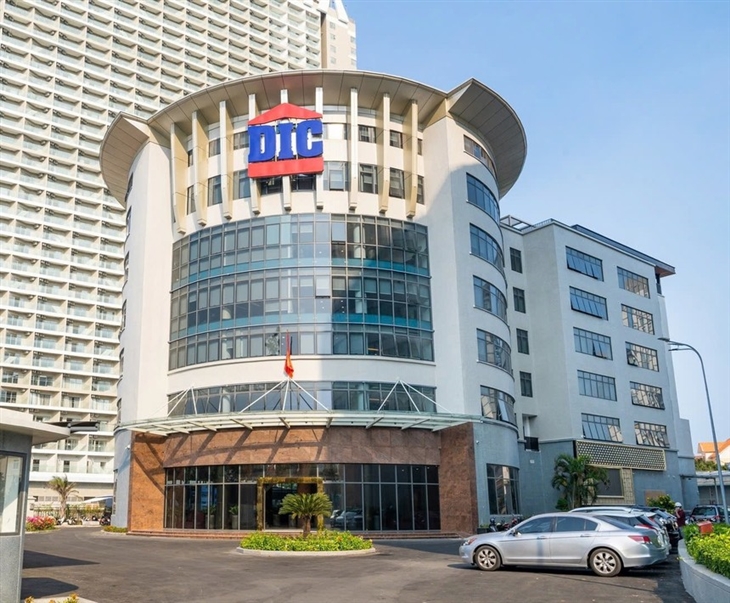
AsemconnectVietnam - 2025 marks a significant transformation for the Vietnam Construction Investment Development Corporation (Stock code: DIG) as the company simultaneously improves its business results and undergoes a strong restructuring of its balance sheet. In the context of a still challenging real estate market, DIG's decisive steps not only have short-term financial significance but also demonstrate a structural change, laying the foundation for a long-term development strategy for the 2026-2030 period.
Strong Growth
Overall, 2025 and early 2026 can be seen as a period where DIG successfully addresses the crucial issue of financial stability and reduces systemic risk. The write-off of bond debt, improvement of profit margins, and enhancement of business efficiency show that the company has moved beyond a purely defensive phase.
Besides financial restructuring, the 2025 financial report shows a significant improvement in DIG's core business operations. Consolidated net revenue exceeded VND4,700 billion for the first time, and gross profit surpassed VND1,000 billion, the highest level since the company's establishment.
Notably, revenue growth did not come from extraordinary income but mainly from the transfer and handover of real estate products. This reflects DIG's resolution of many long-standing legal obstacles at key projects, thereby allowing the revenue accumulated in previous years to be recognized again.
In particular, the strong year-on-year growth in revenue and profit in the fourth quarter of 2025 demonstrates the cyclical nature of the real estate industry, where revenue is typically concentrated towards the end of the year. More importantly, cash flow from business operations served as the foundation for the company to carry out financial restructuring, including the early repurchase of bonds without falling into a passive position.
Another bright spot in DIG's financial picture is the significantly improved profit margin. Net profit increased faster than revenue growth, indicating improved operational efficiency, rather than simply expansion. This improvement stems from two main factors. Firstly, the product structure delivered during the year had better profit margins, with many projects having completed land clearance in previous phases, resulting in lower capital costs. Secondly, more effective control of sales and administrative expenses was achieved in a market that had not fully recovered.
In the real estate industry, maintaining a positive profit margin during a market downturn is a crucial signal. This shows that DIG is not "selling at any cost" to generate cash flow, but is still maintaining a certain position in negotiating selling prices and product strategies.
A Turning Point: "Cleaning Up" Bond Debt
The biggest highlight for DIG in early 2026 is the completion of the early repurchase of all outstanding corporate bonds, officially eliminating bond obligations after years of using this tool to raise capital. While bonds helped the company expand its land bank and implement projects during 2020-2022, when the market cycle reversed and interest rates rose, they became a significant pressure on cash flow and investor sentiment.
The proactive decision to settle bonds early shows that DIG's leadership has accepted short-term trade-offs, including adjusting the capital structure, in order to achieve long-term financial stability. Given the predicted volatility of interest rates in 2026, the elimination of outstanding bond debt significantly reduces refinancing risks, maturity pressures, and interest expenses.
This move is more of a structural step than a single financial event. While many real estate businesses are still facing bond pressure, DIG's decision to bring its debt ratio to a safe level enhances its creditworthiness and opens up opportunities to access new capital at more reasonable costs.
The significant change in capital structure is one of DIG's biggest achievements over the past year. The financial leverage ratio has decreased sharply, with debt-to-equity ratio falling from over 1 to below 1 by the end of 2025. Outstanding loans and bonds now account for only about 22% of total capital, significantly lower than equity.
A "lighter" balance sheet allows DIG to enter 2026 in a well-defensive position amidst high interest rates and increasingly stringent credit conditions for the real estate sector. Without the pressure of bond maturity, the company can be more proactive in choosing project timelines, instead of having to sell quickly to ensure cash flow for debt repayment.
However, analysts also note that the risks have not completely disappeared. DIG still needs significant capital to develop land reserves and implement new projects, therefore bank borrowing costs and future capital raising capabilities remain factors to monitor.
Long-term strategy: towards integrated urban development and sustainable growth
According to the company's leadership, 2026 presents many opportunities as the legal environment becomes increasingly with important laws such as the Land Law, the Real Estate Business Law, and the Housing Law being adjusted synchronously. These changes are expected to create a foundation for the transparent and sustainable recovery of the market.
In practice, DIG has made significant progress in resolving legal issues at key projects, creating a foundation for accelerated implementation in the coming period. Leveraging its large land bank accumulated over many years, along with strengthened financial resources following restructuring, the company aims to develop integrated urban areas incorporating green elements, linked to infrastructure and meeting the real housing needs of customers.
With the achievements of the past year, DIG is demonstrating the image of a real estate company proactively restructuring to adapt to a new cycle – where financial security and quality growth are prioritized, rather than pursuing scale at all costs. This could be an important preparatory step for the company to better capitalize on opportunities when the market enters a clear recovery phase in the coming years.
The positive changes in finance and business results have contributed to FiinRatings upgrading DIG's credit rating from BB to BBB- with a stable outlook. This signal indicates that the market highly values the company's restructuring efforts, while also reflecting a significant reduction in financial risk compared to the previous period. The credit rating upgrade not only has positive implications but also gives DIG an advantage in accessing credit, especially in the context of the real estate industry undergoing a strong restructuring phase.
N.Nga
Source: VITIC/Tinnhanhchungkhoan
EVNGENCO3 (PGV): Electricity production revenue up 9.5% in January
TNG achieves VND506 billion in February
PVCFC (DCM) expands value chain with food-grade CO2
Viettel Construction (CTR): Construction revenue increased 86% in January
PV GAS D (PGD) plans for 10% growth in 2026
Vinh Hoan (VHC) increased 13% revenue in January 2026
PVTrans Pacific (PVP) plans pre-tax profit of VND270 billion in 2026
Ca Mau Fertilizer Corporation (DCM) successfully exports first shipment to the US
Dat Phuong Group (DPG): After-tax profit increased by 46% in Q4 2025
Sao Ta (FMC): Revenue decreases 21% in January 2026
LPBank Securities plans to earn VND1,360 billion in 2026
EVNGENCO3 (PGV) exceeds VND3,700 billion after-tax profit in 2025
Petroleum General Distribution Services (PSD) exceeds profit target by 40% in 2025
Vietnam Rubber Group (GVR): Profits expected to increase by 32% in 2025

Public debt borrowing and repayment plan for 2026
Ensuring resources: Mobilizing sufficient and timely borrowed capital at reasonable costs and acceptable risks to meet expenditure needs ...Plan on implementation of high-tech law
Inter-sectoral legal support program for small and ...

Tourism destinations refresh offerings to welcome New ...
Across the Mekong Delta, many tourist sites have been busy upgrading their offerings. At the Con Son tourism site in Can Tho city, members ...Annual New Year festival shines in Da Nang
Phu Quoc emerging as a favourite global destination
Vietnam Airlines adds 270 flights to during 2026 New Year ...
