


Untangling 'bottleneck' for cassava industry, aiming for $2.5 billion in export
Tuesday, March 3,2026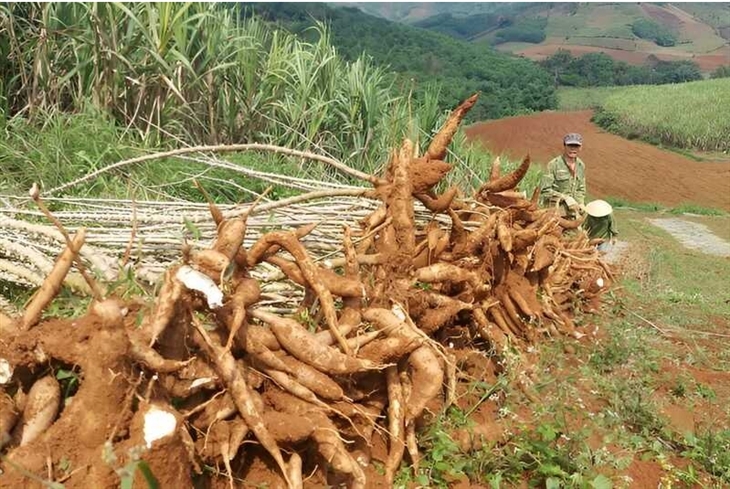
AsemconnectVietnam - Faced with pressure to ensure traceability and combat deforestation, Vietnam's cassava industry is forced to restructure its supply chain, aiming for $2.3 - $2.5 billion in exports.
Large processing capacity but strong dependence on raw materials
In recent years, while exports of many key agricultural products have faced difficulties, export value of cassava and cassava products has maintained relatively stable growth. By 2025, total value of domestic consumption and export of the cassava industry were estimated to reach approximately US$1.3 - US$1.5 billion, making Vietnam the world's third largest cassava exporter and the second largest cassava consumer globally.
Mr. Nghiem Minh Tien, Chairman of Vietnam Cassava Association, said that cassava industry is playing an important role in stabilizing agricultural trade, creating jobs and income for rural people. Not only limited to starch export, cassava industry is expanding its applications to many fields such as food, animal feed, industry and bioenergy, moving towards increasingly environmentally friendly practices.
Vietnam is currently both a major producer of raw cassava and a large-scale cassava processing and export center in the region. Total annual supply of raw cassava reaches over 18 million tons of fresh cassava, of which approximately 58% is domestically sourced, equivalent to more than 10 million tonnes, from about 500,000 hectares of cassava cultivation area. The remaining 42% is imported, mainly from Laos and Cambodia.
Entire industry currently has 142 cassava processing plants, with an actual processing capacity of approximately 11.5 million tonnes of fresh cassava per year. This is one of the few agricultural product sectors with such large processing capacity that it has to supplement imported raw materials to meet production needs.
Besides starch products, cassava industry has much room for development of starch-related products and the utilization of by-products, thereby increasing the added value of the entire chain. However, area of cassava cultivation in the country has tended to decrease slightly in recent years due to competition with other crops and the shift of labor away from the agricultural sector.
Notably, in some localities with forest areas, area planted with cassava continues to expand, raising concerns about link between cassava development and forest resource degradation.
One of the biggest challenges currently facing the cassava industry is increasingly stringent requirements from international markets regarding legality, traceability, and non-deforestation of products. European Union's Deforestation Regulation (EUDR), although currently only applied to the coffee, rubber, and timber industries, is predicted to soon directly or indirectly impacts the cassava industry.
Besides EU, many other major markets such as the United States, the United Kingdom, Japan, South Korea and Australia are also developing new regulations to prevent agricultural and forestry products of unclear origin or that cause deforestation from entering their markets.
Even China, Vietnam's largest cassava importer, is tightening its requirements for quality and traceability. This puts pressure on Vietnam's cassava industry to change rapidly in order to maintain market access.
According to Dr. Nguyen Vinh Quang, a research officer at the Forest Trends organization, unique characteristic of cassava industry is that its raw materials mainly come from small-scale farmers, with more than half a million households involved in production. Products are often purchased through many intermediaries, making it difficult to ensure transparency of information regarding land, growing areas and commercial transactions.
“To meet traceability requirements, cassava industry needs a comprehensive restructuring of current supply chain, from controlling land use and transparentizing supply chain to transitioning informal activities to formal ones”, Dr. Quang emphasized.
Restructuring supply chain, removing traceability bottlenecks
One topic widely discussed at the meeting was review and clear demarcation of land used for cassava cultivation. Expert argued that it is unacceptable to equate all cassava grown on land with forestry elements with deforestation.
In reality, many cassava fields have been cultivated stably for many years, even applying agroforestry models that contribute to improving forest growth and quality. Therefore, a scientific and objective assessment is needed to clearly classify land groups.
For cassava fields planted according to plan on agricultural land, continued management and encouragement of efficient production are necessary. For areas with long-term stable cultivation on forest land, local authorities should consider converting land use purpose to agricultural land to ensure legality. Conversely, cassava fields originating from deforestation, especially after 2020, require resolute forest restoration, especially of protective and special-use forests.
Expert agree that land review must be linked to development of a digital mapping system, applying remote sensing and GIS technology to digitize data on planting areas down to each plot of land and each producer. This is the foundation for identifying planting area codes and building a synchronized database for traceability.
Dr. Ha Cong Tuan, Chairman of Vietnam Association of Agricultural Economics and Rural Development, emphasized that cassava industry has developed continuously for many years, making an important contribution to agricultural growth and ensuring social welfare in disadvantaged areas.
According to Ministry of Agriculture and Environment's guidelines, although area planted with cassava may not increase, production, value, and export turnover are expected to increase significantly. Export turnover of cassava and cassava products is projected to reach US$1.8-2 billion by 2030 and target US$2.3-2.5 billion by 2050.
However, traceability is currently identified as the biggest "bottleneck". According to roadmap, by the end of 2026, all agricultural product sectors must fully meet traceability requirements from the production area to the final product.
To address this, Mr. Ha Cong Tuan proposed need to quickly finalize institutional framework and issue specific regulations on traceability processes suitable to characteristics of cassava industry. Simultaneously, supply chain should be reorganized towards transparency, increasing linkages between processing enterprises, cooperatives and cassava growers. Intermediate purchasing stage needs to be managed strictly and transparently instead of being eliminated.
Only by comprehensively addressing issues related to land, growing areas and traceability can Vietnam's cassava industry overcome challenges, increase added value and achieve sustainable development, meeting increasingly high demands of international market.
Source: Vitic/ congthuong.vn
In recent years, while exports of many key agricultural products have faced difficulties, export value of cassava and cassava products has maintained relatively stable growth. By 2025, total value of domestic consumption and export of the cassava industry were estimated to reach approximately US$1.3 - US$1.5 billion, making Vietnam the world's third largest cassava exporter and the second largest cassava consumer globally.
Mr. Nghiem Minh Tien, Chairman of Vietnam Cassava Association, said that cassava industry is playing an important role in stabilizing agricultural trade, creating jobs and income for rural people. Not only limited to starch export, cassava industry is expanding its applications to many fields such as food, animal feed, industry and bioenergy, moving towards increasingly environmentally friendly practices.
Vietnam is currently both a major producer of raw cassava and a large-scale cassava processing and export center in the region. Total annual supply of raw cassava reaches over 18 million tons of fresh cassava, of which approximately 58% is domestically sourced, equivalent to more than 10 million tonnes, from about 500,000 hectares of cassava cultivation area. The remaining 42% is imported, mainly from Laos and Cambodia.
Entire industry currently has 142 cassava processing plants, with an actual processing capacity of approximately 11.5 million tonnes of fresh cassava per year. This is one of the few agricultural product sectors with such large processing capacity that it has to supplement imported raw materials to meet production needs.
Besides starch products, cassava industry has much room for development of starch-related products and the utilization of by-products, thereby increasing the added value of the entire chain. However, area of cassava cultivation in the country has tended to decrease slightly in recent years due to competition with other crops and the shift of labor away from the agricultural sector.
Notably, in some localities with forest areas, area planted with cassava continues to expand, raising concerns about link between cassava development and forest resource degradation.
One of the biggest challenges currently facing the cassava industry is increasingly stringent requirements from international markets regarding legality, traceability, and non-deforestation of products. European Union's Deforestation Regulation (EUDR), although currently only applied to the coffee, rubber, and timber industries, is predicted to soon directly or indirectly impacts the cassava industry.
Besides EU, many other major markets such as the United States, the United Kingdom, Japan, South Korea and Australia are also developing new regulations to prevent agricultural and forestry products of unclear origin or that cause deforestation from entering their markets.
Even China, Vietnam's largest cassava importer, is tightening its requirements for quality and traceability. This puts pressure on Vietnam's cassava industry to change rapidly in order to maintain market access.
According to Dr. Nguyen Vinh Quang, a research officer at the Forest Trends organization, unique characteristic of cassava industry is that its raw materials mainly come from small-scale farmers, with more than half a million households involved in production. Products are often purchased through many intermediaries, making it difficult to ensure transparency of information regarding land, growing areas and commercial transactions.
“To meet traceability requirements, cassava industry needs a comprehensive restructuring of current supply chain, from controlling land use and transparentizing supply chain to transitioning informal activities to formal ones”, Dr. Quang emphasized.
Restructuring supply chain, removing traceability bottlenecks
One topic widely discussed at the meeting was review and clear demarcation of land used for cassava cultivation. Expert argued that it is unacceptable to equate all cassava grown on land with forestry elements with deforestation.
In reality, many cassava fields have been cultivated stably for many years, even applying agroforestry models that contribute to improving forest growth and quality. Therefore, a scientific and objective assessment is needed to clearly classify land groups.
For cassava fields planted according to plan on agricultural land, continued management and encouragement of efficient production are necessary. For areas with long-term stable cultivation on forest land, local authorities should consider converting land use purpose to agricultural land to ensure legality. Conversely, cassava fields originating from deforestation, especially after 2020, require resolute forest restoration, especially of protective and special-use forests.
Expert agree that land review must be linked to development of a digital mapping system, applying remote sensing and GIS technology to digitize data on planting areas down to each plot of land and each producer. This is the foundation for identifying planting area codes and building a synchronized database for traceability.
Dr. Ha Cong Tuan, Chairman of Vietnam Association of Agricultural Economics and Rural Development, emphasized that cassava industry has developed continuously for many years, making an important contribution to agricultural growth and ensuring social welfare in disadvantaged areas.
According to Ministry of Agriculture and Environment's guidelines, although area planted with cassava may not increase, production, value, and export turnover are expected to increase significantly. Export turnover of cassava and cassava products is projected to reach US$1.8-2 billion by 2030 and target US$2.3-2.5 billion by 2050.
However, traceability is currently identified as the biggest "bottleneck". According to roadmap, by the end of 2026, all agricultural product sectors must fully meet traceability requirements from the production area to the final product.
To address this, Mr. Ha Cong Tuan proposed need to quickly finalize institutional framework and issue specific regulations on traceability processes suitable to characteristics of cassava industry. Simultaneously, supply chain should be reorganized towards transparency, increasing linkages between processing enterprises, cooperatives and cassava growers. Intermediate purchasing stage needs to be managed strictly and transparently instead of being eliminated.
Only by comprehensively addressing issues related to land, growing areas and traceability can Vietnam's cassava industry overcome challenges, increase added value and achieve sustainable development, meeting increasingly high demands of international market.
Source: Vitic/ congthuong.vn
Vietnam Agricultural Markets – Morning Update (March 3, 2026)
US to become new growth driver for Vietnamese tilapia
Vietnam's pepper exports increased in January of 2026
Rice exports increased in January of 2026
Ho Chi Minh City targets high-quality FDI inflows
Vietnam International Furniture and Home Accessories Fair attracts 650 exhibitors
Reference exchange rate drops at week’s beginning
Vietnam's petroleum imports increased in January of 2026
Footwear exports reached over 2 billion USD in January of 2026
Pangasius industry aims for sustainable growth in 2026
Vietnam Agricultural Commodities Update – March 2, 2026
Vietnam Agricultural Markets – February 27
Export of livestock products exceed US$600 million
Vietnam-Singapore trade turnover reaches nearly SGD 40 billion

Plan of Hai Duong province for a period of 2021 - 2030, ...
Organize space reasonably and harmoniously, focusing on connecting Hai Duong in common development space, actively contributing to the ...Plan of Hau Giang province in a period of 2021 - 2030, ...
Sustainable forestry development program in a period of ...

Tourism destinations refresh offerings to welcome New ...
Across the Mekong Delta, many tourist sites have been busy upgrading their offerings. At the Con Son tourism site in Can Tho city, members ...Annual New Year festival shines in Da Nang
Phu Quoc emerging as a favourite global destination
Vietnam Airlines adds 270 flights to during 2026 New Year ...
