


Rice export in 2026: Fragrant, high-quality rice remains mainstream
Saturday, February 28,2026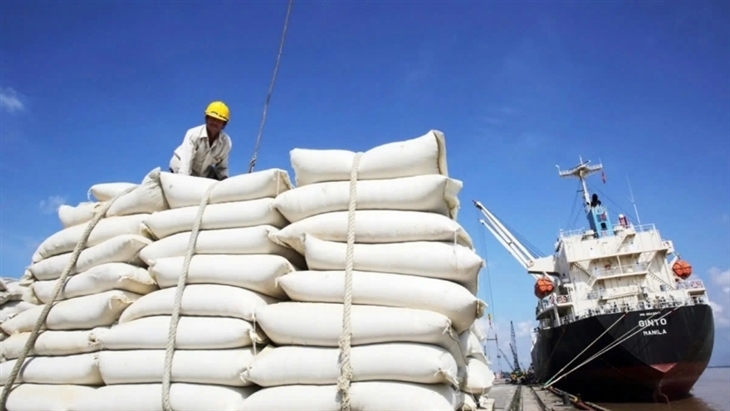
AsemconnectVietnam - Structure of rice exports in 2026 will continue to strongly favor fragrant and high-quality rice, accounting for approximately 75%, affirming direction of increasing value.
Fragrant rice plays mainstream role.
According to Ministry of Agriculture and Environment, total rice cultivation area nationwide in 2026 is estimated at approximately 7.09 million hectares, a decrease of more than 36,000 hectares compared to the previous year. However, thanks to an increase in average yield to 61.4 quintals/hectare, total rice production for the whole year will still reach approximately 43.55 million tonnes, a slight increase compared to 2025. This development shows consistent trend of the rice industry: gradually reducing the area but compensating with increased yield and quality.
In production structure, Mekong Delta continues to play a key role, determining supply of commercial rice for export. In 2026, rice production area in this region (including part of Tay Ninh province) is estimated to reach 3.84 million hectares, yielding approximately 24.34 million tonnes of paddy rice.
After deducting domestic consumption needs of about 28 million people in Mekong Delta and Ho Chi Minh City, along with rice used for seeds, animal feed and other purposes, total amount of paddy rice consumed domestically is estimated at about 8.9 million tonnes. The remaining 15.46 million tonnes of commercial paddy rice, equivalent to 7.73 million tons of milled rice, is reserved for export.
According to Ministry of Agriculture and Environment, structure of rice exports in 2026 will continue to strongly favor high-quality and fragrant rice, with an estimated production of about 5.8 million tonnes, accounting for up to 75% of total exports. Glutinous rice will account for about 773,000 tonnes (10%), and the remainder will be rice for processing, accounting for about 15%.
This direction reflects a significant shift in the industry's development mindset. Instead of competing directly in the regular white rice segment, priced at only around $300-350 per tonne, Vietnamese rice is shifting towards fragrant rice and specialty rice varieties with higher value and less competitive pressure.
At Ministry of Agriculture and Environment's press conference on "Results of work in 2025 and some key tasks for 2026 in the agriculture and environment sector," Mr. Do Ha Nam, Chairman of Vietnam Food Association (VFA), stated that in 2025, Vietnam's rice exports will reach over 8 million tonnes, with a value exceeding US$4.06 billion, at an average price of approximately US$510 per tonne. Vietnam has surpassed Thailand, rising to second place in the world for rice exports, after India. "We are growing more fragrant rice varieties, thereby reducing direct competition with regular white rice and building our own higher-value markets", Mr. Nam emphasized.
However, along with the advantages, market risks are also clearly evident. Currently, nearly 45% of Vietnam's rice export are concentrated in the Philippines market. When this market adjusts its policies, Vietnamese rice market is immediately strongly impacted. In context of the volatile rice market in 2026, increasing proportion of fragrant rice production area to approximately 70% is considered a sound strategy.
Flexible export management
Given complex market developments, Ministry of Agriculture and Environment proposes focusing on boosting exports during months with high harvest yields, while ensuring maintenance of minimum circulating reserves as required. Strictly implementing inventory reporting is considered fundamental to gradually developing a digital platform for monitoring and early warning of rice supply and demand risks.
The Ministry also requires businesses to be ready to supply domestic market when necessary, linking export management with goal of ensuring food security. This is coupled with solutions to promote trade, diversify markets and product segments, accelerate digital transformation in management and develop scenarios for managing rice import and export.
Another prominent issue is procurement and payment activities. According to Mr. Do Ha Nam, regulation requiring cashless payments for transactions exceeding 5 million VND is causing many difficulties in rural and remote areas. Many farmers have to travel dozens of kilometers to withdraw cash, leading to refusal to sell rice if not paid directly, causing bottlenecks in the consumption chain.
From a policy perspective, Ministry of Agriculture and Environment has contributed to amending Decree 107/2018/ND-CP on rice export business and is also developing a mechanism for managing rice imports to protect domestic production and the rice value chain in context of increasingly fierce international competition.
In long term, many experts believe that development orientation towards fragrant rice, specialty rice, and "low-emission green rice" is a suitable choice. Speaking with a reporter from Industry and Trade Newspaper, agricultural expert Hoang Trong Thuy commented that this is a "counter-trend positioning" strategy, not chasing quantity but investing in quality to penetrate higher-end, less competitive and more sustainable segments.
In fact, Vietnam is a pioneering country in implementing large-scale low-emission rice production. According to Ministry of Agriculture and Environment, proportion of high-quality rice in total exports has reached about 89%, of which 60-70% is fragrant and specialty rice. Brands such as ST24, ST25, Hat Ngoc Troi, VJ Pearl Rice… are gradually establishing their position in the EU, the US and Japan.
From a state management perspective, Deputy Minister of Agriculture and Environment Phung Duc Tien frankly acknowledged that there are still overlapping procedures and high logistics costs, especially in the Mekong Delta, reducing the competitiveness of Vietnamese rice. However, in the next two years, many regional transportation infrastructure and logistics center projects are expected to be completed, contributing to reduced transportation costs and more efficient connections between raw material areas and export markets.
Amidst continued shrinking of rice cultivation area but stable production thanks to increased yields, Vietnamese rice industry is facing the need for strong restructuring. Orientation to increase the proportion of fragrant rice and high-quality rice in total exports by 2026 is considered a pillar to increase value, reduce market risks and affirm Vietnamese rice brand on the world map.
Source: Vitic/ congthuong.vn
According to Ministry of Agriculture and Environment, total rice cultivation area nationwide in 2026 is estimated at approximately 7.09 million hectares, a decrease of more than 36,000 hectares compared to the previous year. However, thanks to an increase in average yield to 61.4 quintals/hectare, total rice production for the whole year will still reach approximately 43.55 million tonnes, a slight increase compared to 2025. This development shows consistent trend of the rice industry: gradually reducing the area but compensating with increased yield and quality.
In production structure, Mekong Delta continues to play a key role, determining supply of commercial rice for export. In 2026, rice production area in this region (including part of Tay Ninh province) is estimated to reach 3.84 million hectares, yielding approximately 24.34 million tonnes of paddy rice.
After deducting domestic consumption needs of about 28 million people in Mekong Delta and Ho Chi Minh City, along with rice used for seeds, animal feed and other purposes, total amount of paddy rice consumed domestically is estimated at about 8.9 million tonnes. The remaining 15.46 million tonnes of commercial paddy rice, equivalent to 7.73 million tons of milled rice, is reserved for export.
According to Ministry of Agriculture and Environment, structure of rice exports in 2026 will continue to strongly favor high-quality and fragrant rice, with an estimated production of about 5.8 million tonnes, accounting for up to 75% of total exports. Glutinous rice will account for about 773,000 tonnes (10%), and the remainder will be rice for processing, accounting for about 15%.
This direction reflects a significant shift in the industry's development mindset. Instead of competing directly in the regular white rice segment, priced at only around $300-350 per tonne, Vietnamese rice is shifting towards fragrant rice and specialty rice varieties with higher value and less competitive pressure.
At Ministry of Agriculture and Environment's press conference on "Results of work in 2025 and some key tasks for 2026 in the agriculture and environment sector," Mr. Do Ha Nam, Chairman of Vietnam Food Association (VFA), stated that in 2025, Vietnam's rice exports will reach over 8 million tonnes, with a value exceeding US$4.06 billion, at an average price of approximately US$510 per tonne. Vietnam has surpassed Thailand, rising to second place in the world for rice exports, after India. "We are growing more fragrant rice varieties, thereby reducing direct competition with regular white rice and building our own higher-value markets", Mr. Nam emphasized.
However, along with the advantages, market risks are also clearly evident. Currently, nearly 45% of Vietnam's rice export are concentrated in the Philippines market. When this market adjusts its policies, Vietnamese rice market is immediately strongly impacted. In context of the volatile rice market in 2026, increasing proportion of fragrant rice production area to approximately 70% is considered a sound strategy.
Flexible export management
Given complex market developments, Ministry of Agriculture and Environment proposes focusing on boosting exports during months with high harvest yields, while ensuring maintenance of minimum circulating reserves as required. Strictly implementing inventory reporting is considered fundamental to gradually developing a digital platform for monitoring and early warning of rice supply and demand risks.
The Ministry also requires businesses to be ready to supply domestic market when necessary, linking export management with goal of ensuring food security. This is coupled with solutions to promote trade, diversify markets and product segments, accelerate digital transformation in management and develop scenarios for managing rice import and export.
Another prominent issue is procurement and payment activities. According to Mr. Do Ha Nam, regulation requiring cashless payments for transactions exceeding 5 million VND is causing many difficulties in rural and remote areas. Many farmers have to travel dozens of kilometers to withdraw cash, leading to refusal to sell rice if not paid directly, causing bottlenecks in the consumption chain.
From a policy perspective, Ministry of Agriculture and Environment has contributed to amending Decree 107/2018/ND-CP on rice export business and is also developing a mechanism for managing rice imports to protect domestic production and the rice value chain in context of increasingly fierce international competition.
In long term, many experts believe that development orientation towards fragrant rice, specialty rice, and "low-emission green rice" is a suitable choice. Speaking with a reporter from Industry and Trade Newspaper, agricultural expert Hoang Trong Thuy commented that this is a "counter-trend positioning" strategy, not chasing quantity but investing in quality to penetrate higher-end, less competitive and more sustainable segments.
In fact, Vietnam is a pioneering country in implementing large-scale low-emission rice production. According to Ministry of Agriculture and Environment, proportion of high-quality rice in total exports has reached about 89%, of which 60-70% is fragrant and specialty rice. Brands such as ST24, ST25, Hat Ngoc Troi, VJ Pearl Rice… are gradually establishing their position in the EU, the US and Japan.
From a state management perspective, Deputy Minister of Agriculture and Environment Phung Duc Tien frankly acknowledged that there are still overlapping procedures and high logistics costs, especially in the Mekong Delta, reducing the competitiveness of Vietnamese rice. However, in the next two years, many regional transportation infrastructure and logistics center projects are expected to be completed, contributing to reduced transportation costs and more efficient connections between raw material areas and export markets.
Amidst continued shrinking of rice cultivation area but stable production thanks to increased yields, Vietnamese rice industry is facing the need for strong restructuring. Orientation to increase the proportion of fragrant rice and high-quality rice in total exports by 2026 is considered a pillar to increase value, reduce market risks and affirm Vietnamese rice brand on the world map.
Source: Vitic/ congthuong.vn
What will Lao Cai do to achieve $10 billion of import and export turnover by 2030?
Pangasius and surimi export forecasted to boost in 2026
Fertilizer imports declined in January of 2026
Vietnam fruit and vegetable Market – February 2026
Leather and footwear industry maintains growth amid pressure
Vietnam Fuel Market – February 2026
Gia Lai tightens fishing fleet management to combat IUU fishing
Exports to South Korea reached over US$2.6 billion in January of 2026
Main items exported to UK in January of 2026
Corn import markets in January of 2026
Pangasius exports in 2025 and prospects for 2026
Positive signs for Vietnam’s coffee exports in 2026
Vietnam animal feed market – January 2026
Seafood export enter a phase of sustainable acceleration

Plan of Hai Duong province for a period of 2021 - 2030, ...
Organize space reasonably and harmoniously, focusing on connecting Hai Duong in common development space, actively contributing to the ...Plan of Hau Giang province in a period of 2021 - 2030, ...
Sustainable forestry development program in a period of ...
Tourism destinations refresh offerings to welcome New ...
Across the Mekong Delta, many tourist sites have been busy upgrading their offerings. At the Con Son tourism site in Can Tho city, members ...Annual New Year festival shines in Da Nang
Phu Quoc emerging as a favourite global destination
Vietnam Airlines adds 270 flights to during 2026 New Year ...
