


Seafood export enter a phase of sustainable acceleration
Thursday, February 26,2026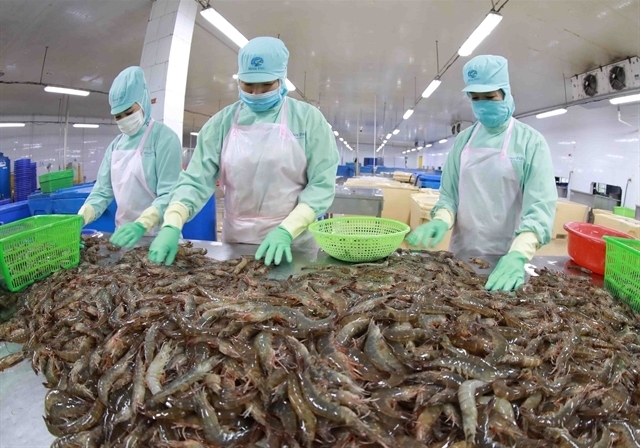
AsemconnectVietnam - Following new export milestone of 2025, Vietnam's seafood industry enters 2026 with goal of increasing added value, strengthening compliance and promoting green transformation.
CPTPP continues to be the 'driving force' of export markets
2025 marks a clear recovery and growth of Vietnam's seafood exports, with turnover reaching nearly US$11.3 billion, an increase of 12.4% compared to 2024. This is not only a new record for the industry but also demonstrates flexible adaptability of seafood businesses in context of a volatile global market, increasing technical barriers and compliance requirements.
In product structure, shrimp continues to play a pivotal role, bringing in US$4.6 billion, an increase of 19% compared to the previous year, accounting for approximately 41% of total industry turnover. This result reflects recovery in demand in many major markets, along with efforts to control diseases, improve productivity and quality in aquaculture areas. Pangasius exports reached US$2.1 billion, an increase of 7.5%, continuing to affirm its position as a strategic commodity, playing an important "buffer" role for Vietnam's seafood exports.
Regarding markets, CPTPP bloc continues to be the largest market cluster for Vietnamese seafood, with an export value of approximately US$3 billion, an increase of 20.8%. If considered individually, China and Hong Kong (China) rose to the top with US$2.4 billion, a strong increase of 28.5%, showing rapid recovery trend of regional market and flexibility in the approach strategy of Vietnamese businesses. United States reached US$1.9 billion, an increase of 4.9%; Japan reached US$1.7 billion, an increase of 10.8%; and EU reached US$1.1 billion, an increase of 12.1%. South Korea achieved $864 million, an increase of 7.2%.
In an interview with Industry and Trade Newspaper on morning of January 18th, Ms. Le Hang, Deputy General Secretary of Vietnam Association of Seafood Processing and Export (VASEP), commented that these figures demonstrate market diversification capacity, flexibility in product strategy and export timing of Vietnamese businesses and reflect increasingly clear role of free trade agreements (FTAs) in expanding market space for seafood.
Looking back at 2025, many believe it will be a "pivotal year" for seafood industry, as restructuring strategies and growth model transformations begin to show clear effectiveness. At conference summarizing work of 2025 and implementing plan for 2026 of Department of Fisheries and Fisheries Inspection, Mr. Tran Dinh Luan, Director of Department of Fisheries and Fisheries Inspection, emphasized that export turnover of nearly 11.3 billion USD is result of fisheries sector's gradual shift towards deep processing, developing a circular economy, and forming closer linkages between farmers, fishermen, processing enterprises and the market.
2026 is identified as the first year of 2026-2030 period, a period of acceleration and breakthrough. A consistent orientation for the fisheries sector during this period is to shift from a production-oriented mindset to an economic mindset in fisheries, from single-value growth to integrated multi-value growth, linking production with processing, logistics, and the market. In 2026 alone, the target for seafood export turnover is projected to reach approximately US$11.5 billion, amidst increasingly fierce international competition and tightening technical barriers.
Deputy Minister of Agriculture and Environment Phung Duc Tien frankly acknowledged that 2026 will present even more challenges but seafood industry must still aim for breakthroughs. Primary focus is on continuing to remove obstacles in the legal framework; simultaneously promoting science, technology and digital transformation, so that from 2026 onwards, science and technology will truly become a driving force for improving production efficiency and added value.
Along with this is determination to lift the IUU "yellow card," strengthen international cooperation and address issues related to the US Marine Mammal Protection Act (MMPA). Fisheries sector is also oriented towards developing aquaculture in reservoirs, opening up new avenues for effectively exploiting the potential of inland water resources.
Proactive adaptation to maintain growth momentum
Entering 2026, a key highlight is the removal of "bottlenecks" in tax policy, a factor that has created significant pressure on seafood businesses for many years. Decree No. 320/2025/ND-CP detailing the implementation of the Corporate Income Tax Law has officially included seafood processing activities in the list of those eligible for tax exemption, provided they meet the conditions regarding the ratio of raw materials, input origin, and are not subject to special consumption tax.
According to VASEP, recognition and preferential exemption of corporate income tax for seafood processing activities is the result of close coordination and dialogue between the association, businesses, the Ministry of Finance, and relevant agencies. At the seminar "Updating new points and hot topics on corporate income tax and value-added tax for seafood businesses," Mr. Nguyen Hoai Nam, General Secretary of VASEP, said that this is an important turning point, creating momentum for businesses to boldly invest in deep processing and increase added value instead of just stopping at preliminary processing.
Furthermore, the Law amending and supplementing several articles of the Value Added Tax Law, passed by the National Assembly at the end of 2025, along with Decree No. 359/2025/ND-CP effective from January 1, 2026, has abolished several tax refund conditions considered long-standing "bottlenecks". These changes are considered timely and practical by the business community, contributing to improved cash flow and reduced compliance costs.
Given predicted challenges in 2026, seafood business community emphasizes the need to develop long-term strategies and enhance resilience. According to Ms. Le Hang, seafood industry will face a series of obstacles such as reciprocal tax policies, anti-dumping duties on shrimp, the US MMPA regulations, the EU's IUU yellow card, and increasingly fierce competition from other exporting countries.
In this context, VASEP has identified three major priorities: expanding markets and enhancing competitiveness; promoting green, transparent, and responsible development linked to traceability and digital transformation; and coordinating with the Government and localities in sustainable development, livelihood, and community support programs.
Source: Vitic/ congthuong.vn
2025 marks a clear recovery and growth of Vietnam's seafood exports, with turnover reaching nearly US$11.3 billion, an increase of 12.4% compared to 2024. This is not only a new record for the industry but also demonstrates flexible adaptability of seafood businesses in context of a volatile global market, increasing technical barriers and compliance requirements.
In product structure, shrimp continues to play a pivotal role, bringing in US$4.6 billion, an increase of 19% compared to the previous year, accounting for approximately 41% of total industry turnover. This result reflects recovery in demand in many major markets, along with efforts to control diseases, improve productivity and quality in aquaculture areas. Pangasius exports reached US$2.1 billion, an increase of 7.5%, continuing to affirm its position as a strategic commodity, playing an important "buffer" role for Vietnam's seafood exports.
Regarding markets, CPTPP bloc continues to be the largest market cluster for Vietnamese seafood, with an export value of approximately US$3 billion, an increase of 20.8%. If considered individually, China and Hong Kong (China) rose to the top with US$2.4 billion, a strong increase of 28.5%, showing rapid recovery trend of regional market and flexibility in the approach strategy of Vietnamese businesses. United States reached US$1.9 billion, an increase of 4.9%; Japan reached US$1.7 billion, an increase of 10.8%; and EU reached US$1.1 billion, an increase of 12.1%. South Korea achieved $864 million, an increase of 7.2%.
In an interview with Industry and Trade Newspaper on morning of January 18th, Ms. Le Hang, Deputy General Secretary of Vietnam Association of Seafood Processing and Export (VASEP), commented that these figures demonstrate market diversification capacity, flexibility in product strategy and export timing of Vietnamese businesses and reflect increasingly clear role of free trade agreements (FTAs) in expanding market space for seafood.
Looking back at 2025, many believe it will be a "pivotal year" for seafood industry, as restructuring strategies and growth model transformations begin to show clear effectiveness. At conference summarizing work of 2025 and implementing plan for 2026 of Department of Fisheries and Fisheries Inspection, Mr. Tran Dinh Luan, Director of Department of Fisheries and Fisheries Inspection, emphasized that export turnover of nearly 11.3 billion USD is result of fisheries sector's gradual shift towards deep processing, developing a circular economy, and forming closer linkages between farmers, fishermen, processing enterprises and the market.
2026 is identified as the first year of 2026-2030 period, a period of acceleration and breakthrough. A consistent orientation for the fisheries sector during this period is to shift from a production-oriented mindset to an economic mindset in fisheries, from single-value growth to integrated multi-value growth, linking production with processing, logistics, and the market. In 2026 alone, the target for seafood export turnover is projected to reach approximately US$11.5 billion, amidst increasingly fierce international competition and tightening technical barriers.
Deputy Minister of Agriculture and Environment Phung Duc Tien frankly acknowledged that 2026 will present even more challenges but seafood industry must still aim for breakthroughs. Primary focus is on continuing to remove obstacles in the legal framework; simultaneously promoting science, technology and digital transformation, so that from 2026 onwards, science and technology will truly become a driving force for improving production efficiency and added value.
Along with this is determination to lift the IUU "yellow card," strengthen international cooperation and address issues related to the US Marine Mammal Protection Act (MMPA). Fisheries sector is also oriented towards developing aquaculture in reservoirs, opening up new avenues for effectively exploiting the potential of inland water resources.
Proactive adaptation to maintain growth momentum
Entering 2026, a key highlight is the removal of "bottlenecks" in tax policy, a factor that has created significant pressure on seafood businesses for many years. Decree No. 320/2025/ND-CP detailing the implementation of the Corporate Income Tax Law has officially included seafood processing activities in the list of those eligible for tax exemption, provided they meet the conditions regarding the ratio of raw materials, input origin, and are not subject to special consumption tax.
According to VASEP, recognition and preferential exemption of corporate income tax for seafood processing activities is the result of close coordination and dialogue between the association, businesses, the Ministry of Finance, and relevant agencies. At the seminar "Updating new points and hot topics on corporate income tax and value-added tax for seafood businesses," Mr. Nguyen Hoai Nam, General Secretary of VASEP, said that this is an important turning point, creating momentum for businesses to boldly invest in deep processing and increase added value instead of just stopping at preliminary processing.
Furthermore, the Law amending and supplementing several articles of the Value Added Tax Law, passed by the National Assembly at the end of 2025, along with Decree No. 359/2025/ND-CP effective from January 1, 2026, has abolished several tax refund conditions considered long-standing "bottlenecks". These changes are considered timely and practical by the business community, contributing to improved cash flow and reduced compliance costs.
Given predicted challenges in 2026, seafood business community emphasizes the need to develop long-term strategies and enhance resilience. According to Ms. Le Hang, seafood industry will face a series of obstacles such as reciprocal tax policies, anti-dumping duties on shrimp, the US MMPA regulations, the EU's IUU yellow card, and increasingly fierce competition from other exporting countries.
In this context, VASEP has identified three major priorities: expanding markets and enhancing competitiveness; promoting green, transparent, and responsible development linked to traceability and digital transformation; and coordinating with the Government and localities in sustainable development, livelihood, and community support programs.
Source: Vitic/ congthuong.vn
Exports to South Korea reached over US$2.6 billion in January of 2026
Main items exported to UK in January of 2026
Corn import markets in January of 2026
Pangasius exports in 2025 and prospects for 2026
Positive signs for Vietnam’s coffee exports in 2026
Fruit and vegetable export face the challenge of maintaining market share in China
2026: Vietnam expected to export 7.73 million tonnes of rice
Vietnam seafood market – February 2026
Vietnam's shrimp exports reached US$4.6 billion in 2025
Soybean imports increased sharply in January of 2026
Wheat imports increased by nearly 127% in January of 2026
Vietnam Steel Market Report – February 2026
Fertilizer exports showed strong growth in January of 2026
Vietnam Rice Market Report – February 2026

Plan of Hai Duong province for a period of 2021 - 2030, ...
Organize space reasonably and harmoniously, focusing on connecting Hai Duong in common development space, actively contributing to the ...Plan of Hau Giang province in a period of 2021 - 2030, ...
Sustainable forestry development program in a period of ...

Tourism destinations refresh offerings to welcome New ...
Across the Mekong Delta, many tourist sites have been busy upgrading their offerings. At the Con Son tourism site in Can Tho city, members ...Annual New Year festival shines in Da Nang
Phu Quoc emerging as a favourite global destination
Vietnam Airlines adds 270 flights to during 2026 New Year ...
