


Managing rice export in 2026: Flexibility to maintain market share
Monday, February 9,2026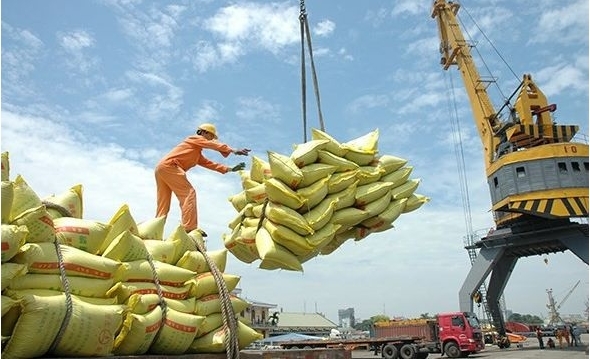
AsemconnectVietnam - In 2026, rice export face many fluctuations as traditional markets shrink. Flexible management and diversification of markets and segments are a "key" to maintaining growth.
Shrinking traditional markets, double pressure on rice export
According to a report by Ministry of Agriculture and Environment, in 2025, Vietnam exported approximately 7.85 million tonnes of rice, worth 4.02 billion USD, a decrease of 12.7% in volume and 29.4% in value compared to 2024. Developments in rice exports in the last months of 2025 also show a large dependence on a few familiar markets. On international market, price of Vietnamese rice exports at the beginning of December 2025 was in the upper-medium range, but decreased slightly towards end of the month as global supply increased sharply.
Mr. Tran Thanh Hai, Deputy Director of the Import-Export Department - Ministry of Industry and Trade, informed that, in its role as a multi-sectoral management ministry for import and export, Ministry of Industry and Trade has implemented a series of solutions to overcome difficulties in rice export activities.
Specifically, following direction of the Government leaders, Ministry of Industry and Trade has reviewed and assessed implementation of Decree No. 107/2018/ND-CP and Decree No.01/2025/ND-CP. Based on that, and considering situation of rice trade activities, Ministry of Industry and Trade submitted Report No.9745/TTr-BCT dated December 8, 2025, to the Government on the draft Decree on rice import and export business, replacing Decree No.107/2018/ND-CP and Decree No.01/2025/ND-CP.
In addition, the Ministry actively engages in bilateral exchanges with traditional and key import partners such as Malaysia and Indonesia, as well as with new markets such as Africa and Brazil, to consider signing Memorandums of Understanding on rice trade. It also engages in discussions with the Philippines to address difficulties faced by rice exporters and to promote stable rice trade in the key Philippine market.
Furthermore, proactively provide information on domestic and global rice supply and demand situation and warn businesses so that they can participate in bidding processes to ensure effective rice exports. Guide and support traders in participating in trade promotion, building and promoting the image and brand of products and businesses domestically and internationally.
Diversifying the market, shifting strongly towards high-quality rice
At recent Rice Export Business Conference organized by Import-Export Department, Mr. Tran Quoc Toan – Deputy Director of Import-Export Department – stated that rice exports in 2026 will be affected by factors such as the Philippines' expected return to importing from January 2026, despite changes in rice import tariffs and potential changes in rice import regulations. These factors will boost Vietnam's rice exports in 2026. Rice exports will also be influenced by return of imports from traditional markets: China, Bangladesh, Africa and market signals from rice trade agreements between Vietnam and other countries. Quality of Vietnamese exported rice is increasingly improving, enhancing competitiveness of Vietnamese rice in the world market.
With those assessments, diversifying markets is an urgent requirement for 2026, especially in markets that Vietnam has not yet fully exploited, such as Europe and the US. At the same time, it is crucial for financially capable businesses to participate in purchasing rice and stabilizing the market.
Regarding Ministry of Industry and Trade's solutions for 2026, Mr. Tran Thanh Hai stated that the Ministry will continue to effectively implement rice export strategy until 2030; including organizing rice trade promotion activities in traditional and potential markets such as the Philippines, China, Africa, and the EU… to promptly take advantage of opportunities should the Philippines resume rice imports (expected in January 2026). Simultaneously, it will maximize demand from these markets to boost exports of this commodity.
In context of shrinking traditional markets like the Philippines and Indonesia, shifting towards the high-end segment is considered a vital strategy. The EU, Japan, the US and China are target markets for high-quality rice, specialty rice and processed products.
Recently, the ST25 rice variety was once again honored as the "world's best-tasting rice," further opening up significant opportunities for the premium segment in the US, Europe and China; Japonica rice is also gaining traction in Japan. Many businesses are also increasing exports of processed products such as dried vermicelli, dried pho noodles and canned rice – items with significantly higher added value than raw rice.
Vietnam Rice Industry Association (VIETRISA) has also suggested that rice should be identified as a special commodity requiring close monitoring to ensure both domestic consumption and food security while effectively meeting export demands.
Simultaneously, there is a need to establish a stable raw material supply area that meets food safety requirements, traceability, quality stability, and brand building. It is necessary to determine production that meets requirements, standards and quantities of importing countries. Accordingly, it is necessary to pilot establishment of several raw material areas that meet the criteria of the 1 million hectare project; businesses should support and actively participate in building raw material areas according to the Project "Sustainable Development of One Million Hectares of High-Quality, Low-Emission Rice Specialized Cultivation Linked to Green Growth in the Mekong Delta by 2030"…in order to achieve a sustainable and high-value rice production chain.
Source: Vitic/ congthuong.vn
According to a report by Ministry of Agriculture and Environment, in 2025, Vietnam exported approximately 7.85 million tonnes of rice, worth 4.02 billion USD, a decrease of 12.7% in volume and 29.4% in value compared to 2024. Developments in rice exports in the last months of 2025 also show a large dependence on a few familiar markets. On international market, price of Vietnamese rice exports at the beginning of December 2025 was in the upper-medium range, but decreased slightly towards end of the month as global supply increased sharply.
Mr. Tran Thanh Hai, Deputy Director of the Import-Export Department - Ministry of Industry and Trade, informed that, in its role as a multi-sectoral management ministry for import and export, Ministry of Industry and Trade has implemented a series of solutions to overcome difficulties in rice export activities.
Specifically, following direction of the Government leaders, Ministry of Industry and Trade has reviewed and assessed implementation of Decree No. 107/2018/ND-CP and Decree No.01/2025/ND-CP. Based on that, and considering situation of rice trade activities, Ministry of Industry and Trade submitted Report No.9745/TTr-BCT dated December 8, 2025, to the Government on the draft Decree on rice import and export business, replacing Decree No.107/2018/ND-CP and Decree No.01/2025/ND-CP.
In addition, the Ministry actively engages in bilateral exchanges with traditional and key import partners such as Malaysia and Indonesia, as well as with new markets such as Africa and Brazil, to consider signing Memorandums of Understanding on rice trade. It also engages in discussions with the Philippines to address difficulties faced by rice exporters and to promote stable rice trade in the key Philippine market.
Furthermore, proactively provide information on domestic and global rice supply and demand situation and warn businesses so that they can participate in bidding processes to ensure effective rice exports. Guide and support traders in participating in trade promotion, building and promoting the image and brand of products and businesses domestically and internationally.
Diversifying the market, shifting strongly towards high-quality rice
At recent Rice Export Business Conference organized by Import-Export Department, Mr. Tran Quoc Toan – Deputy Director of Import-Export Department – stated that rice exports in 2026 will be affected by factors such as the Philippines' expected return to importing from January 2026, despite changes in rice import tariffs and potential changes in rice import regulations. These factors will boost Vietnam's rice exports in 2026. Rice exports will also be influenced by return of imports from traditional markets: China, Bangladesh, Africa and market signals from rice trade agreements between Vietnam and other countries. Quality of Vietnamese exported rice is increasingly improving, enhancing competitiveness of Vietnamese rice in the world market.
With those assessments, diversifying markets is an urgent requirement for 2026, especially in markets that Vietnam has not yet fully exploited, such as Europe and the US. At the same time, it is crucial for financially capable businesses to participate in purchasing rice and stabilizing the market.
Regarding Ministry of Industry and Trade's solutions for 2026, Mr. Tran Thanh Hai stated that the Ministry will continue to effectively implement rice export strategy until 2030; including organizing rice trade promotion activities in traditional and potential markets such as the Philippines, China, Africa, and the EU… to promptly take advantage of opportunities should the Philippines resume rice imports (expected in January 2026). Simultaneously, it will maximize demand from these markets to boost exports of this commodity.
In context of shrinking traditional markets like the Philippines and Indonesia, shifting towards the high-end segment is considered a vital strategy. The EU, Japan, the US and China are target markets for high-quality rice, specialty rice and processed products.
Recently, the ST25 rice variety was once again honored as the "world's best-tasting rice," further opening up significant opportunities for the premium segment in the US, Europe and China; Japonica rice is also gaining traction in Japan. Many businesses are also increasing exports of processed products such as dried vermicelli, dried pho noodles and canned rice – items with significantly higher added value than raw rice.
Vietnam Rice Industry Association (VIETRISA) has also suggested that rice should be identified as a special commodity requiring close monitoring to ensure both domestic consumption and food security while effectively meeting export demands.
Simultaneously, there is a need to establish a stable raw material supply area that meets food safety requirements, traceability, quality stability, and brand building. It is necessary to determine production that meets requirements, standards and quantities of importing countries. Accordingly, it is necessary to pilot establishment of several raw material areas that meet the criteria of the 1 million hectare project; businesses should support and actively participate in building raw material areas according to the Project "Sustainable Development of One Million Hectares of High-Quality, Low-Emission Rice Specialized Cultivation Linked to Green Growth in the Mekong Delta by 2030"…in order to achieve a sustainable and high-value rice production chain.
Source: Vitic/ congthuong.vn
Vietnamese tilapia market share surges in the U.S amid global supply volatility
What can we learn from rice exports in 2025?
Leveraging FTAs, textile and garment industry aims to reach $50 billion export milestone
Vietnam rice market quiet ahead of Lunar New Year on Feb 9
Vietnam pepper prices steady at high levels on Feb 9
Vietnam hog prices slipped nationwide on Feb 9
Vietnam coffee prices slid over the week on global losses on Feb 9
2025–2026: surimi & fish cake exports enter a new cycle – opportunities for Vietnam
Ca Mau’s shrimp-rice model proves effective in climate change adaptation
PM outlines key tasks, solutions for monetary, fiscal policy management in 2026
Netherlands - Vietnam's largest trading partner in EU
Vietnam's imports of goods from Italy in 2025
Vietnam's exports to China saw growth
Vietnam posts 39% surge in trade turnover in January

Plan of Hai Duong province for a period of 2021 - 2030, ...
Organize space reasonably and harmoniously, focusing on connecting Hai Duong in common development space, actively contributing to the ...Plan of Hau Giang province in a period of 2021 - 2030, ...
Sustainable forestry development program in a period of ...

Tourism destinations refresh offerings to welcome New ...
Across the Mekong Delta, many tourist sites have been busy upgrading their offerings. At the Con Son tourism site in Can Tho city, members ...Annual New Year festival shines in Da Nang
Phu Quoc emerging as a favourite global destination
Vietnam Airlines adds 270 flights to during 2026 New Year ...
