


Leveraging FTAs, textile and garment industry aims to reach $50 billion export milestone
Monday, February 9,2026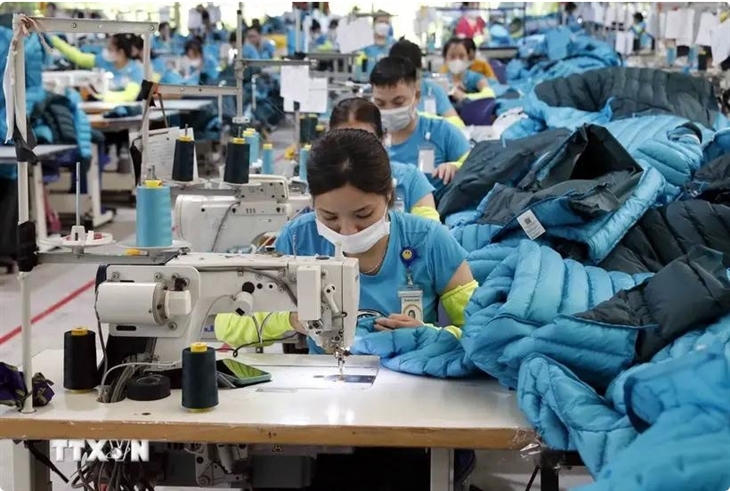
AsemconnectVietnam - In line with goal of enhancing competitiveness of national brands, Vietnam's textile and garment industry aims for export turnover of approximately $50 billion in 2026.
Supply chain restructuring
Based on restructuring supply chain and effectively utilizing free trade agreements (FTAs), Vietnam's textile and garment industry aims for export turnover of approximately $50 billion this year, an increase of nearly $3 billion compared to 2025. This goal aligns with orientation towards sustainable growth and deep integration into global value chain.
According to Vitas' assessment, 2025 is considered a pivotal year for the industry, with export turnover estimated at around $46-47 billion. Further increases in the coming period will focus on the quality of growth, proactive nature of supply chain and ability to leverage integration commitments.
Sharing his views on the industry's strategic direction, Mr. Vu Duc Giang, Chairman of Vietnam Textile and Garment Association (Vitas) and Chairman of Board of Directors of Viet Tien Garment Corporation, stated that the $50 billion target is not a short-term goal but rather the result of a comprehensive restructuring process implemented over many years. “The current focus of textile and garment industry is to enhance capacity of domestic supply chain, increase localization rate and effectively utilize new-generation FTAs, thereby improving position of Vietnamese businesses in global value chain,” Mr. Giang emphasized.
One of key drivers of export growth comes from new-generation FTAs such as CPTPP, EVFTA and RCEP. In fact, by 2025, many textile and garment product lines have begun to effectively utilize tariff preferences, especially in EU market and some CPTPP member countries. However, to fully exploit benefits of FTA, businesses must strictly comply with rules of origin, environmental standards and labor standards.
In this context, restructuring supply chain is considered a decisive factor. In recent years, textile and garment industry has boosted investment in missing stages of value chain, from yarn, weaving, dyeing to logistics and industrial park infrastructure. Formation of concentrated production clusters not only helps businesses proactively secure raw materials and components but also reduces costs, shortens delivery times and enhances ability to meet requirements of demanding markets.
Besides the FTA, global geopolitical and geoeconomic context is also creating significant shifts. Wave of global supply chain restructuring and trend of diversifying supply sources by major brands are opening opportunities for Vietnam to participate more deeply in high value-added segments. According to Chairman of Vitas, in a period of 2025–2027, many new investment projects will come into operation, allowing Vietnamese textile and garment industry to produce product lines that were previously heavily dependent on imports.
Shaping growth strategy of textile and garment industry
In parallel with investment in infrastructure and raw materials, textile and garment businesses are also accelerating the application of technology, digitalization, and automation in production and management. This is considered a necessary condition to improve labor productivity, meet increasingly stringent ESG standards, and increase traceability – an important requirement from FTA markets.
In this overall picture, many large enterprises in the industry, including Viet Tien Garment Corporation, are considered key players in restructuring process. With large-scale production, a wide market network and a shift from processing to FOB and ODM, these enterprises are contributing to shaping a new growth model for the entire industry. Viet Tien currently achieves export turnover of nearly 800 million USD, with consolidated revenue across the entire system of approximately 18,500 billion VND, with key markets including the US, EU, Japan, South Korea and several other key markets, gradually building capacity of Vietnamese brands.
In addition, Mr. Giang stated that Viet Tien is committed to becoming a multi-industry group, with garment manufacturing as its cornerstone, while expanding into areas such as textile raw materials and accessories, industrial real estate, commercial and residential real estate, financial investment, trade and services, hotels, tourism and maritime transport…
In long term, Vietnam Textile and Garment Association has set goal of developing the industry not only to focus on export turnover figures, but also to build a modern textile and garment ecosystem with high self-reliance and linked to sustainable development. On that foundation, $50 billion target is considered a suitable step forward, reflecting shift from extensive growth to enhancing the value and competitiveness of Vietnamese textile and garment brands in the international market.
Source: Vitic/ congthuong.vn
Based on restructuring supply chain and effectively utilizing free trade agreements (FTAs), Vietnam's textile and garment industry aims for export turnover of approximately $50 billion this year, an increase of nearly $3 billion compared to 2025. This goal aligns with orientation towards sustainable growth and deep integration into global value chain.
According to Vitas' assessment, 2025 is considered a pivotal year for the industry, with export turnover estimated at around $46-47 billion. Further increases in the coming period will focus on the quality of growth, proactive nature of supply chain and ability to leverage integration commitments.
Sharing his views on the industry's strategic direction, Mr. Vu Duc Giang, Chairman of Vietnam Textile and Garment Association (Vitas) and Chairman of Board of Directors of Viet Tien Garment Corporation, stated that the $50 billion target is not a short-term goal but rather the result of a comprehensive restructuring process implemented over many years. “The current focus of textile and garment industry is to enhance capacity of domestic supply chain, increase localization rate and effectively utilize new-generation FTAs, thereby improving position of Vietnamese businesses in global value chain,” Mr. Giang emphasized.
One of key drivers of export growth comes from new-generation FTAs such as CPTPP, EVFTA and RCEP. In fact, by 2025, many textile and garment product lines have begun to effectively utilize tariff preferences, especially in EU market and some CPTPP member countries. However, to fully exploit benefits of FTA, businesses must strictly comply with rules of origin, environmental standards and labor standards.
In this context, restructuring supply chain is considered a decisive factor. In recent years, textile and garment industry has boosted investment in missing stages of value chain, from yarn, weaving, dyeing to logistics and industrial park infrastructure. Formation of concentrated production clusters not only helps businesses proactively secure raw materials and components but also reduces costs, shortens delivery times and enhances ability to meet requirements of demanding markets.
Besides the FTA, global geopolitical and geoeconomic context is also creating significant shifts. Wave of global supply chain restructuring and trend of diversifying supply sources by major brands are opening opportunities for Vietnam to participate more deeply in high value-added segments. According to Chairman of Vitas, in a period of 2025–2027, many new investment projects will come into operation, allowing Vietnamese textile and garment industry to produce product lines that were previously heavily dependent on imports.
Shaping growth strategy of textile and garment industry
In parallel with investment in infrastructure and raw materials, textile and garment businesses are also accelerating the application of technology, digitalization, and automation in production and management. This is considered a necessary condition to improve labor productivity, meet increasingly stringent ESG standards, and increase traceability – an important requirement from FTA markets.
In this overall picture, many large enterprises in the industry, including Viet Tien Garment Corporation, are considered key players in restructuring process. With large-scale production, a wide market network and a shift from processing to FOB and ODM, these enterprises are contributing to shaping a new growth model for the entire industry. Viet Tien currently achieves export turnover of nearly 800 million USD, with consolidated revenue across the entire system of approximately 18,500 billion VND, with key markets including the US, EU, Japan, South Korea and several other key markets, gradually building capacity of Vietnamese brands.
In addition, Mr. Giang stated that Viet Tien is committed to becoming a multi-industry group, with garment manufacturing as its cornerstone, while expanding into areas such as textile raw materials and accessories, industrial real estate, commercial and residential real estate, financial investment, trade and services, hotels, tourism and maritime transport…
In long term, Vietnam Textile and Garment Association has set goal of developing the industry not only to focus on export turnover figures, but also to build a modern textile and garment ecosystem with high self-reliance and linked to sustainable development. On that foundation, $50 billion target is considered a suitable step forward, reflecting shift from extensive growth to enhancing the value and competitiveness of Vietnamese textile and garment brands in the international market.
Source: Vitic/ congthuong.vn
Vietnamese tilapia market share surges in the U.S amid global supply volatility
Vietnam rice market quiet ahead of Lunar New Year on Feb 9
Vietnam pepper prices steady at high levels on Feb 9
Vietnam hog prices slipped nationwide on Feb 9
Vietnam coffee prices slid over the week on global losses on Feb 9
2025–2026: surimi & fish cake exports enter a new cycle – opportunities for Vietnam
Ca Mau’s shrimp-rice model proves effective in climate change adaptation
PM outlines key tasks, solutions for monetary, fiscal policy management in 2026
Netherlands - Vietnam's largest trading partner in EU
Vietnam's imports of goods from Italy in 2025
Vietnam's exports to China saw growth
Vietnam posts 39% surge in trade turnover in January
Vietnam coffee prices rose on Feb 6 as Robusta rebounded, Arabica extended losses
Vietnam rice market little changed on Feb 6 as fragrant paddy asking prices edged up

Plan of Hai Duong province for a period of 2021 - 2030, ...
Organize space reasonably and harmoniously, focusing on connecting Hai Duong in common development space, actively contributing to the ...Plan of Hau Giang province in a period of 2021 - 2030, ...
Sustainable forestry development program in a period of ...

Tourism destinations refresh offerings to welcome New ...
Across the Mekong Delta, many tourist sites have been busy upgrading their offerings. At the Con Son tourism site in Can Tho city, members ...Annual New Year festival shines in Da Nang
Phu Quoc emerging as a favourite global destination
Vietnam Airlines adds 270 flights to during 2026 New Year ...
