


Vietnam pepper prices eased on Feb 6 as strong dollar pressured global markets
Friday, February 6,2026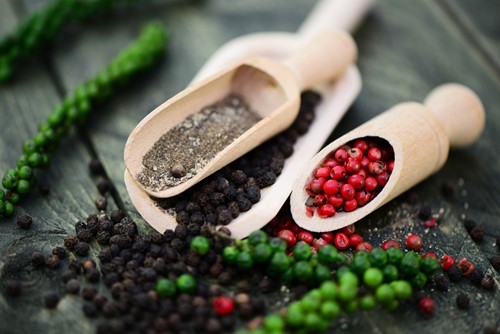
AsemconnectVietnam - According to Kinhtedothi, Vietnam’s pepper prices were quoted lower on Friday as a stronger U.S. dollar weighed on global markets, while the domestic harvest was set to begin across major growing regions, traders said.
Domestic pepper prices on Feb. 6 were seen in the range of 148,500–151,000 dong ($6.10–$6.20) per kg.
The International Pepper Community (IPC) quoted Indonesian Lampung black pepper at $6,720 per metric ton, down 0.3%, while Brazilian black pepper ASTA 570 stood at $6,100 per ton.
Malaysian Kuching black pepper ASTA was quoted at $9,000 per ton.
Malaysian Kuching black pepper ASTA was quoted at $9,000 per ton.
White pepper prices were also lower, with Muntok white pepper at $9,247 per ton, down 0.3%, while Malaysian white pepper ASTA was quoted at $12,000 per ton.
Vietnamese black pepper was traded at $6,400 per ton for the 500 g/l grade and $6,600 per ton for the 550 g/l grade, while white pepper was quoted at $9,150 per ton, traders said.
Market participants said pepper prices came under pressure as the U.S. dollar strengthened.
The U.S. Dollar Index, which measures the greenback against six major currencies, rose 0.33% to 97.94 early on Thursday, hitting a two-week high.
The U.S. Dollar Index, which measures the greenback against six major currencies, rose 0.33% to 97.94 early on Thursday, hitting a two-week high.
The dollar found support as investors adopted a more cautious stance toward risk and assessed early results from the U.S. corporate earnings season, which was about halfway through.
At home, Vietnam’s pepper harvest was expected to begin on a wide scale, although growers faced adverse weather conditions. Prolonged dry spells recorded in early 2026 across key producing areas such as Dak Lak, Gia Lai, Dak Nong and Binh Phuoc were seen reducing flower differentiation and fruit-setting rates, industry sources said.
During the rainy season, heavy rainfall and high humidity were expected to increase the risk of root rot, slow wilt and phytophthora diseases, particularly in older plantations, negatively affecting plant health and future yields.
As a result, average yields in many regions were seen at only moderate levels, especially in aging farms and among growers with limited investment, although younger plantations were expected to maintain stable output.
Some areas planted during 2022–2023 were entering a stable production phase, helping to partially offset supply losses. Meanwhile, wider adoption of water-saving irrigation, balanced fertilization and integrated pest management was expected to support productivity in key regions.
Preliminary estimates showed Vietnam’s 2026 pepper output could fall by around 15–20% from 2025, traders said.
According to the Vietnam Pepper and Spice Association (VPSA),for the whole of 2025, Vietnam exported 247,482 tonnes of pepper, including 212,279 tonnes of black pepper and 35,203 tonnes of white pepper.
Although total export volume declined slightly by about 1.2% compared with 2024, export value surged 26%, reflecting sharply higher prices. Average export prices reached 6,607 USD per tonne for black pepper and 8,629 USD per tonne for white pepper, up more than 30% year-on-year.
Despite the impact of reciprocal tariffs, which caused pepper exports to the US to fall nearly 24% year-on-year, the US remained Vietnam’s largest buyer in 2025 with 55,082 tonnes, accounting for 22.3% of total exports.
Other major markets included the UAE (22,232 tonnes), China (19,923 tonnes), India (12,499 tonnes) and Germany (11,820 tonnes).
VPSA Chairwoman Hoang Thi Lien said Vietnam continues to lead the world in pepper exports, but the industry faces growing pressure from stricter sustainability requirements in key markets such as the EU and the US. Challenges related to soil degradation, emissions and plant diseases are prompting a shift toward regenerative farming models and low-carbon production.
Meanwhile, Phan Minh Thong, Chairman of Phuc Sinh Group, noted that many Vietnamese enterprises are investing in processing technologies to boost value-added exports, helping maintain the competitiveness of Vietnamese pepper amid global volatility.
In 2025, Vietnam also imported 42,688 tonnes of pepper for processing and re-export, valued at 266.2 million USD, with Brazil remaining the largest supplier.
As spicy as pepper, cinnamon exports also hit a record, with nearly 120,300 tonnes shipped, generating 300 million USD in export revenue.
T.Huong
Source: Vitic
Vietnam's cotton and textile fiber import markets in 2025
Vietnam's exports to Italy in December and whole year 2025
Measures to boost Vietnam-Egypt trade cooperation
Reference exchange rate continues to drop slightly on February 5
Agro-forestry-aquatic product exports surge nearly 30% in January
Vietnam pepper prices steady on Feb 5; exports to China jumped in January
Vietnam coffee prices fell for third straight day on Feb 5, slipped below 95,000 dong/kg
Vietnam hog prices on Feb 5 fell further by 1,000 dong/kg
Vietnam rice market on Feb 5: rice prices rose, fresh paddy fell
Vietnam's wood and wood product export markets in 2025
Seafood exports to Singapore increased
Vietnam's exports to China saw growth
Foreign investors allowed to trade via global brokers
Reference exchange rate slightly down on February 4

Plan of Hai Duong province for a period of 2021 - 2030, ...
Organize space reasonably and harmoniously, focusing on connecting Hai Duong in common development space, actively contributing to the ...Plan of Hau Giang province in a period of 2021 - 2030, ...
Sustainable forestry development program in a period of ...

Tourism destinations refresh offerings to welcome New ...
Across the Mekong Delta, many tourist sites have been busy upgrading their offerings. At the Con Son tourism site in Can Tho city, members ...Annual New Year festival shines in Da Nang
Phu Quoc emerging as a favourite global destination
Vietnam Airlines adds 270 flights to during 2026 New Year ...
