


Seafood industry aims for $11.5 billion in exports in 2026
Monday, February 2,2026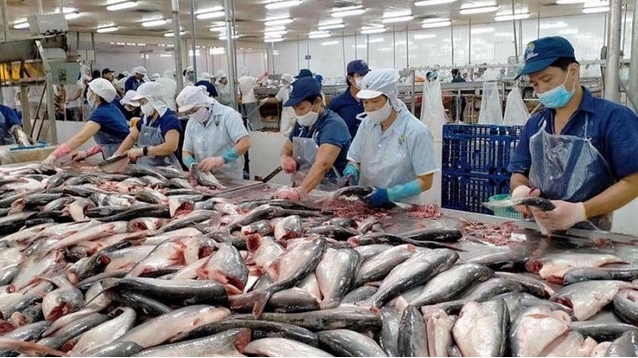
AsemconnectVietnam - According to the plan, in 2026, seafood industry strives to achieve a total production of over 10 million tonnes, with export revenue expected to reach approximately $11.5 billion.
Highlights in production management and institutional improvement in 2025
Mr. Tran Dinh Luan, Director of Fisheries and Fisheries Inspection Department, stated that the most prominent highlight for the industry in 2025 is production management. Specifically, estimated seafood production in 2025 is approximately 9.95 million tonnes, a very high level compared to previous years.
Fisheries development strategy continues to show clear effectiveness throughout entire chain, from exploitation and aquaculture to processing. Key species such as shrimp and pangasius maintain growth momentum; many diversified farmed species such as mollusks and marine fish are gradually expanding their markets.
In particular, seafood export turnover is expected to reach approximately US$11.32 billion, setting a new milestone for the industry. This result reflects effectiveness of the focus on aquaculture, deep processing, value enhancement, circular economy development and sustainable supply chains.
Alongside production development, protection and development of aquatic resources continue to be strengthened. Co-management models have proven effective; many localities have announced areas where fishing is prohibited, areas with temporary fishing bans and areas with restricted fishing. Regular stocking of aquatic resources is maintained, contributing to raising awareness and responsibility within the community.
Environmental forecasting, fishing guidance and technology transfer for product preservation on fishing vessels have been enhanced through scientific research programs. Many fishing vessels, especially those owned by businesses, have adopted new technical solutions, improving quality and value of their products. Patrol and inspection activities by fisheries inspection force have also seen many innovations, with close coordination with border guards, coast guard and local authorities, both enhancing management effectiveness and linking it with education and training for fishermen.
According to Mr. Tran Dinh Luan, fisheries sector is still facing many challenges, especially the fight against illegal, unreported and unregulated (IUU) fishing, along with increasingly evident impacts of natural disasters, extreme rains and floods and localized environmental pollution. These factors require proactive and flexible leadership and early preparation to ensure a stable supply of raw materials for processing and export.
Mr. Nguyen Hoai Nam, General Secretary of Vietnam Association of Seafood Processing and Export, stated that the market is increasingly demanding higher standards for seafood products: harvested products must be legal and farmed products must have farming area codes. However, issuance of farming area codes is still affected by planning and decentralization. The Association recommends that Fisheries and Fisheries Inspection Department continue to cooperate and support in resolving obstacles and accelerating implementation; and promote digitalization in the issuance and verification of harvested seafood.
Implementing a comprehensive set of solutions to boost exports
In overall picture, in 2025, Vietnam's agricultural, forestry and fisheries exports are expected to reach US$70.09 billion, a 12% increase compared to the previous year, the highest level ever. Fisheries alone are projected to reach US$11.32 billion, a 12.7% increase, continuing to make a significant contribution to overall growth of agricultural sector.
In 2026, fisheries sector aims for a total fisheries output of over 10 million tonnes, a 0.6% increase compared to the estimated output in 2025. Of this, catch output is projected at approximately 3.75 million tonnes, a decrease of 2.1% compared to 2025; aquaculture output at 6.25 million tons, an increase of 2.2% compared to 2025. Fisheries export revenue is expected to reach approximately US$11.5 billion.
To achieve 2026 targets, leaders of Fisheries and Aquaculture Inspection Department stated that the industry will closely monitor weather, environmental and market developments and promptly direct production. The focus will be on developing key aquaculture species such as tiger shrimp, whiteleg shrimp and pangasius in concentrated production areas, linked to spatial planning and synchronized infrastructure; promoting industrial marine aquaculture, offshore farming and cage farming using new materials; and developing seaweed and mollusks according to a green economic model.
The industry will also strengthen environmental monitoring and warning systems, control diseases; expand high-tech and recirculating aquaculture, reduce emissions and efficiently utilize water resources; and tighten food safety control throughout entire chain to meet domestic consumption and export requirements.
In field of exploitation, the industry continues to review and classify system of fishing ports and mooring areas according to scale, function, and the level of compliance with requirements for managing fishing vessels, traceability and combating IUU fishing; assess capacity to receive fishing vessels, unload and monitor catch at designated fishing ports; and pilot smart fishing port models associated with digital transformation in fisheries management.
Speaking at the conference, Deputy Minister Phung Duc Tien emphasized that, towards 2026, agriculture and environment sector will implement many solutions to promote the export of agricultural, forestry and aquatic products. The focus will be on continuing to improve system of policies, standards and regulations in harmony with international practices; promoting private sector development and innovation; developing processing, preservation, mechanization, and high-tech applications; accelerating digital transformation and production-consumption linkages; expanding and diversifying markets; Building a brand for high-quality, food-safe and environmentally friendly Vietnamese agricultural products.
By early identification of difficulties, close adherence to practical realities and synchronized implementation of solutions, fisheries sector expects to continue maintaining its pivotal role in agricultural exports, making a positive contribution to sustainable growth of the economy.
Source: Vitic/ congthuong.vn
Mr. Tran Dinh Luan, Director of Fisheries and Fisheries Inspection Department, stated that the most prominent highlight for the industry in 2025 is production management. Specifically, estimated seafood production in 2025 is approximately 9.95 million tonnes, a very high level compared to previous years.
Fisheries development strategy continues to show clear effectiveness throughout entire chain, from exploitation and aquaculture to processing. Key species such as shrimp and pangasius maintain growth momentum; many diversified farmed species such as mollusks and marine fish are gradually expanding their markets.
In particular, seafood export turnover is expected to reach approximately US$11.32 billion, setting a new milestone for the industry. This result reflects effectiveness of the focus on aquaculture, deep processing, value enhancement, circular economy development and sustainable supply chains.
Alongside production development, protection and development of aquatic resources continue to be strengthened. Co-management models have proven effective; many localities have announced areas where fishing is prohibited, areas with temporary fishing bans and areas with restricted fishing. Regular stocking of aquatic resources is maintained, contributing to raising awareness and responsibility within the community.
Environmental forecasting, fishing guidance and technology transfer for product preservation on fishing vessels have been enhanced through scientific research programs. Many fishing vessels, especially those owned by businesses, have adopted new technical solutions, improving quality and value of their products. Patrol and inspection activities by fisheries inspection force have also seen many innovations, with close coordination with border guards, coast guard and local authorities, both enhancing management effectiveness and linking it with education and training for fishermen.
According to Mr. Tran Dinh Luan, fisheries sector is still facing many challenges, especially the fight against illegal, unreported and unregulated (IUU) fishing, along with increasingly evident impacts of natural disasters, extreme rains and floods and localized environmental pollution. These factors require proactive and flexible leadership and early preparation to ensure a stable supply of raw materials for processing and export.
Mr. Nguyen Hoai Nam, General Secretary of Vietnam Association of Seafood Processing and Export, stated that the market is increasingly demanding higher standards for seafood products: harvested products must be legal and farmed products must have farming area codes. However, issuance of farming area codes is still affected by planning and decentralization. The Association recommends that Fisheries and Fisheries Inspection Department continue to cooperate and support in resolving obstacles and accelerating implementation; and promote digitalization in the issuance and verification of harvested seafood.
Implementing a comprehensive set of solutions to boost exports
In overall picture, in 2025, Vietnam's agricultural, forestry and fisheries exports are expected to reach US$70.09 billion, a 12% increase compared to the previous year, the highest level ever. Fisheries alone are projected to reach US$11.32 billion, a 12.7% increase, continuing to make a significant contribution to overall growth of agricultural sector.
In 2026, fisheries sector aims for a total fisheries output of over 10 million tonnes, a 0.6% increase compared to the estimated output in 2025. Of this, catch output is projected at approximately 3.75 million tonnes, a decrease of 2.1% compared to 2025; aquaculture output at 6.25 million tons, an increase of 2.2% compared to 2025. Fisheries export revenue is expected to reach approximately US$11.5 billion.
To achieve 2026 targets, leaders of Fisheries and Aquaculture Inspection Department stated that the industry will closely monitor weather, environmental and market developments and promptly direct production. The focus will be on developing key aquaculture species such as tiger shrimp, whiteleg shrimp and pangasius in concentrated production areas, linked to spatial planning and synchronized infrastructure; promoting industrial marine aquaculture, offshore farming and cage farming using new materials; and developing seaweed and mollusks according to a green economic model.
The industry will also strengthen environmental monitoring and warning systems, control diseases; expand high-tech and recirculating aquaculture, reduce emissions and efficiently utilize water resources; and tighten food safety control throughout entire chain to meet domestic consumption and export requirements.
In field of exploitation, the industry continues to review and classify system of fishing ports and mooring areas according to scale, function, and the level of compliance with requirements for managing fishing vessels, traceability and combating IUU fishing; assess capacity to receive fishing vessels, unload and monitor catch at designated fishing ports; and pilot smart fishing port models associated with digital transformation in fisheries management.
Speaking at the conference, Deputy Minister Phung Duc Tien emphasized that, towards 2026, agriculture and environment sector will implement many solutions to promote the export of agricultural, forestry and aquatic products. The focus will be on continuing to improve system of policies, standards and regulations in harmony with international practices; promoting private sector development and innovation; developing processing, preservation, mechanization, and high-tech applications; accelerating digital transformation and production-consumption linkages; expanding and diversifying markets; Building a brand for high-quality, food-safe and environmentally friendly Vietnamese agricultural products.
By early identification of difficulties, close adherence to practical realities and synchronized implementation of solutions, fisheries sector expects to continue maintaining its pivotal role in agricultural exports, making a positive contribution to sustainable growth of the economy.
Source: Vitic/ congthuong.vn
Reference exchange rate drops 10 VND on February 2
Vietnam rice market flat on the morning of Feb. 2 as Nang Nhen prices stayed high
Vietnam coffee prices held firm on morning of February 2, 2026 despite global pressure
Vietnam hog prices showed mixed movements on the morning of February 2, 2026
Vietnam pepper prices remained unchanged on the morning of February 2, 2026
Congestion at border gates largely resolved: Ministry
VinFast unveils plan to expand electric scooter business to five foreign markets
PM Pham Minh Chinh attends final rehearsal for opening ceremony of first Spring Fair 2026
Imports from China increased sharply
Opportunities for Vietnamese shrimp in Chinese market
Vietnam’s wood industry adapts to sustainable development requirements
Vietnam rice market in January 2026
Reference exchange rate continues to drop on January 30
Vietnam agricultural markets on the Morning of Jan 30, 2026

Plan of Hai Duong province for a period of 2021 - 2030, ...
Organize space reasonably and harmoniously, focusing on connecting Hai Duong in common development space, actively contributing to the ...Plan of Hau Giang province in a period of 2021 - 2030, ...
Sustainable forestry development program in a period of ...

Tourism destinations refresh offerings to welcome New ...
Across the Mekong Delta, many tourist sites have been busy upgrading their offerings. At the Con Son tourism site in Can Tho city, members ...Annual New Year festival shines in Da Nang
Phu Quoc emerging as a favourite global destination
Vietnam Airlines adds 270 flights to during 2026 New Year ...
