


Vietnam's textile and garment industry overcomes major challenges, shaping its long-term future
Tuesday, January 27,2026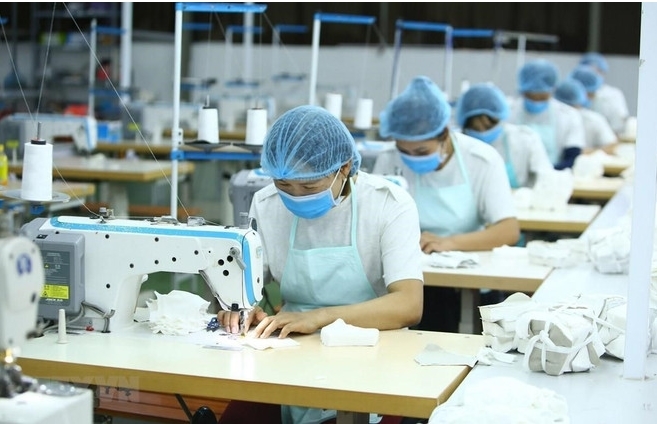
AsemconnectVietnam - Looking back at a period of 2021 to 2025, Vietnam's textile and garment industry has maintained its growth momentum while gradually adjusting its structure, preparing for the road ahead.
Navigating turmoil to stand firm
2025 concluded with textile and garment exports reaching approximately US$46 billion, marking a recovery and restructuring cycle for the industry after unprecedented "shocks."
Speaking to a reporter from the Industry and Trade Newspaper, Mr. Vu Duc Giang - Chairman of Vietnam Textile and Garment Association - stated that, looking back at 2021, few export industries have experienced as many "waves" as textiles and garments. Covid-19 pandemic disrupted global supply chains; in 2021-2022, demand recovered quickly but lacked stability; in 2023-2024, inflation, geopolitical conflicts, and protectionist trends caused the market to shrink; and in 2025, new tariff policies continued to put significant pressure on orders and costs.
In this context, Vietnam's textile and garment exports have maintained a relatively stable growth trajectory. From $35 billion in 2020, export turnover is projected to reach approximately $46 billion in 2025, with a compound annual growth rate of about 5.58% during the 2021-2025 period. In 2025 alone, export turnover is expected to increase by approximately 5.8% compared to 2024.
According to Mr. Vu Duc Giang, this achievement is result of increasing pressure from global brands' policies and labor shifts across the industry. However, he emphasized that the export figures are the result of the efforts of the entire business system and the close support of all levels of government.
A prominent feature of 2021-2025 period is rapid adaptability of businesses, demonstrated by adjusting production methods to meet new brand requirements, proactively restructuring products and markets, and investing in technology. To date, Vietnam's textile and garment industry has exported to 138 markets worldwide.
In terms of product structure, garments continue to account for the dominant share, approximately 80% of export turnover; raw materials account for 9.4%; fabrics about 6%; and the remainder is technical fabrics and accessories. Garment exports are projected to increase from US$27.8 billion in 2020 to approximately US$36.6 billion in 2025. Many high-value items such as t-shirts, jackets, and trousers maintain export turnover exceeding US$1 billion annually.
Notably, product structure has shifted significantly towards product groups with higher technical content, design, and environmental factors. The trend of "greening, digitalization, and fashion-forwarding" is no longer just a guideline but has become a condition for businesses to survive in the global supply chain.
Along with export turnover growth, the industry's trade surplus has also remained high. The value of the export surplus is projected to increase from US$15.5 billion in 2020 to approximately US$21 billion in 2025, the highest level ever, reflecting efforts to increase the use of domestic raw materials and link domestic supply chains.
From a business perspective, Mr. Le Tien Truong - Chairman of Vietnam Textile and Garment Group - said that 2025 will be a successful year for the group, with business performance returning to peak levels like in 2021, but in a much more challenging context. “We made excellent use of the 90 days before the official application of tariffs, creating a strong growth wave in May, June, and July, contributing nearly 30% to the year's performance,” Mr. Truong shared.
Shaping a long-term growth model
Entering 2026, the market “picture” is predicted to continue to face many challenges. Global trade growth is slowing down, and demand from the US, China, and the EU has not yet recovered strongly; Tariffs and technical and environmental barriers are becoming increasingly stringent. However, inflation and interest rates are projected to decrease, and energy prices are more stable, creating certain room for growth for businesses.
According to Dr. Can Van Luc, Chief Economist of BIDV, the biggest risks for textile and garment industry remain prolonged tariffs and weak demand. However, the industry has three advantages: decreasing inflation and interest rates, continued strong digital and green transformation, and better adaptability of businesses compared to previous crisis periods.
In this context, the industry's growth cannot continue to rely on expansion. Mr. Vu Duc Giang stated that from 2026, textile and garment industry will persistently pursue three strategic pillars: diversifying markets, customers, and products; investing heavily in domestic raw material and accessory supply; and deeply applying automation, AI, robotics, and digital transformation. The export turnover target for 2026 is set at 48-49 billion USD. The target for a period of 2026-2030 is approximately $64.5 billion.
Along with that comes need to shift the production model. Vietnamese textile and garment businesses are gradually moving from contract manufacturing to FOB, ODM, and even OBM in some segments, becoming more proactive in design, raw materials, logistics, and warehouse management in import markets. “Businesses that invest in green standards, robotics, and AI will enter the leading group in the market,” Mr. Giang emphasized.
From a state management perspective, Mr. Vu Ba Phu, Director of Trade Promotion Department (Ministry of Industry and Trade), believes that in the long term, a deeper restructuring of textile and garment industry is required. Not only should the industry be self-sufficient in raw materials and accessories, but it also needs to gradually build a textile and fashion ecosystem, from dyeing and finishing industrial parks, human resource training, research and development, brand building. “According to experts, sustainable growth of the industry in next 10 years will depend on three core factors: labor productivity, mastery of technology, and institutional and process reforms”, Mr. Vu Ba Phu stated.
Source: Vitic/ congthuong.vn
2025 concluded with textile and garment exports reaching approximately US$46 billion, marking a recovery and restructuring cycle for the industry after unprecedented "shocks."
Speaking to a reporter from the Industry and Trade Newspaper, Mr. Vu Duc Giang - Chairman of Vietnam Textile and Garment Association - stated that, looking back at 2021, few export industries have experienced as many "waves" as textiles and garments. Covid-19 pandemic disrupted global supply chains; in 2021-2022, demand recovered quickly but lacked stability; in 2023-2024, inflation, geopolitical conflicts, and protectionist trends caused the market to shrink; and in 2025, new tariff policies continued to put significant pressure on orders and costs.
In this context, Vietnam's textile and garment exports have maintained a relatively stable growth trajectory. From $35 billion in 2020, export turnover is projected to reach approximately $46 billion in 2025, with a compound annual growth rate of about 5.58% during the 2021-2025 period. In 2025 alone, export turnover is expected to increase by approximately 5.8% compared to 2024.
According to Mr. Vu Duc Giang, this achievement is result of increasing pressure from global brands' policies and labor shifts across the industry. However, he emphasized that the export figures are the result of the efforts of the entire business system and the close support of all levels of government.
A prominent feature of 2021-2025 period is rapid adaptability of businesses, demonstrated by adjusting production methods to meet new brand requirements, proactively restructuring products and markets, and investing in technology. To date, Vietnam's textile and garment industry has exported to 138 markets worldwide.
In terms of product structure, garments continue to account for the dominant share, approximately 80% of export turnover; raw materials account for 9.4%; fabrics about 6%; and the remainder is technical fabrics and accessories. Garment exports are projected to increase from US$27.8 billion in 2020 to approximately US$36.6 billion in 2025. Many high-value items such as t-shirts, jackets, and trousers maintain export turnover exceeding US$1 billion annually.
Notably, product structure has shifted significantly towards product groups with higher technical content, design, and environmental factors. The trend of "greening, digitalization, and fashion-forwarding" is no longer just a guideline but has become a condition for businesses to survive in the global supply chain.
Along with export turnover growth, the industry's trade surplus has also remained high. The value of the export surplus is projected to increase from US$15.5 billion in 2020 to approximately US$21 billion in 2025, the highest level ever, reflecting efforts to increase the use of domestic raw materials and link domestic supply chains.
From a business perspective, Mr. Le Tien Truong - Chairman of Vietnam Textile and Garment Group - said that 2025 will be a successful year for the group, with business performance returning to peak levels like in 2021, but in a much more challenging context. “We made excellent use of the 90 days before the official application of tariffs, creating a strong growth wave in May, June, and July, contributing nearly 30% to the year's performance,” Mr. Truong shared.
Shaping a long-term growth model
Entering 2026, the market “picture” is predicted to continue to face many challenges. Global trade growth is slowing down, and demand from the US, China, and the EU has not yet recovered strongly; Tariffs and technical and environmental barriers are becoming increasingly stringent. However, inflation and interest rates are projected to decrease, and energy prices are more stable, creating certain room for growth for businesses.
According to Dr. Can Van Luc, Chief Economist of BIDV, the biggest risks for textile and garment industry remain prolonged tariffs and weak demand. However, the industry has three advantages: decreasing inflation and interest rates, continued strong digital and green transformation, and better adaptability of businesses compared to previous crisis periods.
In this context, the industry's growth cannot continue to rely on expansion. Mr. Vu Duc Giang stated that from 2026, textile and garment industry will persistently pursue three strategic pillars: diversifying markets, customers, and products; investing heavily in domestic raw material and accessory supply; and deeply applying automation, AI, robotics, and digital transformation. The export turnover target for 2026 is set at 48-49 billion USD. The target for a period of 2026-2030 is approximately $64.5 billion.
Along with that comes need to shift the production model. Vietnamese textile and garment businesses are gradually moving from contract manufacturing to FOB, ODM, and even OBM in some segments, becoming more proactive in design, raw materials, logistics, and warehouse management in import markets. “Businesses that invest in green standards, robotics, and AI will enter the leading group in the market,” Mr. Giang emphasized.
From a state management perspective, Mr. Vu Ba Phu, Director of Trade Promotion Department (Ministry of Industry and Trade), believes that in the long term, a deeper restructuring of textile and garment industry is required. Not only should the industry be self-sufficient in raw materials and accessories, but it also needs to gradually build a textile and fashion ecosystem, from dyeing and finishing industrial parks, human resource training, research and development, brand building. “According to experts, sustainable growth of the industry in next 10 years will depend on three core factors: labor productivity, mastery of technology, and institutional and process reforms”, Mr. Vu Ba Phu stated.
Source: Vitic/ congthuong.vn
Vietnam’s import and export in 2026: great opportunities, numerous challenges
Vietnam becomes RoK’s key export market in ASEAN
Rubber exports in 2025 hit 4-year low
Exports to Cambodia reached over $5.6 billion in 2025
Vietnam's Pangasius and Tilapia export markets in 2025
Domestic petroleum market in Vietnam in 2025: Prices adjusted 54 times
Challenges for Vietnam's seafood exports in 2026
Exports to Laos to increased in 2025
Tightening conditions for chemical production, business, and imports
Domestic coffee market on January 23, 2026: Price increased by 2000 VND
Domestic rice market on January 23, 2026: Winter-spring paddy trading remained sluggish
Domestic pepper market on January 23, 2026: Prices closed to VND150,000 per kg
Industry, trade sector plays core role in national development in new era: official
Exports of goods to Malaysia increased in 2025

Plan of Hai Duong province for a period of 2021 - 2030, ...
Organize space reasonably and harmoniously, focusing on connecting Hai Duong in common development space, actively contributing to the ...Plan of Hau Giang province in a period of 2021 - 2030, ...
Sustainable forestry development program in a period of ...

Tourism destinations refresh offerings to welcome New ...
Across the Mekong Delta, many tourist sites have been busy upgrading their offerings. At the Con Son tourism site in Can Tho city, members ...Annual New Year festival shines in Da Nang
Phu Quoc emerging as a favourite global destination
Vietnam Airlines adds 270 flights to during 2026 New Year ...
