


Vietnam’s import and export in 2026: great opportunities, numerous challenges
Tuesday, January 27,2026
AsemconnectVietnam - Entering 2026, Vietnam's import-export sector faces a bright future with increasing scale and position but also numerous challenges.
Opportunities from key industries
Entering 2026, import-export activities are expected to continue to be one of important pillars of the Vietnamese economy. After 2021-2025 period with many unpredictable fluctuations in global economy and slow recovery of global trade, Vietnam's exports have still maintained impressive growth, creating an important foundation for macroeconomic stability and enhancing position of Vietnamese goods in the international market.
According to Mr. Nguyen Anh Son, Director of Import-Export Department (Ministry of Industry and Trade), over the past five years, average export growth rate of Vietnam has reached about 10% per year – a high growth rate in the context of many uncertainties in global trade. Notably, since 2023, Vietnam has officially joined group of top 20 largest export economies in the world, marking a significant development in scale and position of a highly open economy.
Beyond growth in export value, import and export play a crucial role in macroeconomic stability. Vietnam has maintained a continuous trade surplus for 10 years, from 2016 to the present. Stable foreign exchange reserves from this surplus contribute to reducing pressure on exchange rate, strengthening foreign exchange reserves and creating flexibility for monetary policy management – a key factor for a deeply integrated economy like Vietnam.
In import and export landscape of recent years and looking ahead to 2026, agricultural products, especially fruits and vegetables, stand out as a bright spot. According to data from Vietnam Customs Department, fruit and vegetable export in November 2025 reached US$701 million. Although lower than previous month due to seasonal factors and natural disasters, it still showed a strong increase compared to the same period in 2024. For the first 11 months of the year, fruit and vegetable exports reached US$7.75 billion, a 17.3% increase year-on-year; estimated total for 2025 is approximately US$8.5 billion, a record high.
Notably, this growth trend is not uniform but shows a clear recovery from mid-2025. After a decline in the first quarter, fruit and vegetable export increased sharply from June, particularly in July and September. This recovery is linked to removal of obstacles in durian exports and increased demand in major markets.
Six key fruit crops – durian, banana, mango, jackfruit, coconut and pommel – continue to play a leading role. Among them, durian has emerged as a strategic product, especially in Chinese market, with estimated sales exceeding $4 billion. Fruit and vegetable exports to China in the first 11 months reached approximately $5 billion, an increase of about 15% and far exceeding the previous year's record. Simultaneously, the US and South Korean markets also recorded positive growth.
In another pillar, textile and garment industry continues to maintain a stable growth trajectory. From $35 billion in 2020, textile and garment export turnover is projected to reach approximately $46 billion in 2025, with a compound annual growth rate of nearly 5.6% during the 2021–2025 periods. In 2025 alone, turnover is expected to increase by approximately 5.8% year-on-year, amidst pressure from global brand policies and increasing labor mobility.
According to Mr. Vu Duc Giang, Chairman of Vietnam Textile and Garment Association, this result reflects rapid adaptation efforts of textile and garment businesses, from adjusting production methods and restructuring products to investing in technology. To date, Vietnamese textiles and garments have exported to 138 markets, with a strong shift in product structure towards product groups with higher technical content, design and environmental factors. Trend of "greening, digitalization, and fashion-oriented" has become a mandatory condition for survival in global supply chain.
Along with export growth, textile and garment industry's trade surplus also remains high, reaching approximately US$21 billion in 2025 – the highest level ever. This reflects efforts to increase the use of domestic raw materials and strengthen domestic supply chain linkages. From a business perspective, 2025 is considered a successful year, as many corporations have taken advantage of favorable market conditions to create a strong growth wave during peak months.
New challenges and growth opportunities for export and import in 2026
Besides bright spots, export and import landscape in 2026 also presents numerous challenges. On the international level, the global trade environment is changing rapidly and unpredictably. The slow recovery of the world economy, geopolitical conflicts, trade fragmentation, and increasing protectionist trends are narrowing the traditional growth opportunities. In particular, new standards on sustainable development, emission reduction, traceability, and social responsibility are increasingly becoming mandatory conditions, creating significant pressure on export businesses.
Domestically, import and export activities still reveal structural bottlenecks. Export growth remains heavily dependent on FDI sector, while domestic enterprises have not yet deeply participated in high value-added stages. Many industries still rely heavily on imported raw materials and components, making the economy vulnerable to external shocks.
Design, international marketing and branding capabilities of Vietnamese businesses remain weak. Meeting technical and green standards of high-end markets is still limited, resulting in domestic value added in exports not commensurate with the achieved export value.
In this context, cross-border e-commerce is opening up new growth opportunities. According to Vietnam E-commerce Association, in 2024, scale of online import and export will reach approximately US$4.1 billion, of which online exports will reach US$1.7 billion. Vietnamese goods are increasingly present on global e-commerce platforms, with a significant increase in the number of sellers and products.
However, cross-border e-commerce remains a "difficult challenge" for most small and medium-sized enterprises (SMEs) due to limitations in human resources, market knowledge, logistics costs and ability to comply with international legal regulations. Survey results show that the majority of businesses desire comprehensive training and support to participate more deeply in global value chain through online channels.
Overall, 2026 presents a landscape of import and export opportunities alongside challenges. Maintaining growth momentum, improving export quality, and increasing domestic added value will be key challenges. In this context, the proactive adaptation of businesses, along with the State's constructive role in improving institutions, supporting green transformation, digital transformation, and the development of cross-border e-commerce will determine potential for breakthroughs in Vietnam's import and export sector in the coming period.
Source: Vitic/ congthuong.vn
Entering 2026, import-export activities are expected to continue to be one of important pillars of the Vietnamese economy. After 2021-2025 period with many unpredictable fluctuations in global economy and slow recovery of global trade, Vietnam's exports have still maintained impressive growth, creating an important foundation for macroeconomic stability and enhancing position of Vietnamese goods in the international market.
According to Mr. Nguyen Anh Son, Director of Import-Export Department (Ministry of Industry and Trade), over the past five years, average export growth rate of Vietnam has reached about 10% per year – a high growth rate in the context of many uncertainties in global trade. Notably, since 2023, Vietnam has officially joined group of top 20 largest export economies in the world, marking a significant development in scale and position of a highly open economy.
Beyond growth in export value, import and export play a crucial role in macroeconomic stability. Vietnam has maintained a continuous trade surplus for 10 years, from 2016 to the present. Stable foreign exchange reserves from this surplus contribute to reducing pressure on exchange rate, strengthening foreign exchange reserves and creating flexibility for monetary policy management – a key factor for a deeply integrated economy like Vietnam.
In import and export landscape of recent years and looking ahead to 2026, agricultural products, especially fruits and vegetables, stand out as a bright spot. According to data from Vietnam Customs Department, fruit and vegetable export in November 2025 reached US$701 million. Although lower than previous month due to seasonal factors and natural disasters, it still showed a strong increase compared to the same period in 2024. For the first 11 months of the year, fruit and vegetable exports reached US$7.75 billion, a 17.3% increase year-on-year; estimated total for 2025 is approximately US$8.5 billion, a record high.
Notably, this growth trend is not uniform but shows a clear recovery from mid-2025. After a decline in the first quarter, fruit and vegetable export increased sharply from June, particularly in July and September. This recovery is linked to removal of obstacles in durian exports and increased demand in major markets.
Six key fruit crops – durian, banana, mango, jackfruit, coconut and pommel – continue to play a leading role. Among them, durian has emerged as a strategic product, especially in Chinese market, with estimated sales exceeding $4 billion. Fruit and vegetable exports to China in the first 11 months reached approximately $5 billion, an increase of about 15% and far exceeding the previous year's record. Simultaneously, the US and South Korean markets also recorded positive growth.
In another pillar, textile and garment industry continues to maintain a stable growth trajectory. From $35 billion in 2020, textile and garment export turnover is projected to reach approximately $46 billion in 2025, with a compound annual growth rate of nearly 5.6% during the 2021–2025 periods. In 2025 alone, turnover is expected to increase by approximately 5.8% year-on-year, amidst pressure from global brand policies and increasing labor mobility.
According to Mr. Vu Duc Giang, Chairman of Vietnam Textile and Garment Association, this result reflects rapid adaptation efforts of textile and garment businesses, from adjusting production methods and restructuring products to investing in technology. To date, Vietnamese textiles and garments have exported to 138 markets, with a strong shift in product structure towards product groups with higher technical content, design and environmental factors. Trend of "greening, digitalization, and fashion-oriented" has become a mandatory condition for survival in global supply chain.
Along with export growth, textile and garment industry's trade surplus also remains high, reaching approximately US$21 billion in 2025 – the highest level ever. This reflects efforts to increase the use of domestic raw materials and strengthen domestic supply chain linkages. From a business perspective, 2025 is considered a successful year, as many corporations have taken advantage of favorable market conditions to create a strong growth wave during peak months.
New challenges and growth opportunities for export and import in 2026
Besides bright spots, export and import landscape in 2026 also presents numerous challenges. On the international level, the global trade environment is changing rapidly and unpredictably. The slow recovery of the world economy, geopolitical conflicts, trade fragmentation, and increasing protectionist trends are narrowing the traditional growth opportunities. In particular, new standards on sustainable development, emission reduction, traceability, and social responsibility are increasingly becoming mandatory conditions, creating significant pressure on export businesses.
Domestically, import and export activities still reveal structural bottlenecks. Export growth remains heavily dependent on FDI sector, while domestic enterprises have not yet deeply participated in high value-added stages. Many industries still rely heavily on imported raw materials and components, making the economy vulnerable to external shocks.
Design, international marketing and branding capabilities of Vietnamese businesses remain weak. Meeting technical and green standards of high-end markets is still limited, resulting in domestic value added in exports not commensurate with the achieved export value.
In this context, cross-border e-commerce is opening up new growth opportunities. According to Vietnam E-commerce Association, in 2024, scale of online import and export will reach approximately US$4.1 billion, of which online exports will reach US$1.7 billion. Vietnamese goods are increasingly present on global e-commerce platforms, with a significant increase in the number of sellers and products.
However, cross-border e-commerce remains a "difficult challenge" for most small and medium-sized enterprises (SMEs) due to limitations in human resources, market knowledge, logistics costs and ability to comply with international legal regulations. Survey results show that the majority of businesses desire comprehensive training and support to participate more deeply in global value chain through online channels.
Overall, 2026 presents a landscape of import and export opportunities alongside challenges. Maintaining growth momentum, improving export quality, and increasing domestic added value will be key challenges. In this context, the proactive adaptation of businesses, along with the State's constructive role in improving institutions, supporting green transformation, digital transformation, and the development of cross-border e-commerce will determine potential for breakthroughs in Vietnam's import and export sector in the coming period.
Source: Vitic/ congthuong.vn
Rubber exports in 2025 hit 4-year low
Exports to Cambodia reached over $5.6 billion in 2025
Vietnam's Pangasius and Tilapia export markets in 2025
Domestic petroleum market in Vietnam in 2025: Prices adjusted 54 times
Challenges for Vietnam's seafood exports in 2026
Exports to Laos to increased in 2025
Tightening conditions for chemical production, business, and imports
Domestic coffee market on January 23, 2026: Price increased by 2000 VND
Domestic rice market on January 23, 2026: Winter-spring paddy trading remained sluggish
Domestic pepper market on January 23, 2026: Prices closed to VND150,000 per kg
Industry, trade sector plays core role in national development in new era: official
Exports of goods to Malaysia increased in 2025
Vietnam's seafood exports in 2025 reach record high of 11.3 billion USD
Tightening consulting conditions, increasing safety requirements in Chemical Industry

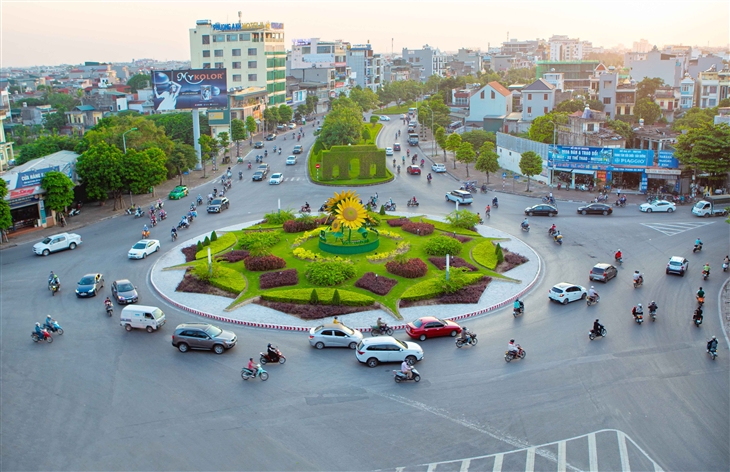
Plan of Hai Duong province for a period of 2021 - 2030, ...
Organize space reasonably and harmoniously, focusing on connecting Hai Duong in common development space, actively contributing to the ...Plan of Hau Giang province in a period of 2021 - 2030, ...
Sustainable forestry development program in a period of ...

Tourism destinations refresh offerings to welcome New ...
Across the Mekong Delta, many tourist sites have been busy upgrading their offerings. At the Con Son tourism site in Can Tho city, members ...Annual New Year festival shines in Da Nang
Phu Quoc emerging as a favourite global destination
Vietnam Airlines adds 270 flights to during 2026 New Year ...
