


Paving a way for accelerating export from a record of $920 billion
Monday, January 12,2026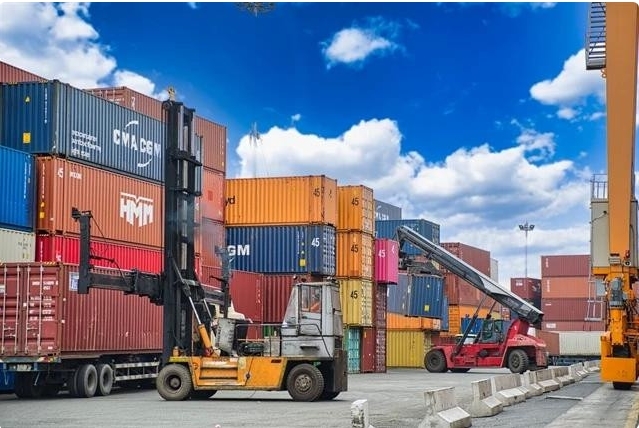
AsemconnectVietnam - A record of $920 billion in import and export in 2025 lays a foundation for 2026, during which Vietnam will boost logistics, improve institutions and develop supporting industries to accelerate exports.
Exports maintain growth amidst international trade fluctuations
In 2025, world trade faces numerous uncertainties as major countries increase barriers and implement retaliatory tariffs, directly impacting supply chains and trade costs. Open economies, including Vietnam, are significantly affected by rising input costs and extended shipping times.
In Asia, Free Trade Agreements (FTAs) continue to play a crucial role in maintaining market share and optimizing tariff preferences. Vietnam, with its extensive FTA network, has relatively well utilized opportunities to increase exports, but the task of meeting increasingly stringent standards for traceability, quarantine and environmental protection is becoming more challenging.
Domestically, natural disasters have caused damage in many raw material areas, disrupting supply chain of agricultural products and processing industries. Despite this, logistics operations have maintained high capacity, ensuring smooth flow of goods for production and export.
According to data from Customs Department, in 2025, Vietnam's total import and export turnover reached approximately US$920 billion, an increase of nearly 17% compared to the previous year. Of this, exports reached approximately US$470.59 billion, an increase of 15.9%; and imports reached US$449.41 billion, an increase of 18%. This helped Vietnam maintain a trade surplus of over US$21 billion and placed it among the world's largest trading economies.
This result also marks an important milestone for economy in a period of deep integration. This achievement reflects rapid adaptability of businesses to fluctuations in international market.
In textile and garment sector, May 10 Corporation is a prime example of ability to adjust its strategy in a timely manner. Speaking to reporters from Industry and Trade Newspaper, Mr. Than Duc Viet, General Director, said that 2025 was a difficult period due to tariff fluctuations and market demand but the company had already achieved its export targets and expanded its domestic market. “We have observed that Vietnamese businesses have good resilience, especially in adapting to meet market demands,” Mr. Than Duc Viet emphasized.
In agricultural sector, many businesses are shifting their investment towards preservation technology and deep processing lines to expand exports to high-end markets. Vina T&T Group exported containers of fruit (longan, fresh coconut) to the Netherlands with a 45-day shipping journey while maintaining quality, affirming position of Vietnamese goods in the EU market. Mr. Nguyen Dinh Tung, Chairman of the company, believes that the key to the industry's sustainability lies in "conducting business systematically" and meeting high international standards.
Agriculture and Environment sector is projected to reach nearly US$70 billion in 2025, with fruit and vegetable exports reaching US$8-8.4 billion, an increase of approximately 18% compared to 2024. According to Mr. Nguyen Thanh Binh, Chairman of Vietnam Fruit and Vegetable Association (Vnfruit), processed fruits and vegetables will continue to experience double-digit growth, reaching approximately US$1.65 billion, significantly increasing product value compared to fresh exports. This is a suitable direction to stabilize domestic prices and expand profit margins.
8% export growth target and solutions from the Ministry of Industry and Trade
Despite achieving many positive results, export share of domestic enterprises is still not commensurate with its potential. Mr. Nguyen Ngoc Hoa, Chairman of the Ho Chi Minh City Business Association (HUBA), stated that the FDI sector accounts for approximately 75% of total export turnover, while domestic enterprises only account for 25%.
“Specific policies are needed to increase proportion of ‘domestic resources,’ especially in agricultural and food sectors. Logistics currently has high costs; investment in infrastructure and the development of commodity exchanges, especially derivatives, are necessary,” Mr. Nguyen Ngoc Hoa proposed.
Experts and businesses also believe that while exports are expected to grow strongly in 2025, there are still many things to consider. Although export market structure has shifted, level of dependence on a few major markets remains high, such as Northeast Asian countries, the US, ASEAN and the EU. Statistics show that export turnover to these four market regions accounts for nearly 80% of the country's total export turnover, leading to risks when demand or trade policies in these markets fluctuate.
Many commodities such as coffee, pepper, shrimp and pangasius fish have high value but the fact that some transactions are not conducted through exchange leaves businesses without tools to hedge against price increases and makes it difficult to sign long-term contracts. Meanwhile, utilization rate of FTA preferences is only about 31%, indicating that there is still significant room for growth.
Forecasts for 2026 indicate that global economy and trade will continue to face many risks, from geopolitical instability to supply chain disruptions, putting significant pressure on export activities of emerging economies. In this context, Ministry of Industry and Trade aims for an 11% increase in the industrial production index (IIP) and an over 8% increase in export turnover compared to 2025 in 2026, while maintaining a trade surplus of approximately US$25 billion.
However, target of an 8% increase in exports is considered challenging, as this growth is based on the high growth projected for 2025. This year, export overcame difficulties, reaching approximately US$470 billion, a 16% increase, significantly higher than the planned 12%.
To realize this goal, Ministry of Industry and Trade has identified focus as restructuring industrial sector towards high value-added production, reducing raw material exports, developing high-tech industries, increasing self-sufficiency in raw materials, and promoting supporting industries. Increasing localization rate is considered a key factor in reducing dependence on imported components.
In addition, Ministry of Industry and Trade will effectively utilize benefits from existing Free Trade Agreements (FTAs), actively exploit recovering markets and expand export channels through new bilateral and multilateral agreements. Trade defense measures, early risk warning, dispute resolution and market update will be implemented regularly and proactively.
Amid geopolitical conflicts, climate change, and high logistics costs, Ministry of Industry and Trade prioritizes promoting negotiations on new-generation FTAs, accelerating implementation of National Logistics Strategy, reducing transportation and warehousing costs, building a commodity derivatives trading market and amending the Commercial Law to align with international standards.
Ministry is also coordinating establishment of international financial centers in Ho Chi Minh City and Da Nang, developing free trade zones; and implementing the "Go Global - Reaching the International Market" program to support small and medium-sized enterprises in participating deeply in export value chains.
From a professional perspective, Associate Professor Dr. Nguyen Thuong Lang of National Economics University believes that Vietnam needs to focus on three strategic pillars: developing domestic industries, especially supporting industries and increasing localization rate; shifting to a green and smart production model, linking exports with environmental standards and digital transformation; Diversifying markets, exploiting Halal region, Africa, South Asia and ASEAN to reduce dependence. "If administrative reforms and cost reductions are strongly implemented, goal of exceeding US$1 trillion in exports and imports by 2026 has a solid foundation", said Mr. Nguyen Thuong Lang.
Source: Vitic/ congthuong.vn
In 2025, world trade faces numerous uncertainties as major countries increase barriers and implement retaliatory tariffs, directly impacting supply chains and trade costs. Open economies, including Vietnam, are significantly affected by rising input costs and extended shipping times.
In Asia, Free Trade Agreements (FTAs) continue to play a crucial role in maintaining market share and optimizing tariff preferences. Vietnam, with its extensive FTA network, has relatively well utilized opportunities to increase exports, but the task of meeting increasingly stringent standards for traceability, quarantine and environmental protection is becoming more challenging.
Domestically, natural disasters have caused damage in many raw material areas, disrupting supply chain of agricultural products and processing industries. Despite this, logistics operations have maintained high capacity, ensuring smooth flow of goods for production and export.
According to data from Customs Department, in 2025, Vietnam's total import and export turnover reached approximately US$920 billion, an increase of nearly 17% compared to the previous year. Of this, exports reached approximately US$470.59 billion, an increase of 15.9%; and imports reached US$449.41 billion, an increase of 18%. This helped Vietnam maintain a trade surplus of over US$21 billion and placed it among the world's largest trading economies.
This result also marks an important milestone for economy in a period of deep integration. This achievement reflects rapid adaptability of businesses to fluctuations in international market.
In textile and garment sector, May 10 Corporation is a prime example of ability to adjust its strategy in a timely manner. Speaking to reporters from Industry and Trade Newspaper, Mr. Than Duc Viet, General Director, said that 2025 was a difficult period due to tariff fluctuations and market demand but the company had already achieved its export targets and expanded its domestic market. “We have observed that Vietnamese businesses have good resilience, especially in adapting to meet market demands,” Mr. Than Duc Viet emphasized.
In agricultural sector, many businesses are shifting their investment towards preservation technology and deep processing lines to expand exports to high-end markets. Vina T&T Group exported containers of fruit (longan, fresh coconut) to the Netherlands with a 45-day shipping journey while maintaining quality, affirming position of Vietnamese goods in the EU market. Mr. Nguyen Dinh Tung, Chairman of the company, believes that the key to the industry's sustainability lies in "conducting business systematically" and meeting high international standards.
Agriculture and Environment sector is projected to reach nearly US$70 billion in 2025, with fruit and vegetable exports reaching US$8-8.4 billion, an increase of approximately 18% compared to 2024. According to Mr. Nguyen Thanh Binh, Chairman of Vietnam Fruit and Vegetable Association (Vnfruit), processed fruits and vegetables will continue to experience double-digit growth, reaching approximately US$1.65 billion, significantly increasing product value compared to fresh exports. This is a suitable direction to stabilize domestic prices and expand profit margins.
8% export growth target and solutions from the Ministry of Industry and Trade
Despite achieving many positive results, export share of domestic enterprises is still not commensurate with its potential. Mr. Nguyen Ngoc Hoa, Chairman of the Ho Chi Minh City Business Association (HUBA), stated that the FDI sector accounts for approximately 75% of total export turnover, while domestic enterprises only account for 25%.
“Specific policies are needed to increase proportion of ‘domestic resources,’ especially in agricultural and food sectors. Logistics currently has high costs; investment in infrastructure and the development of commodity exchanges, especially derivatives, are necessary,” Mr. Nguyen Ngoc Hoa proposed.
Experts and businesses also believe that while exports are expected to grow strongly in 2025, there are still many things to consider. Although export market structure has shifted, level of dependence on a few major markets remains high, such as Northeast Asian countries, the US, ASEAN and the EU. Statistics show that export turnover to these four market regions accounts for nearly 80% of the country's total export turnover, leading to risks when demand or trade policies in these markets fluctuate.
Many commodities such as coffee, pepper, shrimp and pangasius fish have high value but the fact that some transactions are not conducted through exchange leaves businesses without tools to hedge against price increases and makes it difficult to sign long-term contracts. Meanwhile, utilization rate of FTA preferences is only about 31%, indicating that there is still significant room for growth.
Forecasts for 2026 indicate that global economy and trade will continue to face many risks, from geopolitical instability to supply chain disruptions, putting significant pressure on export activities of emerging economies. In this context, Ministry of Industry and Trade aims for an 11% increase in the industrial production index (IIP) and an over 8% increase in export turnover compared to 2025 in 2026, while maintaining a trade surplus of approximately US$25 billion.
However, target of an 8% increase in exports is considered challenging, as this growth is based on the high growth projected for 2025. This year, export overcame difficulties, reaching approximately US$470 billion, a 16% increase, significantly higher than the planned 12%.
To realize this goal, Ministry of Industry and Trade has identified focus as restructuring industrial sector towards high value-added production, reducing raw material exports, developing high-tech industries, increasing self-sufficiency in raw materials, and promoting supporting industries. Increasing localization rate is considered a key factor in reducing dependence on imported components.
In addition, Ministry of Industry and Trade will effectively utilize benefits from existing Free Trade Agreements (FTAs), actively exploit recovering markets and expand export channels through new bilateral and multilateral agreements. Trade defense measures, early risk warning, dispute resolution and market update will be implemented regularly and proactively.
Amid geopolitical conflicts, climate change, and high logistics costs, Ministry of Industry and Trade prioritizes promoting negotiations on new-generation FTAs, accelerating implementation of National Logistics Strategy, reducing transportation and warehousing costs, building a commodity derivatives trading market and amending the Commercial Law to align with international standards.
Ministry is also coordinating establishment of international financial centers in Ho Chi Minh City and Da Nang, developing free trade zones; and implementing the "Go Global - Reaching the International Market" program to support small and medium-sized enterprises in participating deeply in export value chains.
From a professional perspective, Associate Professor Dr. Nguyen Thuong Lang of National Economics University believes that Vietnam needs to focus on three strategic pillars: developing domestic industries, especially supporting industries and increasing localization rate; shifting to a green and smart production model, linking exports with environmental standards and digital transformation; Diversifying markets, exploiting Halal region, Africa, South Asia and ASEAN to reduce dependence. "If administrative reforms and cost reductions are strongly implemented, goal of exceeding US$1 trillion in exports and imports by 2026 has a solid foundation", said Mr. Nguyen Thuong Lang.
Source: Vitic/ congthuong.vn
Agricultural, forestry and fisheries exports near $70 billion mark
Exports to the US increased by 28.1% in 2025
Vietnam’s pepper exports reach US$1.66 billion in 2025
Domestic rice market on January 10, 2026: Fragrant and soft rice prices remain high
Seafood export in 2026: 'long-term challenge' after reaching over $11.3 billion milestones
Cashew industry at a new crossroads
Vietnam's agricultural, forestry and fisheries exports face new opportunities
Key agricultural export sectors surpass US$8 billion
Vietnam's agricultural, forestry, and fishery exports in 2025
Vietnam's import and export turnover reached 930 billion USD in 2025
Developing overseas markets: sustainable path for Vietnamese goods
Seafood exports reached record high of over $11 billion
Imports and exports of in 2025 and targets for 2026
Vietnam’s economic indexes in December and Q4 of 2025

Plan of Hai Duong province for a period of 2021 - 2030, ...
Organize space reasonably and harmoniously, focusing on connecting Hai Duong in common development space, actively contributing to the ...Plan of Hau Giang province in a period of 2021 - 2030, ...
Sustainable forestry development program in a period of ...
