


Agricultural, forestry and fisheries exports near $70 billion mark
Monday, January 12,2026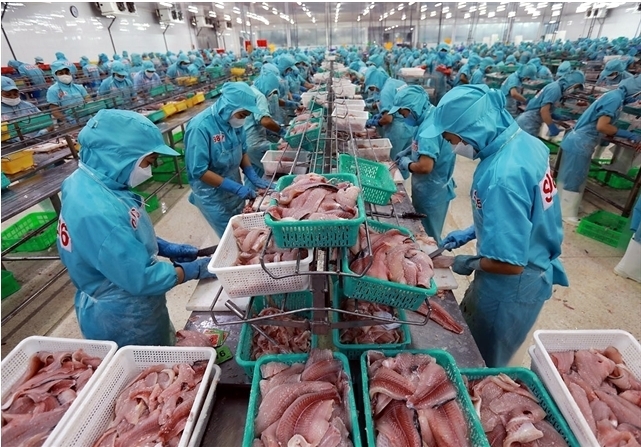
AsemconnectVietnam - Fishery, wood, fruits and vegetables, and coffee have all surpassed historical milestones, contributing to bringing the export value of agricultural, forestry and fisheries products close to $70 billion, far exceeding the 2025 target.
Coffee, wood and vegetables experience strong growth, setting new records
In 2025, Vietnam's wood industry will make a significant mark, steadily climbing to historical sales peaks. In 2025, export value of wood and wood products is expected to reach US$17.3 billion, placing Vietnam 5th in the world in total wood export value and 2nd in high-value wood products, after China.
According to Forestry and Forest Protection Department (Ministry of Agriculture and Environment), after 24 years of participating in international market, Vietnam's wood industry has achieved impressive growth. From US$219 million in 2000, exports increased to US$16 billion in 2022. Although 2023 was affected by post-Covid-19, reducing exports to US$13.5 billion, wood industry is expected to rebound strongly in 2024-2025. As of December 15th, timber exports reached US$13.3 billion, accounting for approximately three-quarters of the total agricultural trade surplus.
Currently, Vietnamese timber is present in over 160 countries, with the US, Japan, China, South Korea and EU accounting for over 90% of the total export value. Despite continuously facing strict traceability requirements, anti-dumping lawsuits, and new tax policies, the industry maintains its position with high value-added interior and exterior furniture products.
Alongside timber, fruits and vegetables have become a bright spot for breakthrough growth, especially in the second half of 2025. According to customs data, in the first half of December, export turnover reached nearly US$400 million, bringing total value from the beginning of the year to mid-December to US$8.2 billion. For the whole year, fruit and vegetable exports are estimated to reach approximately US$8.59 billion, a 20% increase compared to 2024.
China remains the number one market, accounting for 64% of the export value with nearly US$5 billion in the first 11 months. However, the US recorded a 56% increase, reaching US$500 million; South Korea, Japan, the Netherlands, and Taiwan all maintained exports of US$100 million or more, demonstrating increasingly clear potential for market expansion. The fruit and vegetable sector has been particularly successful in the durian, banana, mango, jackfruit, coconut, and pomelo segments, thanks to the standardization of growing area codes, traceability, and compliance with safety standards.
Speaking with a reporter from Industry and Trade Newspaper, Mr. Dang Phuc Nguyen, General Secretary of the Vietnam Fruit and Vegetable Association (Vinafruit), commented: “Fruit and vegetable exports in 2025 are result of a long-term standardization process in production. As quality improves, the doors to international markets open wider, helping the industry enter a phase of sustainable growth”.
In overall picture, coffee is the sector that has made the most significant mark, surpassing the $8 billion mark for the first time, despite a production volume of only about 1.5 million tonnes. Average export price increased by 40% compared to 2024, reflecting a shift from increasing production volume to increasing value.
Not only Robusta plays a fundamental role, but roasted, processed and specialty coffee are experiencing strong growth and are preferred by major roasters in Europe. Many large growing regions such as Dak Lak, Gia Lai, and Lam Dong have adopted smart farming models, using digital technology to monitor production processes and trace origins. Mr. Nguyen Nam Hai - Chairman of the Vietnam Coffee and Cocoa Association - emphasized that the 2025 results are not only due to high prices but also to the achievements of many years of improving quality standards. When products are better, the market will choose us.
Far surpassing the target of approaching the 70 billion USD mark
Along with coffee, wood, and fruits and vegetables, according to the Vietnam Association of Seafood Processing and Export (VASEP), the total cumulative seafood export turnover for the first 11 months of 2025 will reach 10.5 billion USD, an increase of 19% compared to the same period in 2024. This positive result shows that the seafood industry is maintaining a sustainable recovery after the previous decline, with shrimp and pangasius continuing to play a leading role, while other seafood groups are also experiencing growth again.
Forecasts for December 2025 indicate seafood export turnover will reach approximately US$840 million, a slight decrease compared to the same period last year due to businesses being more cautious about exporting to the US market ahead of MMPA regulations and concerns about anti-dumping duties on shrimp from the beginning of 2026. However, for the whole year, seafood exports are expected to reach over US$11.3 billion, an increase of about 11% compared to 2024.
Experts assess that cost pressures, trade regulations and high quality standards remain significant challenges for the industry. However, opportunities to expand added value through processed products, improve traceability standards, and environmental standards are considered key directions to maintain growth.
In total for the first 11 months, agricultural, forestry, and fisheries export turnover reached US$64.01 billion. If current pace is maintained in the final month, 2025 will close with nearly $70 billion, far exceeding the government's target of $65 billion. Many sectors are simultaneously reaching new highs instead of relying solely on a single key group, reflecting the long-term shift in agricultural production towards a high-value, sustainable model that meets global green standards.
Ministry of Agriculture and Environment stated that in the coming period, the sector will continue to promote innovation in production models, boost deep processing, improve quality standards, and expand markets. Associations are encouraged to participate more deeply in policy-making, support businesses in removing trade barriers, develop environmentally friendly products, and move towards a transparent, modern and highly competitive agricultural sector.
Source: Vitic/ congthuong.vn
In 2025, Vietnam's wood industry will make a significant mark, steadily climbing to historical sales peaks. In 2025, export value of wood and wood products is expected to reach US$17.3 billion, placing Vietnam 5th in the world in total wood export value and 2nd in high-value wood products, after China.
According to Forestry and Forest Protection Department (Ministry of Agriculture and Environment), after 24 years of participating in international market, Vietnam's wood industry has achieved impressive growth. From US$219 million in 2000, exports increased to US$16 billion in 2022. Although 2023 was affected by post-Covid-19, reducing exports to US$13.5 billion, wood industry is expected to rebound strongly in 2024-2025. As of December 15th, timber exports reached US$13.3 billion, accounting for approximately three-quarters of the total agricultural trade surplus.
Currently, Vietnamese timber is present in over 160 countries, with the US, Japan, China, South Korea and EU accounting for over 90% of the total export value. Despite continuously facing strict traceability requirements, anti-dumping lawsuits, and new tax policies, the industry maintains its position with high value-added interior and exterior furniture products.
Alongside timber, fruits and vegetables have become a bright spot for breakthrough growth, especially in the second half of 2025. According to customs data, in the first half of December, export turnover reached nearly US$400 million, bringing total value from the beginning of the year to mid-December to US$8.2 billion. For the whole year, fruit and vegetable exports are estimated to reach approximately US$8.59 billion, a 20% increase compared to 2024.
China remains the number one market, accounting for 64% of the export value with nearly US$5 billion in the first 11 months. However, the US recorded a 56% increase, reaching US$500 million; South Korea, Japan, the Netherlands, and Taiwan all maintained exports of US$100 million or more, demonstrating increasingly clear potential for market expansion. The fruit and vegetable sector has been particularly successful in the durian, banana, mango, jackfruit, coconut, and pomelo segments, thanks to the standardization of growing area codes, traceability, and compliance with safety standards.
Speaking with a reporter from Industry and Trade Newspaper, Mr. Dang Phuc Nguyen, General Secretary of the Vietnam Fruit and Vegetable Association (Vinafruit), commented: “Fruit and vegetable exports in 2025 are result of a long-term standardization process in production. As quality improves, the doors to international markets open wider, helping the industry enter a phase of sustainable growth”.
In overall picture, coffee is the sector that has made the most significant mark, surpassing the $8 billion mark for the first time, despite a production volume of only about 1.5 million tonnes. Average export price increased by 40% compared to 2024, reflecting a shift from increasing production volume to increasing value.
Not only Robusta plays a fundamental role, but roasted, processed and specialty coffee are experiencing strong growth and are preferred by major roasters in Europe. Many large growing regions such as Dak Lak, Gia Lai, and Lam Dong have adopted smart farming models, using digital technology to monitor production processes and trace origins. Mr. Nguyen Nam Hai - Chairman of the Vietnam Coffee and Cocoa Association - emphasized that the 2025 results are not only due to high prices but also to the achievements of many years of improving quality standards. When products are better, the market will choose us.
Far surpassing the target of approaching the 70 billion USD mark
Along with coffee, wood, and fruits and vegetables, according to the Vietnam Association of Seafood Processing and Export (VASEP), the total cumulative seafood export turnover for the first 11 months of 2025 will reach 10.5 billion USD, an increase of 19% compared to the same period in 2024. This positive result shows that the seafood industry is maintaining a sustainable recovery after the previous decline, with shrimp and pangasius continuing to play a leading role, while other seafood groups are also experiencing growth again.
Forecasts for December 2025 indicate seafood export turnover will reach approximately US$840 million, a slight decrease compared to the same period last year due to businesses being more cautious about exporting to the US market ahead of MMPA regulations and concerns about anti-dumping duties on shrimp from the beginning of 2026. However, for the whole year, seafood exports are expected to reach over US$11.3 billion, an increase of about 11% compared to 2024.
Experts assess that cost pressures, trade regulations and high quality standards remain significant challenges for the industry. However, opportunities to expand added value through processed products, improve traceability standards, and environmental standards are considered key directions to maintain growth.
In total for the first 11 months, agricultural, forestry, and fisheries export turnover reached US$64.01 billion. If current pace is maintained in the final month, 2025 will close with nearly $70 billion, far exceeding the government's target of $65 billion. Many sectors are simultaneously reaching new highs instead of relying solely on a single key group, reflecting the long-term shift in agricultural production towards a high-value, sustainable model that meets global green standards.
Ministry of Agriculture and Environment stated that in the coming period, the sector will continue to promote innovation in production models, boost deep processing, improve quality standards, and expand markets. Associations are encouraged to participate more deeply in policy-making, support businesses in removing trade barriers, develop environmentally friendly products, and move towards a transparent, modern and highly competitive agricultural sector.
Source: Vitic/ congthuong.vn
Vietnam’s pepper exports reach US$1.66 billion in 2025
Domestic rice market on January 10, 2026: Fragrant and soft rice prices remain high
Seafood export in 2026: 'long-term challenge' after reaching over $11.3 billion milestones
Cashew industry at a new crossroads
Vietnam's agricultural, forestry and fisheries exports face new opportunities
Key agricultural export sectors surpass US$8 billion
Vietnam's agricultural, forestry, and fishery exports in 2025
Vietnam's import and export turnover reached 930 billion USD in 2025
Developing overseas markets: sustainable path for Vietnamese goods
Seafood exports reached record high of over $11 billion
Imports and exports of in 2025 and targets for 2026
Vietnam’s economic indexes in December and Q4 of 2025
Industrial production continues to breakthrough in 2026
Industrial Production Index increased 9.9% year – on – year in Q4 of 2025

Plan of Hai Duong province for a period of 2021 - 2030, ...
Organize space reasonably and harmoniously, focusing on connecting Hai Duong in common development space, actively contributing to the ...Plan of Hau Giang province in a period of 2021 - 2030, ...
Sustainable forestry development program in a period of ...
