


Seafood export in 2026: 'long-term challenge' after reaching over $11.3 billion milestones
Saturday, January 10,2026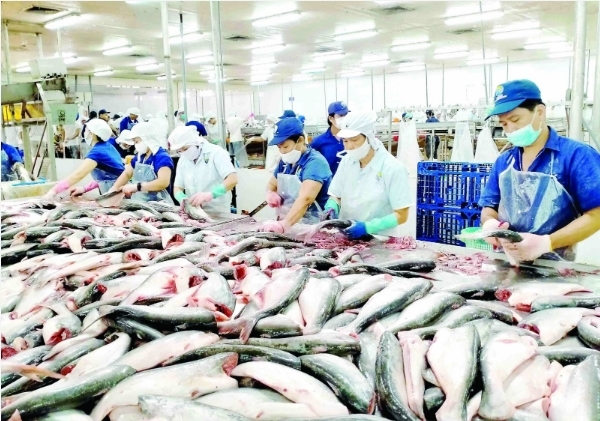
AsemconnectVietnam - After setting a milestone of over $11.3 billion in 2025, Vietnam's seafood exports enter 2026 with many opportunities intertwined with challenges.
Three main reasons for a boost of seafood exports in 2025
According to Vietnam Association of Seafood Processing and Export (VASEP), 2025 presents many challenges for seafood exports, from US retaliatory tariffs, risk of anti-dumping duties on shrimp, high production costs, to increasingly stringent technical barriers. However, it is precisely in this difficult context that seafood exports have recorded unexpected surges.
Firstly, instability in global market increases need for stockpiling, potentially leading to a sharp increase in food prices. This has prompted both consumers and businesses in many countries to increase stockpiling, thereby boosting demand for seafood imports.
Secondly, proactive and flexible approach of Vietnamese seafood business community is crucial. Businesses have early identified risks from unfavorable timelines related to reciprocal tariffs, anti-dumping duties or the US MMPA regulations, thereby developing strategies to increase exports, adjust markets and plan deliveries to minimize negative impacts.
Thirdly, advantages from Free Trade Agreements (FTAs) continue to be an important leverage, helping seafood exports break through in potential markets within the CPTPP, EU and RCEP blocs, compensating for difficulties in some major markets.
Vietnamese seafood accelerates in CPTPP, China and EU
Amidst instability of US market policies and technical barriers, Vietnamese seafood exports have undergone a clear adjustment in their market structure.
CPTPP bloc continues to be a major export driver thanks to tariff advantages and stability of markets such as Japan, Canada, and Australia. Cumulative seafood exports to CPTPP countries are projected to reach US$3.07 billion in 2025, a 22% increase compared to 2024.
China and Hong Kong (China) are the fastest-growing markets among key markets, with total exports reaching US$2.45 billion, a 29% increase. In particular, demand for fresh seafood such as lobster, crab, scallops and clams is increasing sharply, demonstrating growing role of this region in Vietnam's seafood export structure.
For EU, total exports are projected to reach nearly US$1.2 billion, a 12.5% increase compared to 2024. Demand in this market is gradually improving, with aquaculture products showing a greater advantage, while wild-caught seafood remains affected by the IUU yellow card. It can be said that the CPTPP, China & Hong Kong (China) and EU are key markets, playing an important role as a support for businesses in context of the US market facing many uncertainties regarding tax policies and technical barriers.
Specifically, seafood exports to the US decreased by 45% in December. However, for the whole year of 2025, exports to this market will still bring in a remarkable figure, nearly $1.9 billion, a slight increase of 3% compared to 2024.
Surpassing the $11 billion mark: Seafood exports still face the "challenge" of sustainability in 2026
Vietnam Association of Seafood Processing and Export (VASEP) believes that $11 billion mark is primarily result of breakthroughs demonstrating flexibility, taking advantage of opportunities and market sentiment in the context of many uncertainties. However, there is also a cyclical element to the market: after a period of deep decline and low prices, the market enters a phase of supply shortage, leading to a rebound in both price and demand.
Shift in market and product structure is a long-term strategy for businesses and the entire industry, but it requires more time to adjust and adapt gradually, rather than creating sustainable change in just one or two years.
“US tariff policies, trade restrictions and technical barriers may continue to make exporters worldwide cautious and consider shifting markets. This trend simultaneously creates significant competitive pressure in other markets such as EU, China, ASEAN and the Middle East. Furthermore, IUU yellow card remains a "bottleneck" that needs to be addressed to further open the EU market and enhance the reputation of Vietnamese seafood in the US and other markets”, commented Ms. Le Hang, Deputy Secretary General of VASEP.
Source: Vitic/ congthuong.vn
According to Vietnam Association of Seafood Processing and Export (VASEP), 2025 presents many challenges for seafood exports, from US retaliatory tariffs, risk of anti-dumping duties on shrimp, high production costs, to increasingly stringent technical barriers. However, it is precisely in this difficult context that seafood exports have recorded unexpected surges.
Firstly, instability in global market increases need for stockpiling, potentially leading to a sharp increase in food prices. This has prompted both consumers and businesses in many countries to increase stockpiling, thereby boosting demand for seafood imports.
Secondly, proactive and flexible approach of Vietnamese seafood business community is crucial. Businesses have early identified risks from unfavorable timelines related to reciprocal tariffs, anti-dumping duties or the US MMPA regulations, thereby developing strategies to increase exports, adjust markets and plan deliveries to minimize negative impacts.
Thirdly, advantages from Free Trade Agreements (FTAs) continue to be an important leverage, helping seafood exports break through in potential markets within the CPTPP, EU and RCEP blocs, compensating for difficulties in some major markets.
Vietnamese seafood accelerates in CPTPP, China and EU
Amidst instability of US market policies and technical barriers, Vietnamese seafood exports have undergone a clear adjustment in their market structure.
CPTPP bloc continues to be a major export driver thanks to tariff advantages and stability of markets such as Japan, Canada, and Australia. Cumulative seafood exports to CPTPP countries are projected to reach US$3.07 billion in 2025, a 22% increase compared to 2024.
China and Hong Kong (China) are the fastest-growing markets among key markets, with total exports reaching US$2.45 billion, a 29% increase. In particular, demand for fresh seafood such as lobster, crab, scallops and clams is increasing sharply, demonstrating growing role of this region in Vietnam's seafood export structure.
For EU, total exports are projected to reach nearly US$1.2 billion, a 12.5% increase compared to 2024. Demand in this market is gradually improving, with aquaculture products showing a greater advantage, while wild-caught seafood remains affected by the IUU yellow card. It can be said that the CPTPP, China & Hong Kong (China) and EU are key markets, playing an important role as a support for businesses in context of the US market facing many uncertainties regarding tax policies and technical barriers.
Specifically, seafood exports to the US decreased by 45% in December. However, for the whole year of 2025, exports to this market will still bring in a remarkable figure, nearly $1.9 billion, a slight increase of 3% compared to 2024.
Surpassing the $11 billion mark: Seafood exports still face the "challenge" of sustainability in 2026
Vietnam Association of Seafood Processing and Export (VASEP) believes that $11 billion mark is primarily result of breakthroughs demonstrating flexibility, taking advantage of opportunities and market sentiment in the context of many uncertainties. However, there is also a cyclical element to the market: after a period of deep decline and low prices, the market enters a phase of supply shortage, leading to a rebound in both price and demand.
Shift in market and product structure is a long-term strategy for businesses and the entire industry, but it requires more time to adjust and adapt gradually, rather than creating sustainable change in just one or two years.
“US tariff policies, trade restrictions and technical barriers may continue to make exporters worldwide cautious and consider shifting markets. This trend simultaneously creates significant competitive pressure in other markets such as EU, China, ASEAN and the Middle East. Furthermore, IUU yellow card remains a "bottleneck" that needs to be addressed to further open the EU market and enhance the reputation of Vietnamese seafood in the US and other markets”, commented Ms. Le Hang, Deputy Secretary General of VASEP.
Source: Vitic/ congthuong.vn
Vietnam's agricultural, forestry and fisheries exports face new opportunities
Key agricultural export sectors surpass US$8 billion
Vietnam's agricultural, forestry, and fishery exports in 2025
Vietnam's import and export turnover reached 930 billion USD in 2025
Developing overseas markets: sustainable path for Vietnamese goods
Seafood exports reached record high of over $11 billion
Imports and exports of in 2025 and targets for 2026
Vietnam’s economic indexes in December and Q4 of 2025
Industrial production continues to breakthrough in 2026
Industrial Production Index increased 9.9% year – on – year in Q4 of 2025
Challenges of maintaining seafood export growth in 2026
Pangasius exports in 2025 saw growth
Agricultural export: Positive signals from EU market
Vietnam's Industry: Recovery lays foundation for new cycle

Plan of Hai Duong province for a period of 2021 - 2030, ...
Organize space reasonably and harmoniously, focusing on connecting Hai Duong in common development space, actively contributing to the ...Plan of Hau Giang province in a period of 2021 - 2030, ...
Sustainable forestry development program in a period of ...
