


Vietnam's agricultural, forestry and fisheries exports face new opportunities
Saturday, January 10,2026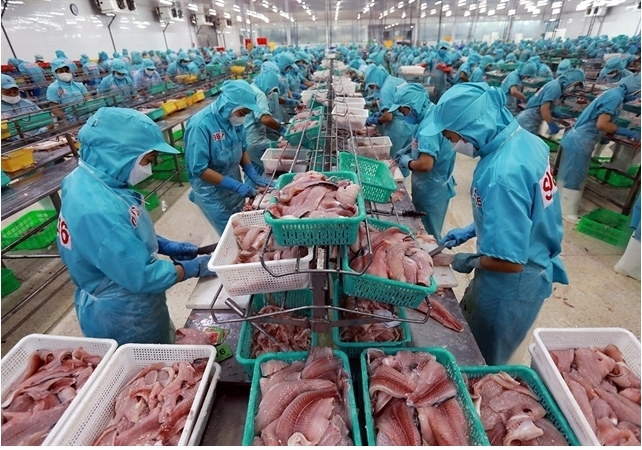
AsemconnectVietnam - A record of over 70 billion USD in export in 2025 opens up new opportunities, placing Vietnam's agricultural, forestry, and fisheries sector before requirement to raise standards and build brands for long-term breakthroughs
Achievements of innovative thinking and improved quality standards
Export landscape for agricultural, forestry and aquatic products in 2025 can be described as "blossoming." Following directives of the Government and the Prime Minister, ministries and agencies such as Ministry of Industry and Trade and Ministry of Agriculture and Environment have proactively implemented a series of solutions to address trade barriers, resolve food safety issues and expand markets.
Trade promotion delegations have been sent to key markets; numerous official letters and cooperation agreements have been signed; and thousands of new planting area and packaging facility codes have been issued, creating a passport for Vietnamese agricultural products to enter the world.
As a result, export value of agricultural, forestry and aquatic products is estimated at US$70.09 billion, an increase of 12% compared to 2024, exceeding expected US$65 billion, becoming a new milestone for the industry. Of these, agricultural products reached US$37.25 billion (+13.7%), seafood US$11.32 billion (+12.7%), forestry products US$18.5 billion (+6.6%), livestock products US$628 million (+17.4%), production inputs US$2.38 billion (+27.1%), and salt US$12.1 million (+84.9%). Vietnam maintained 10 export product groups exceeding US$1 billion, with three groups surpassing US$8 billion: wood US$11.6 billion, coffee and fruits and vegetables both reaching US$8.6 billion.
Agricultural expert Hoang Trong Thuy commented that these figures did not come about naturally. They are result of a long period of preparation, market opening, raising quality standards, promoting trade, and removing technical barriers. It also represents a shift from experience of "selling goods" to a mindset of "building markets and creating demand." Vietnamese agricultural products are entering a new phase where quality is not just a requirement, but a matter of survival.
It's not just about exporting a lot, but about exporting wisely.
Besides impressive export figures for agricultural, forestry and aquatic products in 2025, there's a bigger challenge: how to ensure that Vietnamese goods are not only abundant but also truly valuable, have a brand, consistent standards, and sustainable competitiveness on the international stage.
Mr. Luong Van Tu, Chairman of VICETA, former Chairman of Vietnam Coffee and Cocoa Association and former head of WTO negotiating team, shared that in process of deep integration, WTO agreement is of special significance to Vietnamese agricultural products. It not only opens up markets but also creates pressure to raise quality standards. “Strong production capacity does not equate to competitiveness. Products must meet international standards to stand out in the market,” Mr. Luong Van Tu said.
In fact, Vietnam has a great natural advantage in agricultural products. Coffee and pepper were once world leaders; they still hold number one position in exports; and fruits, vegetables, rice and seafood have seen strong growth. A Nobel laureate professor, upon visiting Vietnam, once said: "Vietnam can absolutely become kitchen of the world". That statement wasn't just praise, but also suggested a vision: to become a global supplier of high-quality food.
But to become the "kitchen of the world," Vietnamese products must be delicious, clean, consistent and uniform. Story of coffee is proof of this. When first brought to international market, percentage of defective beans in Vietnamese coffee reached 70%. After many years of improving harvesting, processing and preservation, Vietnamese coffee is now almost never rejected due to defects. Quality has increased and value has increased accordingly. From simple raw exports, Vietnam has developed roasted and ground coffee, instant coffee, specialty coffee… each step of deep processing adds double, triple or even quadruple the value.
The same is true for rice, cashews, pepper and fruits. Selling raw materials cheaply yields little profit. Selling finished, branded products yields much higher profits. Exporting large quantities is not enough; what Vietnam needs is high-value exports.
Standardization, branding, and product storytelling
Another issue that needs to be addressed directly is fragmented nature of current standards system. Some products simultaneously have three levels of standards: basic standards, provincial standards and national standards, making it difficult for businesses to export. Lack of a unified standard limits access to high-end markets. To expand globally, Vietnam needs a clear set of standards that are close to international standards, building trust with importers and consumers.
Standardization is foundation but for Vietnamese goods to gain a foothold, they must have a brand. Packaging, design, product story, consumer experience – all contribute to emotional value. Previously, when bringing gifts abroad, people often chose foreign products. Now, Vietnamese shoes, clothing, handicrafts and beverages are increasingly popular choices. This is a positive sign showing that Vietnamese goods are changing.
However, communication for agricultural products is still inadequate. Good products need a good story. Vietnamese product weeks, coffee festivals, fruit festivals…are not just for display, but to persuade consumers with stories about culture, nutritional value and journey of creating product. Vietnamese goods may be good, but they must be told well, inspiring customers to buy, use, and recommend them.
In 2026, Prime Minister Pham Minh Chinh assigned Ministry of Agriculture and Environment key task of diversifying markets, products, and supply chains; expanding brands, promoting deep processing and developing domestic and international markets simultaneously. This is not just a directive, but a lifeline for Vietnamese agricultural products in the era of quality competition.
Export of agricultural, forestry and aquatic products in general and Vietnamese agricultural products in particular, is considered to be facing a golden opportunity. Market doors are wide open, global demand is high and Vietnamese brands are gradually gaining recognition. But this opportunity will only turn into sustainable success when we remain steadfast in three pillars: When products are good and meet international standards, the market is no longer an obstacle; when we have a brand, we sell based on value, not just low prices; when we tell the product story well, buyers not only consume but become voluntary ambassadors for Vietnamese goods.
And when Vietnamese agricultural products enter the world with a proactive and confident mindset, we have the right to expect a future where Vietnam is not just a production hub, but a nation providing high-quality food to global market.
Source: Vitic/ congthuong.vn
Export landscape for agricultural, forestry and aquatic products in 2025 can be described as "blossoming." Following directives of the Government and the Prime Minister, ministries and agencies such as Ministry of Industry and Trade and Ministry of Agriculture and Environment have proactively implemented a series of solutions to address trade barriers, resolve food safety issues and expand markets.
Trade promotion delegations have been sent to key markets; numerous official letters and cooperation agreements have been signed; and thousands of new planting area and packaging facility codes have been issued, creating a passport for Vietnamese agricultural products to enter the world.
As a result, export value of agricultural, forestry and aquatic products is estimated at US$70.09 billion, an increase of 12% compared to 2024, exceeding expected US$65 billion, becoming a new milestone for the industry. Of these, agricultural products reached US$37.25 billion (+13.7%), seafood US$11.32 billion (+12.7%), forestry products US$18.5 billion (+6.6%), livestock products US$628 million (+17.4%), production inputs US$2.38 billion (+27.1%), and salt US$12.1 million (+84.9%). Vietnam maintained 10 export product groups exceeding US$1 billion, with three groups surpassing US$8 billion: wood US$11.6 billion, coffee and fruits and vegetables both reaching US$8.6 billion.
Agricultural expert Hoang Trong Thuy commented that these figures did not come about naturally. They are result of a long period of preparation, market opening, raising quality standards, promoting trade, and removing technical barriers. It also represents a shift from experience of "selling goods" to a mindset of "building markets and creating demand." Vietnamese agricultural products are entering a new phase where quality is not just a requirement, but a matter of survival.
It's not just about exporting a lot, but about exporting wisely.
Besides impressive export figures for agricultural, forestry and aquatic products in 2025, there's a bigger challenge: how to ensure that Vietnamese goods are not only abundant but also truly valuable, have a brand, consistent standards, and sustainable competitiveness on the international stage.
Mr. Luong Van Tu, Chairman of VICETA, former Chairman of Vietnam Coffee and Cocoa Association and former head of WTO negotiating team, shared that in process of deep integration, WTO agreement is of special significance to Vietnamese agricultural products. It not only opens up markets but also creates pressure to raise quality standards. “Strong production capacity does not equate to competitiveness. Products must meet international standards to stand out in the market,” Mr. Luong Van Tu said.
In fact, Vietnam has a great natural advantage in agricultural products. Coffee and pepper were once world leaders; they still hold number one position in exports; and fruits, vegetables, rice and seafood have seen strong growth. A Nobel laureate professor, upon visiting Vietnam, once said: "Vietnam can absolutely become kitchen of the world". That statement wasn't just praise, but also suggested a vision: to become a global supplier of high-quality food.
But to become the "kitchen of the world," Vietnamese products must be delicious, clean, consistent and uniform. Story of coffee is proof of this. When first brought to international market, percentage of defective beans in Vietnamese coffee reached 70%. After many years of improving harvesting, processing and preservation, Vietnamese coffee is now almost never rejected due to defects. Quality has increased and value has increased accordingly. From simple raw exports, Vietnam has developed roasted and ground coffee, instant coffee, specialty coffee… each step of deep processing adds double, triple or even quadruple the value.
The same is true for rice, cashews, pepper and fruits. Selling raw materials cheaply yields little profit. Selling finished, branded products yields much higher profits. Exporting large quantities is not enough; what Vietnam needs is high-value exports.
Standardization, branding, and product storytelling
Another issue that needs to be addressed directly is fragmented nature of current standards system. Some products simultaneously have three levels of standards: basic standards, provincial standards and national standards, making it difficult for businesses to export. Lack of a unified standard limits access to high-end markets. To expand globally, Vietnam needs a clear set of standards that are close to international standards, building trust with importers and consumers.
Standardization is foundation but for Vietnamese goods to gain a foothold, they must have a brand. Packaging, design, product story, consumer experience – all contribute to emotional value. Previously, when bringing gifts abroad, people often chose foreign products. Now, Vietnamese shoes, clothing, handicrafts and beverages are increasingly popular choices. This is a positive sign showing that Vietnamese goods are changing.
However, communication for agricultural products is still inadequate. Good products need a good story. Vietnamese product weeks, coffee festivals, fruit festivals…are not just for display, but to persuade consumers with stories about culture, nutritional value and journey of creating product. Vietnamese goods may be good, but they must be told well, inspiring customers to buy, use, and recommend them.
In 2026, Prime Minister Pham Minh Chinh assigned Ministry of Agriculture and Environment key task of diversifying markets, products, and supply chains; expanding brands, promoting deep processing and developing domestic and international markets simultaneously. This is not just a directive, but a lifeline for Vietnamese agricultural products in the era of quality competition.
Export of agricultural, forestry and aquatic products in general and Vietnamese agricultural products in particular, is considered to be facing a golden opportunity. Market doors are wide open, global demand is high and Vietnamese brands are gradually gaining recognition. But this opportunity will only turn into sustainable success when we remain steadfast in three pillars: When products are good and meet international standards, the market is no longer an obstacle; when we have a brand, we sell based on value, not just low prices; when we tell the product story well, buyers not only consume but become voluntary ambassadors for Vietnamese goods.
And when Vietnamese agricultural products enter the world with a proactive and confident mindset, we have the right to expect a future where Vietnam is not just a production hub, but a nation providing high-quality food to global market.
Source: Vitic/ congthuong.vn
Vietnam's agricultural, forestry, and fishery exports in 2025
Vietnam's import and export turnover reached 930 billion USD in 2025
Developing overseas markets: sustainable path for Vietnamese goods
Seafood exports reached record high of over $11 billion
Imports and exports of in 2025 and targets for 2026
Vietnam’s economic indexes in December and Q4 of 2025
Industrial production continues to breakthrough in 2026
Industrial Production Index increased 9.9% year – on – year in Q4 of 2025
Challenges of maintaining seafood export growth in 2026
Pangasius exports in 2025 saw growth
Agricultural export: Positive signals from EU market
Vietnam's Industry: Recovery lays foundation for new cycle
China – Vietnam freight train volume hits record
Exports to US reached nearly 152 billion USD in 2025
