


Seafood exports reached record high of over $11 billion
Friday, January 9,2026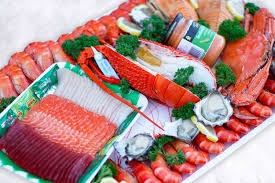
AsemconnectVietnam - By the end of December of 2025, seafood exports reached approximately $840 million, bringing the total seafood exports for the year 2025 to over $11.34 billion, a 13% increase compared to 2024.
Three main reasons driving exports
According to Ms. Le Hang, Deputy Secretary General of the Vietnam Association of Seafood Processing and Export (VASEP), 2025 was a year with many challenges for seafood exports, from US retaliatory tariffs, the risk of anti-dumping duties on shrimp, high production costs, to increasingly stringent technical barriers. However, it is precisely in this difficult context that seafood exports have recorded unexpected surges.
There were three main reasons driving the growth of seafood exports in 2025. Firstly, global market instability increases the need for stockpiling, potentially leading to sharp increases in food prices. This prompts both consumers and businesses in many countries to increase stockpiling, thereby boosting seafood imports.
Secondly, the proactive and flexible approach of the Vietnamese seafood business community plays a crucial role. Businesses have early identified risks from unfavorable timelines related to reciprocal tariffs, anti-dumping duties, and the US MMPA regulations, thereby developing strategies to increase exports, adjust markets, and plan deliveries to minimize negative impacts.
In the context of significant instability in the US market regarding tariff policies and technical barriers, Vietnamese seafood exports have undergone a clear adjustment in their market structure.
China and Hong Kong were the fastest-growing markets among Vietnam's key seafood export markets, with annual export value reaching US$2.45 billion, a 29% increase. In particular, demand for fresh seafood products such as lobster, crab, scallops, and clams has surged, demonstrating the growing role of this region in Vietnam's seafood export structure.
Thirdly, the advantages from free trade agreements (FTAs) continue to be a crucial leverage, helping seafood exports break through in potential markets within the CPTPP, EU, and RCEP blocs, compensating for difficulties in some major markets.
It can be said that the CPTPP, China and Hong Kong, and the EU were key markets, playing a vital role as a support system for businesses amidst the instability of US market policies and technical barriers.
Export challenges in 2026
According to VASEP, the 2025 results show fairly balanced growth among key product groups, with shrimp continuing to play a leading role. In 2025, shrimp exports reached US$4.65 billion, a 20% increase compared to 2024, accounting for the largest share of total export value.
Pangasius fish ranked second with an export value of US$2.19 billion, an 8% increase, experiencing a more "lucky" year compared to other product categories in terms of market conditions due to more favorable anti-dumping duties in the US.
The export value exceeding US$11 billion in 2025 is primarily the result of flexible breakthroughs, effectively utilizing opportunities and market sentiment amidst many uncertainties. However, there is also a cyclical element to the market: after a period of deep decline and low prices, the market enters a phase of supply shortage, leading to a rebound in both price and demand.
The shift in market and product structure is a long-term strategy for businesses and the entire industry, but it requires more time for gradual adjustment and adaptation, rather than creating sustainable change in just one or two years.
US tariff policies, trade restrictions, and technical barriers may continue to make exporters worldwide cautious and consider shifting markets.
This trend simultaneously creates significant competitive pressure in other markets such as the EU, China, ASEAN, and the Middle East. Furthermore, the IUU yellow card remains a bottleneck that needs to be addressed to further open the EU market and enhance the reputation of Vietnamese seafood in the US and other markets.
Based on the above factors, VASEP believes that the challenge of maintaining seafood export growth in 2026 – amidst many uncertainties and unpredictable circumstances – is a major hurdle that Vietnamese seafood businesses must overcome, from the record growth of 2025 to the challenge of sustaining growth in 2026.
CK
Source: VITIC/ thuehaiquan.tapchikinhtetaichinh.vn
Vietnam's import and export turnover reached 930 billion USD in 2025
Imports and exports of in 2025 and targets for 2026
Vietnam’s economic indexes in December and Q4 of 2025
Industrial production continues to breakthrough in 2026
Industrial Production Index increased 9.9% year – on – year in Q4 of 2025
Challenges of maintaining seafood export growth in 2026
Pangasius exports in 2025 saw growth
Agricultural export: Positive signals from EU market
Vietnam's Industry: Recovery lays foundation for new cycle
China – Vietnam freight train volume hits record
Exports to US reached nearly 152 billion USD in 2025
Vietnam-China trade sets new record
Vietnam aims to elevate Autumn Economic Forum into prestigious annual platform: Deputy PM
Fourteen new laws, one ordinance made public


Plan of Hai Duong province for a period of 2021 - 2030, ...
Organize space reasonably and harmoniously, focusing on connecting Hai Duong in common development space, actively contributing to the ...Plan of Hau Giang province in a period of 2021 - 2030, ...
Sustainable forestry development program in a period of ...
