


Agricultural export: Positive signals from EU market
Monday, January 5,2026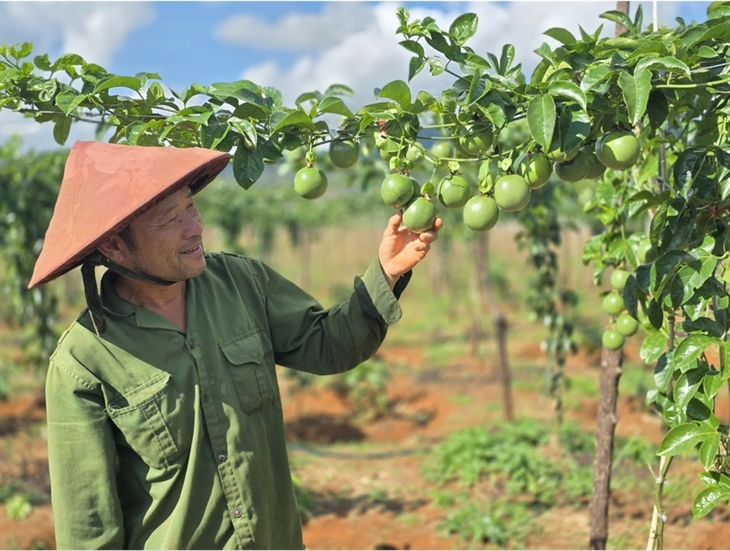
AsemconnectVietnam - Agricultural exports to the EU have seen positive developments, creating new momentum for Vietnamese businesses to compete on quality, standardization, and brand building.
Exports surge, EU market demand improves
According to Vietnam Association of Seafood Processing and Export, in November 2025 alone, seafood exports reached US$989.5 million, a 64.6% increase compared to the same period in 2024. This result contributes to bringing total export value of entire industry for the first 11 months of 2025 to US$10.5 billion, a 19% increase. For EU market, export value exceeded US$1 billion, a 17.4% increase, showing a clear recovery in demand, especially for aquaculture products, although wild-caught seafood is still affected by IUU warnings.
In food sector, Customs Department recorded rice exports in November at 374,288 tons, equivalent to US$190.14 million. Despite a slight decrease in average prices, Vietnam maintained a high export volume of over 7.53 million tons in the first 11 months. A significant highlight is the signing of a cooperation agreement between A AN Foodstuff Joint Stock Company and AWTC GmbH (Germany) for exclusive distribution of A AN clean rice in Europe, opening up a long-term path for Vietnamese rice to penetrate deeper into EU, where quality standards are among the strictest in the world. Expected production is 1,000 tonnes in 2025 and double that in 2026, promising to set a good precedent for Vietnamese businesses to build brands in the high-end market.
Particularly noteworthy is fruit and vegetable sector, the fastest-growing group in EU. In the first nine months of the year, export turnover reached approximately US$269 million, an increase of 51.7%. It is projected that exports for the whole year of 2025 could reach nearly $400 million, the highest level ever. Passion fruit leads in growth rate with a share of approximately 25% of total export value and an increase of over 100%. Many other products such as pineapple, mango, and coconut also recorded double- to triple-digit growth thanks to their alignment with the green consumer trend, prioritizing natural foods with minimal chemical processing.
EU is currently the fastest-growing market for fruits and vegetables, becoming a bright spot helping Vietnam reduce its dependence on traditional markets. Considering member countries, the Netherlands continues to play role of the largest distribution "gateway," accounting for 35-40% of export value thanks to its developed logistics infrastructure. Germany and France rank second and third, with stable demand for frozen fruits and processed products.
Consumer trends in EU are creating positive changes in the structure of Vietnam's agricultural exports. EU prioritizes importing high value-added products such as dried and frozen fruits and juices, instead of just fresh raw materials as before. This helps Vietnamese businesses extend shelf life, reduce logistics pressure, take advantage of seasonal demand, and increase export value per unit of product.
Many businesses have proactively expanded their capacity to meet the growing demand from this demanding market. For example, WestFood has put into operation a 7-hectare agricultural processing plant in Hau Giang, with an investment of 666 billion VND and a capacity of 30,000 tons of finished products per year – currently the largest plant in the Mekong Delta region.
In seafood sector, Sao Ta Food Joint Stock Company (Fimex VN) is boosting exports of processed shrimp, focusing on Nobashi and breaded shrimp products to increase value. Businesses are also expanding their ASC-certified farming areas to ensure traceability, a criterion that is increasingly important as the EU tightens requirements for environmental sustainability and animal welfare.
Experts assess that the strong shift towards deep processing is the key to long-term competitiveness. Not only does this help increase export value of agricultural products, but this model also demonstrates that Vietnamese agricultural products are adapting increasingly quickly to EU standards, shifting from a mindset of "selling raw products in large quantities but with low profits" to "selling refined products with high and stable value."
Businesses are shifting from passive to proactive.
Another positive point in 2025 is that the number of EU warnings on Vietnamese agricultural products will decrease by nearly 50%, from 114 warnings in 2024 to 60. This is considered a significant step forward because EU constantly changes regulations on pesticide residues, antibiotics, additives, and labeling. Even a small deviation can lead to the return or destruction of a shipment.
Speaking with a reporter from Industry and Trade Newspaper, Dr. Ngo Xuan Nam, Deputy Director of SPS Vietnam Office, said that this result reflects the efforts of both businesses and localities in controlling quality from the outset. Instead of waiting for a warning before taking action, businesses have begun to adopt a proactive approach, receiving standard information early to adjust production processes.
In 2025, the SPS Office compiled nearly 1,000 notifications from WTO member countries, including 578 draft new regulations related to food safety and quarantine, and organized six handbooks on SPS implementation for each product group (EU, Australia, Islamic countries, seafood, fruits and vegetables, etc.). Four regional conferences on SPS commitments in the EVFTA, UKVFTA, RCEP, etc., were also held in various localities to guide businesses on how to meet the new standards. The goal is to reduce warnings, increase sustainable compliance capacity, and lay the foundation for stable export expansion.
In addition, many businesses are shifting their approach to the EU in a new way, not only finding importers but also establishing a commercial presence, bonded warehouses, and logistics in EU to proactively distribute and serve customers. This approach helps shorten delivery times, optimize transportation costs, and maintain stable goods circulation.
EU is a high-standard market with frequently updated regulations. In the coming period, the bloc will continue to strictly control pesticide residue levels and combat trade fraud. The implementation of the EUDR (Anti-Deforestation Regulation) has been postponed, giving businesses time to prepare, but it still requires significant investment in green transitions and transparent data on farming areas.
Many experts believe that to effectively utilize EVFTA and maintain growth momentum, Vietnamese businesses need to invest in traceability, and establish farming and cultivation areas that meet international standards. In addition, they should promote deep processing and value-added products. They should also promptly monitor changes in SPS, MRL, and environmental regulations. Furthermore, they need to build brands and establish a long-term commercial presence in EU.
With an increasingly improved compliance base and proactive efforts from businesses, the EU market is considered to have enormous potential. Vietnamese agricultural products are gradually shifting from "begging for market access" to "building markets." This is considered an important step in raising the profile of Vietnamese agricultural products on the world export map.
Source: Vitic/ congthuong.vn
According to Vietnam Association of Seafood Processing and Export, in November 2025 alone, seafood exports reached US$989.5 million, a 64.6% increase compared to the same period in 2024. This result contributes to bringing total export value of entire industry for the first 11 months of 2025 to US$10.5 billion, a 19% increase. For EU market, export value exceeded US$1 billion, a 17.4% increase, showing a clear recovery in demand, especially for aquaculture products, although wild-caught seafood is still affected by IUU warnings.
In food sector, Customs Department recorded rice exports in November at 374,288 tons, equivalent to US$190.14 million. Despite a slight decrease in average prices, Vietnam maintained a high export volume of over 7.53 million tons in the first 11 months. A significant highlight is the signing of a cooperation agreement between A AN Foodstuff Joint Stock Company and AWTC GmbH (Germany) for exclusive distribution of A AN clean rice in Europe, opening up a long-term path for Vietnamese rice to penetrate deeper into EU, where quality standards are among the strictest in the world. Expected production is 1,000 tonnes in 2025 and double that in 2026, promising to set a good precedent for Vietnamese businesses to build brands in the high-end market.
Particularly noteworthy is fruit and vegetable sector, the fastest-growing group in EU. In the first nine months of the year, export turnover reached approximately US$269 million, an increase of 51.7%. It is projected that exports for the whole year of 2025 could reach nearly $400 million, the highest level ever. Passion fruit leads in growth rate with a share of approximately 25% of total export value and an increase of over 100%. Many other products such as pineapple, mango, and coconut also recorded double- to triple-digit growth thanks to their alignment with the green consumer trend, prioritizing natural foods with minimal chemical processing.
EU is currently the fastest-growing market for fruits and vegetables, becoming a bright spot helping Vietnam reduce its dependence on traditional markets. Considering member countries, the Netherlands continues to play role of the largest distribution "gateway," accounting for 35-40% of export value thanks to its developed logistics infrastructure. Germany and France rank second and third, with stable demand for frozen fruits and processed products.
Consumer trends in EU are creating positive changes in the structure of Vietnam's agricultural exports. EU prioritizes importing high value-added products such as dried and frozen fruits and juices, instead of just fresh raw materials as before. This helps Vietnamese businesses extend shelf life, reduce logistics pressure, take advantage of seasonal demand, and increase export value per unit of product.
Many businesses have proactively expanded their capacity to meet the growing demand from this demanding market. For example, WestFood has put into operation a 7-hectare agricultural processing plant in Hau Giang, with an investment of 666 billion VND and a capacity of 30,000 tons of finished products per year – currently the largest plant in the Mekong Delta region.
In seafood sector, Sao Ta Food Joint Stock Company (Fimex VN) is boosting exports of processed shrimp, focusing on Nobashi and breaded shrimp products to increase value. Businesses are also expanding their ASC-certified farming areas to ensure traceability, a criterion that is increasingly important as the EU tightens requirements for environmental sustainability and animal welfare.
Experts assess that the strong shift towards deep processing is the key to long-term competitiveness. Not only does this help increase export value of agricultural products, but this model also demonstrates that Vietnamese agricultural products are adapting increasingly quickly to EU standards, shifting from a mindset of "selling raw products in large quantities but with low profits" to "selling refined products with high and stable value."
Businesses are shifting from passive to proactive.
Another positive point in 2025 is that the number of EU warnings on Vietnamese agricultural products will decrease by nearly 50%, from 114 warnings in 2024 to 60. This is considered a significant step forward because EU constantly changes regulations on pesticide residues, antibiotics, additives, and labeling. Even a small deviation can lead to the return or destruction of a shipment.
Speaking with a reporter from Industry and Trade Newspaper, Dr. Ngo Xuan Nam, Deputy Director of SPS Vietnam Office, said that this result reflects the efforts of both businesses and localities in controlling quality from the outset. Instead of waiting for a warning before taking action, businesses have begun to adopt a proactive approach, receiving standard information early to adjust production processes.
In 2025, the SPS Office compiled nearly 1,000 notifications from WTO member countries, including 578 draft new regulations related to food safety and quarantine, and organized six handbooks on SPS implementation for each product group (EU, Australia, Islamic countries, seafood, fruits and vegetables, etc.). Four regional conferences on SPS commitments in the EVFTA, UKVFTA, RCEP, etc., were also held in various localities to guide businesses on how to meet the new standards. The goal is to reduce warnings, increase sustainable compliance capacity, and lay the foundation for stable export expansion.
In addition, many businesses are shifting their approach to the EU in a new way, not only finding importers but also establishing a commercial presence, bonded warehouses, and logistics in EU to proactively distribute and serve customers. This approach helps shorten delivery times, optimize transportation costs, and maintain stable goods circulation.
EU is a high-standard market with frequently updated regulations. In the coming period, the bloc will continue to strictly control pesticide residue levels and combat trade fraud. The implementation of the EUDR (Anti-Deforestation Regulation) has been postponed, giving businesses time to prepare, but it still requires significant investment in green transitions and transparent data on farming areas.
Many experts believe that to effectively utilize EVFTA and maintain growth momentum, Vietnamese businesses need to invest in traceability, and establish farming and cultivation areas that meet international standards. In addition, they should promote deep processing and value-added products. They should also promptly monitor changes in SPS, MRL, and environmental regulations. Furthermore, they need to build brands and establish a long-term commercial presence in EU.
With an increasingly improved compliance base and proactive efforts from businesses, the EU market is considered to have enormous potential. Vietnamese agricultural products are gradually shifting from "begging for market access" to "building markets." This is considered an important step in raising the profile of Vietnamese agricultural products on the world export map.
Source: Vitic/ congthuong.vn
China – Vietnam freight train volume hits record
Exports to US reached nearly 152 billion USD in 2025
Vietnam-China trade sets new record
Vietnam aims to elevate Autumn Economic Forum into prestigious annual platform: Deputy PM
Fourteen new laws, one ordinance made public
Textile and garment exports estimated to reach 46 billion USD in 2025
Rules of origin for exports to UK under CPTPP
Vietnam positions itself as a key Southeast Asian economic hub: Thai newspaper
Hai Phong records positive progress in combating IUU fishing
Vietrade warns of scams related to National Fair – Spring 2026
Electronic C/O: businesses need to prepare carefully to optimize export opportunities
Tea exports: Preferential C/Os become strategic lever in FTAs
Vietnam's coffee exports to the EU increased sharply in the first 11 months of 2025 thanks to the EVFTA.
Latest update on utilization rate of preferential C/O in Vietnam's FTAs

Plan of Hai Duong province for a period of 2021 - 2030, ...
Organize space reasonably and harmoniously, focusing on connecting Hai Duong in common development space, actively contributing to the ...Plan of Hau Giang province in a period of 2021 - 2030, ...
Sustainable forestry development program in a period of ...

Vietnam’s auto sales up 6.5% over 11 months
The Vietnam Automobile Manufacturers’ Association (VAMA) has reported that total auto sales of its members in the first 11 months of 2025 ...Vietnamese canoeists bring home first gold at SEA Games 33
SEA Games 33: Good news keeps flowing from swimming, ...
Exhibition on President Ho Chi Minh’s footprints in Russia ...
