


Vietnam-US seafood trade: from humble beginnings to remarkable growth
Friday, December 26,2025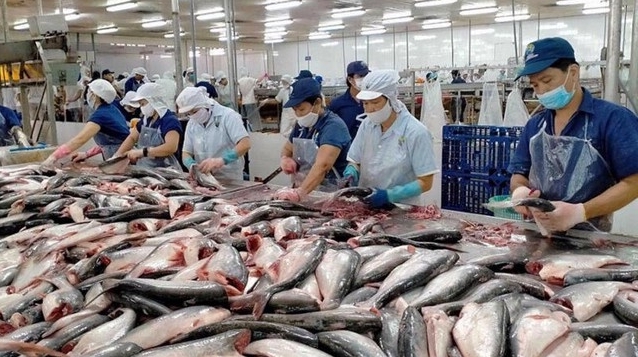
AsemconnectVietnam - In the early 1990s, Vietnam's seafood exports to the United States were only $39 million, but today they have grown to nearly $2 billion annually.
Vietnam-US Seafood Trade: 30 Years in Review
2025 marks the 30th anniversary of the normalization of diplomatic relations between Vietnam and the United States (1995-2025). Along with the country's process of international economic integration, Vietnam-US seafood trade has experienced exceptionally impressive growth, from an initial scale of a few tens of millions of dollars to nearly $2 billion annually, making the United States Vietnam's number one seafood export market for many consecutive years.
According to Ms. Le Hang, Deputy Secretary General of Vietnam Association of Seafood Processing and Export (VASEP), in the late 1990s, Vietnam's seafood exports to the United States started very modestly.
In 1997, export value only reached $39 million, mainly frozen shrimp. However, the picture fundamentally changed after the two countries signed the Vietnam-US Bilateral Trade Agreement (BTA) in 2000. In that same year, seafood exports to the United States surged to nearly $300 million, ushering in a period of rapid growth lasting for more than two decades.
Next significant milestone was 2007, when Vietnam officially joined the WTO. From then on, Vietnamese seafood entered a period of strong expansion in the US market. Export turnover quickly surpassed US$700 million in 2008, exceeding US$1 billion for the first time in 2010 and remaining stable at US$1.1-1.7 billion during the 2011-2014 period.
“It can be said that the 2010-2014 period was a period of rapid growth for Vietnamese seafood in the US, when all three main product groups – shrimp, pangasius, and tuna – experienced strong breakthroughs, bringing the total turnover in 2014 to a record high of US$1.74 billion,” Ms. Le Hang informed.
Entering the 2020s, despite the severe impact of the COVID-19 pandemic and disruptions to the global supply chain, seafood exports to the United States maintained significant momentum. In 2020, turnover reached US$1.62 billion; in 2021, it surged to US$2.05 billion; In 2022, exports reached a historical peak of $2.15 billion. This was the result of a synergy between increased consumer demand after the pandemic and the rapid adaptability of Vietnamese businesses.
“After the two countries upgraded their relationship to a Comprehensive Strategic Partnership (September 2023), seafood exports were affected by inflation, high inventory levels, and the trend of tightening spending in the United States, but still maintained a very large scale: $1.56 billion in 2023, recovering to $1.82 billion in 2024 and estimated to reach nearly $1.95 billion in 2025. Compared to the starting point of only $39 million in 1997, Vietnam's seafood exports to the United States have increased almost 50 times in nearly 30 years,” Ms. Le Hang said.
In terms of product structure, shrimp has consistently been the leading product group for the past 30 years. From over $32 million in 1997, shrimp exports to this country peaked at over $1.06 billion in 2014, maintaining around $800 million - $1.05 billion in recent years and estimated to reach $814.7 million in 2025.
Pangasius (catfish) has emerged strongly since the early 2000s, especially breaking through in the period 2010 - 2018 with many years reaching $300 - $550 million. Despite strong fluctuations due to anti-dumping duties and increased compliance costs, pangasius is still expected to maintain a scale of over $330 million in 2025.
Tuna exports have shown sustained growth, from very low levels in the late 1990s to nearly $487 million in 2022, currently fluctuating between $350 - $390 million per year. In addition, product groups such as other marine fish, crabs, squid, octopus, and shellfish are increasingly contributing positively, reflecting the trend of diversifying export products.
Adapting for Sustainable Development
To overcome challenges and enter a “new era,” the Vietnamese seafood industry must prepare itself for the fluctuations of the US market, from market strategy and risk management to environmental and social standards. Improving quality, increasing transparency in the supply chain, reducing emissions, and digitizing traceability are no longer options, but have become mandatory requirements.
From a market structure perspective, Vietnam and the United States have almost no direct competition in seafood products, but rather a clear complementary relationship. Facilitating access for Vietnamese seafood to this market not only provides US consumers with more product choices but also expands opportunities for Vietnam to increase imports of soybeans and grains from the US as feed ingredients for aquaculture, thereby forming a two-way value chain.
“After 30 years, Vietnam-US seafood trade has progressed from exploratory relations to opening up, overcoming barriers, deep integration, and moving towards sustainability. In the context of bilateral relations being elevated to a Comprehensive Strategic Partnership, expectations for a stable, transparent, and long-term development phase for Vietnamese seafood in this market are becoming clearer than ever,” Ms. Le Hang emphasized.
Source: Vitic/ congthuong.vn
2025 marks the 30th anniversary of the normalization of diplomatic relations between Vietnam and the United States (1995-2025). Along with the country's process of international economic integration, Vietnam-US seafood trade has experienced exceptionally impressive growth, from an initial scale of a few tens of millions of dollars to nearly $2 billion annually, making the United States Vietnam's number one seafood export market for many consecutive years.
According to Ms. Le Hang, Deputy Secretary General of Vietnam Association of Seafood Processing and Export (VASEP), in the late 1990s, Vietnam's seafood exports to the United States started very modestly.
In 1997, export value only reached $39 million, mainly frozen shrimp. However, the picture fundamentally changed after the two countries signed the Vietnam-US Bilateral Trade Agreement (BTA) in 2000. In that same year, seafood exports to the United States surged to nearly $300 million, ushering in a period of rapid growth lasting for more than two decades.
Next significant milestone was 2007, when Vietnam officially joined the WTO. From then on, Vietnamese seafood entered a period of strong expansion in the US market. Export turnover quickly surpassed US$700 million in 2008, exceeding US$1 billion for the first time in 2010 and remaining stable at US$1.1-1.7 billion during the 2011-2014 period.
“It can be said that the 2010-2014 period was a period of rapid growth for Vietnamese seafood in the US, when all three main product groups – shrimp, pangasius, and tuna – experienced strong breakthroughs, bringing the total turnover in 2014 to a record high of US$1.74 billion,” Ms. Le Hang informed.
Entering the 2020s, despite the severe impact of the COVID-19 pandemic and disruptions to the global supply chain, seafood exports to the United States maintained significant momentum. In 2020, turnover reached US$1.62 billion; in 2021, it surged to US$2.05 billion; In 2022, exports reached a historical peak of $2.15 billion. This was the result of a synergy between increased consumer demand after the pandemic and the rapid adaptability of Vietnamese businesses.
“After the two countries upgraded their relationship to a Comprehensive Strategic Partnership (September 2023), seafood exports were affected by inflation, high inventory levels, and the trend of tightening spending in the United States, but still maintained a very large scale: $1.56 billion in 2023, recovering to $1.82 billion in 2024 and estimated to reach nearly $1.95 billion in 2025. Compared to the starting point of only $39 million in 1997, Vietnam's seafood exports to the United States have increased almost 50 times in nearly 30 years,” Ms. Le Hang said.
In terms of product structure, shrimp has consistently been the leading product group for the past 30 years. From over $32 million in 1997, shrimp exports to this country peaked at over $1.06 billion in 2014, maintaining around $800 million - $1.05 billion in recent years and estimated to reach $814.7 million in 2025.
Pangasius (catfish) has emerged strongly since the early 2000s, especially breaking through in the period 2010 - 2018 with many years reaching $300 - $550 million. Despite strong fluctuations due to anti-dumping duties and increased compliance costs, pangasius is still expected to maintain a scale of over $330 million in 2025.
Tuna exports have shown sustained growth, from very low levels in the late 1990s to nearly $487 million in 2022, currently fluctuating between $350 - $390 million per year. In addition, product groups such as other marine fish, crabs, squid, octopus, and shellfish are increasingly contributing positively, reflecting the trend of diversifying export products.
Adapting for Sustainable Development
To overcome challenges and enter a “new era,” the Vietnamese seafood industry must prepare itself for the fluctuations of the US market, from market strategy and risk management to environmental and social standards. Improving quality, increasing transparency in the supply chain, reducing emissions, and digitizing traceability are no longer options, but have become mandatory requirements.
From a market structure perspective, Vietnam and the United States have almost no direct competition in seafood products, but rather a clear complementary relationship. Facilitating access for Vietnamese seafood to this market not only provides US consumers with more product choices but also expands opportunities for Vietnam to increase imports of soybeans and grains from the US as feed ingredients for aquaculture, thereby forming a two-way value chain.
“After 30 years, Vietnam-US seafood trade has progressed from exploratory relations to opening up, overcoming barriers, deep integration, and moving towards sustainability. In the context of bilateral relations being elevated to a Comprehensive Strategic Partnership, expectations for a stable, transparent, and long-term development phase for Vietnamese seafood in this market are becoming clearer than ever,” Ms. Le Hang emphasized.
Source: Vitic/ congthuong.vn
Vietnam’s animal feed market in 2025
Rules of origin for exports to UK under CPTPP
Rice exports reached over US$3.85 billion in 11 months of 2025
Exports to Japan showed growth in 11 months of 2025
Exports to South Korea in 11 months of 2025
Trade revenue approached $900 billion mark
US accounted for over 80% of Vietnam's crab exports
Vietnam's lobster export soar, reaching a record of $712 million
Durian export: transparent codes to secure billion-Dollar market
Vietnamese bananas open up export opportunities thanks to partnership with US distributor
EU's whitefish supply shortage and opportunities for Vietnamese pangasius
Safe chemical industry to be built
Latest update on utilization rate of preferential C/O in Vietnam's FTAs
Electronic C/O: businesses need to prepare carefully to optimize export opportunities


Plan of Hai Duong province for a period of 2021 - 2030, ...
Organize space reasonably and harmoniously, focusing on connecting Hai Duong in common development space, actively contributing to the ...Plan of Hau Giang province in a period of 2021 - 2030, ...
Sustainable forestry development program in a period of ...

Vietnam’s auto sales up 6.5% over 11 months
The Vietnam Automobile Manufacturers’ Association (VAMA) has reported that total auto sales of its members in the first 11 months of 2025 ...Vietnamese canoeists bring home first gold at SEA Games 33
SEA Games 33: Good news keeps flowing from swimming, ...
Exhibition on President Ho Chi Minh’s footprints in Russia ...
