


Passion fruit export experience rapid growth, setting an export record
Friday, December 26,2025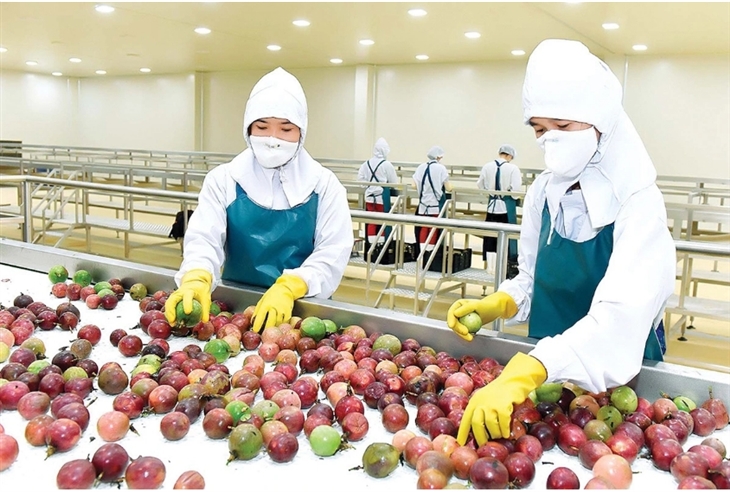
AsemconnectVietnam - Passion fruit exports have seen a breakthrough in growth, from US$20 million in 2015 to over US$222 million in 2023 and reaching US$202 million in just the first 10 months of 2025.
Rapid export growth
At the forum "Sustainable Development of Passion Fruit Industry through a Supply Chain" organized by Ministry of Agriculture and Environment on December 12th, Mr. To Van Huan, representative of Department of Crop Production and Plant Protection, emphasized that Vietnam's passion fruit exports have increased more than tenfold in 10 years, from US$20 million (2015) to US$222.5 million (2023). By October 2025, export turnover is expected to continue to exceed US$202 million, demonstrating stable growth despite fluctuations in global market.
The Central Highlands is currently the "capital" of passion fruit, accounting for over 86% of the area and 92.5% of the country's production. Vietnam has announced circulation of 43 varieties, meeting increasing demand for production and export. According to Mr. Huan, Vietnamese passion fruit has a special advantage in terms of climate, rapid growth, and high yield. More than 80% of production is used for processing and exporting fresh fruit, opening up a vast market.
However, the industry still faces challenges: lack of disease-free varieties, fragmented production, loose supply chains, inconsistent processing technology, and increasingly stringent quarantine barriers.
Key fruit crop project for 2025–2030 aims to maintain passion fruit area at 12,000–15,000 hectares, with a production of 250,000–300,000 tonnes in key regions such as Gia Lai, Lam Dong, Dak Lak, Quang Tri, Nghe An, and Son La. According to Gia Lai Department of Agriculture and Environment, total area of passion fruit cultivation nationwide reached 12,600 hectares, with a production of over 178,500 tonnes. Central Highlands accounted for 88% of area, with Gia Lai leading the way. In 2025 alone, Gia Lai is estimated to have 5,650 hectares of passion fruit with a production of over 210,000 tonnes. The province has been granted 48 planting area codes and 6 export packaging facilities – key factors in expanding the market.
Mr. Doan Ngoc Co, Deputy Director of Gia Lai Department of Agriculture and Environment, said that official export of passion fruit to Chinese market since July 2022 has created a major boost, significantly increasing the value of the entire chain. Many businesses have partnered with cooperatives and farmers to form a closed production-processing-consumption chain, meeting the requirements for planting area codes, packaging and deep processing.
However, the industry still faces challenges such as climate change, fragmented land areas, spontaneous planting, inconsistent seed quality, and stringent requirements from the EU, the US, Japan, and China.
Establishing large-scale raw material areas
Mr. Vu Minh Viet, Deputy Editor-in-Chief of the Agriculture and Environment Newspaper, noted that passion fruit is becoming one of the fastest-growing crops, making a significant contribution to Vietnam's agricultural export turnover. The Central Highlands – especially Gia Lai – has formed a complete value chain from seed, production, processing to export.
However, rapid development, at times even "overheated," has led to complex disease outbreaks, inconsistent seed quality, and reduced yields in many orchards. If seed quality, production organization, and pest management are not rectified soon, the passion fruit industry could repeat the mistakes of the spontaneous development phase.
Global passion fruit market is growing rapidly thanks to consumer trends towards natural, low-sugar, nutrient-rich, and sustainably certified products. Market size is projected to reach approximately US$4.8 billion by 2025, with processed and frozen products accounting for a large proportion. Vietnam is currently among the top 10 largest passion fruit producers and exporters in the world, after Brazil, Colombia, Ecuador, and Peru.
Notably, since July 2022, Vietnamese passion fruit has been officially exported to China, providing a significant boost to the entire industry, expanding consumer markets and increasing export value. In Gia Lai, many businesses have partnered with cooperatives and farmers to form a closed production, processing, and consumption chain, aiming for sustainable exports.
However, the industry still faces many challenges: fragmented production, weak supply chain linkages, inconsistent seed quality, complex disease outbreaks, and high logistics costs. Meanwhile, major markets such as the EU, the US, Japan, and China are increasingly tightening technical standards and traceability requirements.
In this context, value chain linkages play a decisive role, especially "business, cooperative, farmer" model, moving towards the "five stakeholders" model: the State, businesses, cooperatives, farmers, and banks. Key solutions include: planning and developing standardized raw material areas; controlling the quality and origin of seeds; standardizing cultivation processes according to VietGAP and GlobalGAP; promoting digital transformation in cultivation area management; investing in deep processing; and building and promoting the Vietnamese passion fruit brand in the international market. "The linkage between businesses, cooperatives, and farmers will be the key to sustainable development and enhanced competitiveness," Mr. Doan Ngoc Co shared.
Ms. Nguyen Thi Bich Ngoc, Deputy Director of Institute of Plant Protection (Vietnam Academy of Agricultural Sciences), proposed the early development of a national standard for disease-free passion fruit seedlings, strengthening the management of commercial varieties, and applying a three-tiered greenhouse system in seed production.
She also suggested establishing large-scale, uniform raw material areas with consistent varieties and technical processes, with the participation of the Institute of Plant Protection in monitoring and warning about pests and diseases. She also recommended promoting the development of production models that meet VietGAP and GlobalGAP standards to improve the quality of passion fruit and better meet the requirements of the export market.
Source: Vitic/ congthuong.vn
At the forum "Sustainable Development of Passion Fruit Industry through a Supply Chain" organized by Ministry of Agriculture and Environment on December 12th, Mr. To Van Huan, representative of Department of Crop Production and Plant Protection, emphasized that Vietnam's passion fruit exports have increased more than tenfold in 10 years, from US$20 million (2015) to US$222.5 million (2023). By October 2025, export turnover is expected to continue to exceed US$202 million, demonstrating stable growth despite fluctuations in global market.
The Central Highlands is currently the "capital" of passion fruit, accounting for over 86% of the area and 92.5% of the country's production. Vietnam has announced circulation of 43 varieties, meeting increasing demand for production and export. According to Mr. Huan, Vietnamese passion fruit has a special advantage in terms of climate, rapid growth, and high yield. More than 80% of production is used for processing and exporting fresh fruit, opening up a vast market.
However, the industry still faces challenges: lack of disease-free varieties, fragmented production, loose supply chains, inconsistent processing technology, and increasingly stringent quarantine barriers.
Key fruit crop project for 2025–2030 aims to maintain passion fruit area at 12,000–15,000 hectares, with a production of 250,000–300,000 tonnes in key regions such as Gia Lai, Lam Dong, Dak Lak, Quang Tri, Nghe An, and Son La. According to Gia Lai Department of Agriculture and Environment, total area of passion fruit cultivation nationwide reached 12,600 hectares, with a production of over 178,500 tonnes. Central Highlands accounted for 88% of area, with Gia Lai leading the way. In 2025 alone, Gia Lai is estimated to have 5,650 hectares of passion fruit with a production of over 210,000 tonnes. The province has been granted 48 planting area codes and 6 export packaging facilities – key factors in expanding the market.
Mr. Doan Ngoc Co, Deputy Director of Gia Lai Department of Agriculture and Environment, said that official export of passion fruit to Chinese market since July 2022 has created a major boost, significantly increasing the value of the entire chain. Many businesses have partnered with cooperatives and farmers to form a closed production-processing-consumption chain, meeting the requirements for planting area codes, packaging and deep processing.
However, the industry still faces challenges such as climate change, fragmented land areas, spontaneous planting, inconsistent seed quality, and stringent requirements from the EU, the US, Japan, and China.
Establishing large-scale raw material areas
Mr. Vu Minh Viet, Deputy Editor-in-Chief of the Agriculture and Environment Newspaper, noted that passion fruit is becoming one of the fastest-growing crops, making a significant contribution to Vietnam's agricultural export turnover. The Central Highlands – especially Gia Lai – has formed a complete value chain from seed, production, processing to export.
However, rapid development, at times even "overheated," has led to complex disease outbreaks, inconsistent seed quality, and reduced yields in many orchards. If seed quality, production organization, and pest management are not rectified soon, the passion fruit industry could repeat the mistakes of the spontaneous development phase.
Global passion fruit market is growing rapidly thanks to consumer trends towards natural, low-sugar, nutrient-rich, and sustainably certified products. Market size is projected to reach approximately US$4.8 billion by 2025, with processed and frozen products accounting for a large proportion. Vietnam is currently among the top 10 largest passion fruit producers and exporters in the world, after Brazil, Colombia, Ecuador, and Peru.
Notably, since July 2022, Vietnamese passion fruit has been officially exported to China, providing a significant boost to the entire industry, expanding consumer markets and increasing export value. In Gia Lai, many businesses have partnered with cooperatives and farmers to form a closed production, processing, and consumption chain, aiming for sustainable exports.
However, the industry still faces many challenges: fragmented production, weak supply chain linkages, inconsistent seed quality, complex disease outbreaks, and high logistics costs. Meanwhile, major markets such as the EU, the US, Japan, and China are increasingly tightening technical standards and traceability requirements.
In this context, value chain linkages play a decisive role, especially "business, cooperative, farmer" model, moving towards the "five stakeholders" model: the State, businesses, cooperatives, farmers, and banks. Key solutions include: planning and developing standardized raw material areas; controlling the quality and origin of seeds; standardizing cultivation processes according to VietGAP and GlobalGAP; promoting digital transformation in cultivation area management; investing in deep processing; and building and promoting the Vietnamese passion fruit brand in the international market. "The linkage between businesses, cooperatives, and farmers will be the key to sustainable development and enhanced competitiveness," Mr. Doan Ngoc Co shared.
Ms. Nguyen Thi Bich Ngoc, Deputy Director of Institute of Plant Protection (Vietnam Academy of Agricultural Sciences), proposed the early development of a national standard for disease-free passion fruit seedlings, strengthening the management of commercial varieties, and applying a three-tiered greenhouse system in seed production.
She also suggested establishing large-scale, uniform raw material areas with consistent varieties and technical processes, with the participation of the Institute of Plant Protection in monitoring and warning about pests and diseases. She also recommended promoting the development of production models that meet VietGAP and GlobalGAP standards to improve the quality of passion fruit and better meet the requirements of the export market.
Source: Vitic/ congthuong.vn
Rules of origin for exports to UK under CPTPP
Rice exports reached over US$3.85 billion in 11 months of 2025
Exports to Japan showed growth in 11 months of 2025
Exports to South Korea in 11 months of 2025
Trade revenue approached $900 billion mark
US accounted for over 80% of Vietnam's crab exports
Vietnam's lobster export soar, reaching a record of $712 million
Durian export: transparent codes to secure billion-Dollar market
Vietnamese bananas open up export opportunities thanks to partnership with US distributor
EU's whitefish supply shortage and opportunities for Vietnamese pangasius
Safe chemical industry to be built
Latest update on utilization rate of preferential C/O in Vietnam's FTAs
Electronic C/O: businesses need to prepare carefully to optimize export opportunities
Shrimp exports increased in 11 months of 2025

Plan of Hai Duong province for a period of 2021 - 2030, ...
Organize space reasonably and harmoniously, focusing on connecting Hai Duong in common development space, actively contributing to the ...Plan of Hau Giang province in a period of 2021 - 2030, ...
Sustainable forestry development program in a period of ...

Vietnam’s auto sales up 6.5% over 11 months
The Vietnam Automobile Manufacturers’ Association (VAMA) has reported that total auto sales of its members in the first 11 months of 2025 ...Vietnamese canoeists bring home first gold at SEA Games 33
SEA Games 33: Good news keeps flowing from swimming, ...
Exhibition on President Ho Chi Minh’s footprints in Russia ...
