


Vietnam's lobster export soar, reaching a record of $712 million
Tuesday, December 23,2025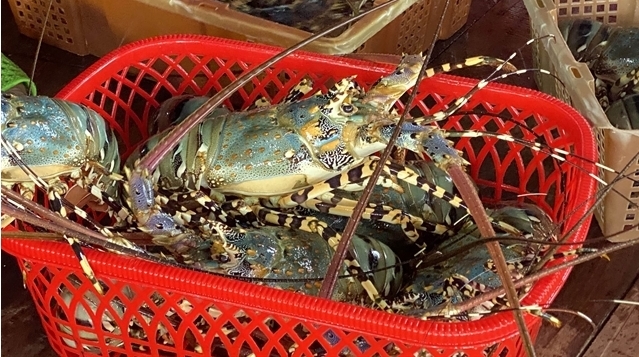
AsemconnectVietnam - According to Vietnam Customs data, Vietnam's lobster export in the first 10 months of 2025 reached $712 million, a rare increase of 135%, thanks to huge demand from China.
Continuing to breakthrough in 2025
According to Vietnam Customs data, Vietnam's lobster exports continued to surge in October 2025, reaching $93 million, a 75% increase compared to the same period last year. Strong growth momentum from the beginning of the year has brought the 10-month export value to $712 million, an increase of 135% compared to the same period in 2024, a rare increase for a single seafood group.
In terms of product structure, green lobsters still play a leading role, accounting for 98% of total export value, reaching $700 million and increasing by 141% after 10 months. Conversely, spiny lobsters and other types of lobsters decreased slightly by 22% and 1% respectively, indicating that market is focusing on lobster species with the highest demand.
According to Vietnam Association of Seafood Processing and Export (VASEP), China and Hong Kong (China) continue to be the most important growth drivers for Vietnam's lobster industry.
In the first 10 months, exports to this market reached US$702 million, an increase of 135% and accounting for almost entire export value of the industry. This growth momentum follows a boom period from 2024, when export value to China increased from US$141 million in 2023 to US$404 million in 2024, equivalent to 186%.
In this large import market, competitive landscape is changing rapidly. According to reference data, China imported nearly 49,900 tonnes of lobster in the first three quarters of the year, an increase of 13%. However, imports from Canada decreased by 39% due to a total tariff burden of 32%, while US lobster imports decreased by 10% due to a 17% tariff and increasing competitive pressure.
Conversely, Vietnam emerged as the most beneficial supplier, with China importing over 17,365 tonnes of Vietnamese lobster, nearly three times the amount imported during the same period, valued at US$556 million.
Vietnam Association of Seafood Processing and Export (VASEP) assessed that tariff advantages were a decisive factor. Vietnamese lobster was not subject to retaliatory tariffs like Canada and the United States, making its selling price significantly more competitive. Its geographical proximity provided a major advantage in transporting live lobsters, reducing losses and costs.
"Besides that, Chinese consumer demand is shifting strongly towards green lobsters, a segment where Vietnam has abundant supply. Another factor is that major lobster farming areas have recovered well in recent years, creating a foundation for Vietnam to meet the strong increase in market demand," Vietnam Association of Seafood Processing and Export (VASEP) stated.
Vietnam Association of Seafood Processing and Export (VASEP) believes that despite the strong increase in exports, domestic farmers still face many difficulties. Lobster prices previously dropped sharply due to oversupply after the Lunar New Year holiday, along with fierce competition from Australia, Canada, the United States and Southeast Asian countries such as the Philippines, Indonesia and Malaysia, creating significant pressure on domestic purchase prices. When China lifted its ban on Australian lobsters, Vietnam's market share faced even greater pressure.
In parallel with price factor, Chinese market is tightening regulations on quality and registration of processing facilities. If new regulations like Order 280 are implemented early and strictly, they could directly impact exports, especially for fresh seafood.
In addition, in late November, key lobster farming areas in Phu Yen, particularly Xuan Dai Bay, suffered significant damage due to heavy rain and flooding. Freshwater flooding the bay caused mass deaths of lobsters due to water shock; many households lost almost all of their cages and had to sell them off at more than half the original price due to a lack of ice for preservation. With over 27,000 cages, this area is one of the most important lobster suppliers in the country.
Vietnam Association of Seafood Processing and Export (VASEP) believes that, in the short term, export businesses may not be significantly affected because supplies for year-end contracts have already been prepared. However, in the medium term, damage to the lobster harvest could significantly reduce supply in early 2026, causing price volatility and affecting the ability to maintain the current export growth rate.
End-of-Year and Early 2026 Outlook
Amidst positive developments in trade activities in the final months of the year, the outlook for Vietnamese lobster exports is assessed to continue its growth momentum, especially as demand from the Chinese market remains high.
According to Vietnam Association of Seafood Processing and Export (VASEP), period from now until the end of the year and extending into early 2026 will be a crucial time for the lobster industry to capitalize on the purchasing power for the peak season of festivals and the Lunar New Year in China. This is the strongest seafood consumption period of the year, creating a favorable foundation for Vietnamese lobster shipments to accelerate.
However, along with the opportunities come noteworthy warnings. Recently, China has repeatedly announced stricter inspection, quarantine, and traceability requirements for imported seafood products.
Businesses are concerned that if these new measures are widely implemented, customs clearance times could be extended and compliance costs increased. These factors could create immediate bottlenecks, directly impacting delivery speeds and export plans during peak seasons.
For perishable goods like lobster, even a slight delay in inspection can significantly increase risks, affecting quality and selling prices.
Overall, lobster remains the brightest spot in Vietnam's seafood export picture in 2025, thanks to strong growth from the Chinese market. However, according to Vietnam Association of Seafood Processing and Export (VASEP), to maintain and consolidate these achievements, the industry needs to simultaneously ensure stable supply from farming areas, improve its capacity to meet market demands, and proactively adapt to increasingly stringent trade policies from China.
To maintain and strengthen this growth momentum, the lobster industry needs to proactively prepare both internally and strategically for the market. Ensuring stable supply in key farming areas, improving the capacity to meet international standards, and closely monitoring policy changes from China will be decisive factors. In addition, strengthening supply chain linkages and enhancing the role of cooperatives and leading enterprises will help the industry be more proactive in the face of trade fluctuations.
Source: Vitic/ congthuong.vn
According to Vietnam Customs data, Vietnam's lobster exports continued to surge in October 2025, reaching $93 million, a 75% increase compared to the same period last year. Strong growth momentum from the beginning of the year has brought the 10-month export value to $712 million, an increase of 135% compared to the same period in 2024, a rare increase for a single seafood group.
In terms of product structure, green lobsters still play a leading role, accounting for 98% of total export value, reaching $700 million and increasing by 141% after 10 months. Conversely, spiny lobsters and other types of lobsters decreased slightly by 22% and 1% respectively, indicating that market is focusing on lobster species with the highest demand.
According to Vietnam Association of Seafood Processing and Export (VASEP), China and Hong Kong (China) continue to be the most important growth drivers for Vietnam's lobster industry.
In the first 10 months, exports to this market reached US$702 million, an increase of 135% and accounting for almost entire export value of the industry. This growth momentum follows a boom period from 2024, when export value to China increased from US$141 million in 2023 to US$404 million in 2024, equivalent to 186%.
In this large import market, competitive landscape is changing rapidly. According to reference data, China imported nearly 49,900 tonnes of lobster in the first three quarters of the year, an increase of 13%. However, imports from Canada decreased by 39% due to a total tariff burden of 32%, while US lobster imports decreased by 10% due to a 17% tariff and increasing competitive pressure.
Conversely, Vietnam emerged as the most beneficial supplier, with China importing over 17,365 tonnes of Vietnamese lobster, nearly three times the amount imported during the same period, valued at US$556 million.
Vietnam Association of Seafood Processing and Export (VASEP) assessed that tariff advantages were a decisive factor. Vietnamese lobster was not subject to retaliatory tariffs like Canada and the United States, making its selling price significantly more competitive. Its geographical proximity provided a major advantage in transporting live lobsters, reducing losses and costs.
"Besides that, Chinese consumer demand is shifting strongly towards green lobsters, a segment where Vietnam has abundant supply. Another factor is that major lobster farming areas have recovered well in recent years, creating a foundation for Vietnam to meet the strong increase in market demand," Vietnam Association of Seafood Processing and Export (VASEP) stated.
Vietnam Association of Seafood Processing and Export (VASEP) believes that despite the strong increase in exports, domestic farmers still face many difficulties. Lobster prices previously dropped sharply due to oversupply after the Lunar New Year holiday, along with fierce competition from Australia, Canada, the United States and Southeast Asian countries such as the Philippines, Indonesia and Malaysia, creating significant pressure on domestic purchase prices. When China lifted its ban on Australian lobsters, Vietnam's market share faced even greater pressure.
In parallel with price factor, Chinese market is tightening regulations on quality and registration of processing facilities. If new regulations like Order 280 are implemented early and strictly, they could directly impact exports, especially for fresh seafood.
In addition, in late November, key lobster farming areas in Phu Yen, particularly Xuan Dai Bay, suffered significant damage due to heavy rain and flooding. Freshwater flooding the bay caused mass deaths of lobsters due to water shock; many households lost almost all of their cages and had to sell them off at more than half the original price due to a lack of ice for preservation. With over 27,000 cages, this area is one of the most important lobster suppliers in the country.
Vietnam Association of Seafood Processing and Export (VASEP) believes that, in the short term, export businesses may not be significantly affected because supplies for year-end contracts have already been prepared. However, in the medium term, damage to the lobster harvest could significantly reduce supply in early 2026, causing price volatility and affecting the ability to maintain the current export growth rate.
End-of-Year and Early 2026 Outlook
Amidst positive developments in trade activities in the final months of the year, the outlook for Vietnamese lobster exports is assessed to continue its growth momentum, especially as demand from the Chinese market remains high.
According to Vietnam Association of Seafood Processing and Export (VASEP), period from now until the end of the year and extending into early 2026 will be a crucial time for the lobster industry to capitalize on the purchasing power for the peak season of festivals and the Lunar New Year in China. This is the strongest seafood consumption period of the year, creating a favorable foundation for Vietnamese lobster shipments to accelerate.
However, along with the opportunities come noteworthy warnings. Recently, China has repeatedly announced stricter inspection, quarantine, and traceability requirements for imported seafood products.
Businesses are concerned that if these new measures are widely implemented, customs clearance times could be extended and compliance costs increased. These factors could create immediate bottlenecks, directly impacting delivery speeds and export plans during peak seasons.
For perishable goods like lobster, even a slight delay in inspection can significantly increase risks, affecting quality and selling prices.
Overall, lobster remains the brightest spot in Vietnam's seafood export picture in 2025, thanks to strong growth from the Chinese market. However, according to Vietnam Association of Seafood Processing and Export (VASEP), to maintain and consolidate these achievements, the industry needs to simultaneously ensure stable supply from farming areas, improve its capacity to meet market demands, and proactively adapt to increasingly stringent trade policies from China.
To maintain and strengthen this growth momentum, the lobster industry needs to proactively prepare both internally and strategically for the market. Ensuring stable supply in key farming areas, improving the capacity to meet international standards, and closely monitoring policy changes from China will be decisive factors. In addition, strengthening supply chain linkages and enhancing the role of cooperatives and leading enterprises will help the industry be more proactive in the face of trade fluctuations.
Source: Vitic/ congthuong.vn
Durian export: transparent codes to secure billion-Dollar market
Vietnamese bananas open up export opportunities thanks to partnership with US distributor
EU's whitefish supply shortage and opportunities for Vietnamese pangasius
Safe chemical industry to be built
Latest update on utilization rate of preferential C/O in Vietnam's FTAs
Rules of origin for exports to UK under CPTPP
Trade revenue approached $900 billion mark
Electronic C/O: businesses need to prepare carefully to optimize export opportunities
Shrimp exports increased in 11 months of 2025
Tea exports: Preferential C/Os become strategic lever in FTAs
'Greening' export: Key to Vietnamese goods breaking through globally
Vietnam’s fruit and vegetable exports increased in 11 months of 2025
Imports of milk and dairy products increased in first 11 months of 2025
Leveraging CEPA Agreement: Tuna opens wide access to the Middle East via UAE
