


Ample room remains for trade, investment cooperation with Japan, RoK
Tuesday, December 16,2025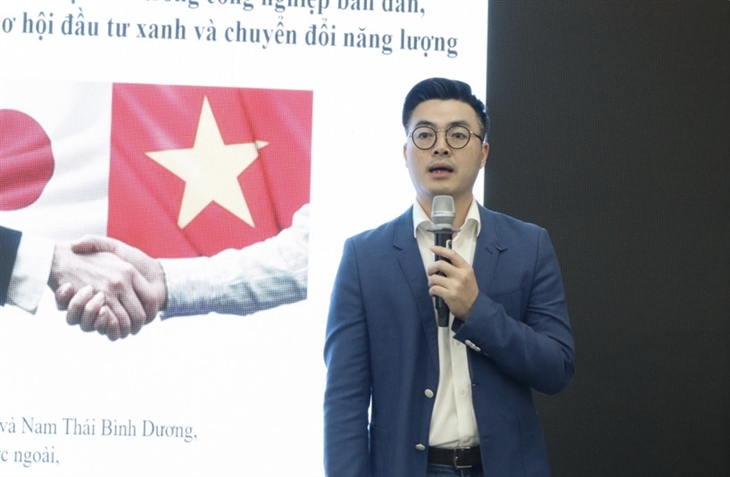
AsemconnectVietnam - A seminar was held in Ho Chi Minh City on December 15, aiming to explore ways for fostering Vietnam's trade with the two Northeast Asian countries.
Japan and the Republic of Korea (RoK) are among Vietnam’s most important economic partners, with considerable room for further cooperation, but Vietnamese enterprises must adopt clearer strategies and continuously upgrade technological capacity to attract more investment and expand trade, experts said.
They gathered at a seminar hosted by the Ho Chi Minh City Centre of International Integration Support (CIIS) under the HCM City Institute for Development Studies on December 15, aiming to explore ways for fostering Vietnam's trade with the two Northeast Asian countries.
Vu Manh Dong from the Ministry of Industry and Trade’s Department of Foreign Market Development said Japan remains one of Vietnam’s leading economic partners across trade, foreign direct investment (FDI), official development assistance (ODA), and labour cooperation. Bilateral trade has been strongly supported by free trade agreements such as the Vietnam – Japan Economic Partnership Agreement (VJEPA), the ASEAN – Japan Comprehensive Economic Partnership (AJCEP), the Comprehensive and Progressive Agreement for Trans-Pacific Partnership (CPTPP), and the Regional Comprehensive Economic Partnership (RCEP).
Trade structures between the two countries are largely complementary. Vietnam mainly exports textiles and garments, transport vehicles and parts, machinery, wood products, aquatic products, and computers and components to Japan, while importing computers, electronic components, machinery, equipment, and steel products.
In terms of investment, Japan was Vietnam’s third-largest investor as of the end of November 2025, with 5,698 projects and total registered capital of 79.27 billion USD, accounting for about 15% of total FDI.
According to the official, Vietnam – Japan cooperation benefits from tariff incentives under the FTAs, geographical proximity, Vietnam’s labour advantages, and Japan’s strong capacity for technology transfer. However, Vietnamese businesses face challenges including stringent quality standards—particularly for agro-fishery products, intense competition from other countries, limited access to capital and advanced technology, cultural differences, and exchange rate volatility.
Exports to Japan are expected to continue growing in wooden furniture, textiles – garments, food products, and handicrafts, Dong said.
Pham Minh Ha, First Secretary at the Vietnam Trade Office in Japan, said the Japanese market increasingly prioritises safety, traceability, green consumption, and health-oriented products, driving demand for processed and frozen food as well as convenience products. Packaging requirements are strict, while drugstore chains are emerging as a new distribution channel for certain food and agricultural products.
To succeed, she recommended, businesses must stay updated on regulations, ensure quality control, invest in technology, pursue long-term market strategies, promote trade promotion, and further engage in business networking activities in Japan.
Turning to the RoK, Pham Khac Tuyen, Commercial Counsellor at the Vietnamese Embassy in this country, identified four major barriers: tightening legal and technical standards; mandatory environmental, social and governance (ESG) requirements; pressures from digitalisation and localisation; and stringent logistics and testing standards of distribution systems.
Vietnamese firms should focus on long-term value rather than short-term price competition, prioritising product quality, environmentally friendly packaging, brand building, and sustainable partnerships, he said, ading that participating in specialised fairs in the RoK is also an effective way to seek suitable partners.
Nguyen Duy Kien, head of the Northeast Asia and South Pacific division at the Ministry of Industry and Trade, noted that shifting supply chains and rising high-tech investment from the RoK offer opportunities for Vietnamese firms to integrate more deeply into Korean supply chains, particularly in supporting industries.
However, he warned against over-reliance on single customers; underinvestment in production capacity, quality governance, and technology; and weak negotiation skills, contract risk management, and business culture understanding.
Kien recommended that enterprises upgrade capabilities in stages, from simple processing to higher-value, technology-intensive component manufacturing. He also called on authorities to shift from traditional investment promotion to strategic support, including assistance with international certification, digital transformation, and legal advisory services./.
Source: en.vietnamplus.vn/ample-room-remains-for-trade-investment-cooperation-with-japan-rok-post334359.vnp
They gathered at a seminar hosted by the Ho Chi Minh City Centre of International Integration Support (CIIS) under the HCM City Institute for Development Studies on December 15, aiming to explore ways for fostering Vietnam's trade with the two Northeast Asian countries.
Vu Manh Dong from the Ministry of Industry and Trade’s Department of Foreign Market Development said Japan remains one of Vietnam’s leading economic partners across trade, foreign direct investment (FDI), official development assistance (ODA), and labour cooperation. Bilateral trade has been strongly supported by free trade agreements such as the Vietnam – Japan Economic Partnership Agreement (VJEPA), the ASEAN – Japan Comprehensive Economic Partnership (AJCEP), the Comprehensive and Progressive Agreement for Trans-Pacific Partnership (CPTPP), and the Regional Comprehensive Economic Partnership (RCEP).
Trade structures between the two countries are largely complementary. Vietnam mainly exports textiles and garments, transport vehicles and parts, machinery, wood products, aquatic products, and computers and components to Japan, while importing computers, electronic components, machinery, equipment, and steel products.
In terms of investment, Japan was Vietnam’s third-largest investor as of the end of November 2025, with 5,698 projects and total registered capital of 79.27 billion USD, accounting for about 15% of total FDI.
According to the official, Vietnam – Japan cooperation benefits from tariff incentives under the FTAs, geographical proximity, Vietnam’s labour advantages, and Japan’s strong capacity for technology transfer. However, Vietnamese businesses face challenges including stringent quality standards—particularly for agro-fishery products, intense competition from other countries, limited access to capital and advanced technology, cultural differences, and exchange rate volatility.
Exports to Japan are expected to continue growing in wooden furniture, textiles – garments, food products, and handicrafts, Dong said.
Pham Minh Ha, First Secretary at the Vietnam Trade Office in Japan, said the Japanese market increasingly prioritises safety, traceability, green consumption, and health-oriented products, driving demand for processed and frozen food as well as convenience products. Packaging requirements are strict, while drugstore chains are emerging as a new distribution channel for certain food and agricultural products.
To succeed, she recommended, businesses must stay updated on regulations, ensure quality control, invest in technology, pursue long-term market strategies, promote trade promotion, and further engage in business networking activities in Japan.
Turning to the RoK, Pham Khac Tuyen, Commercial Counsellor at the Vietnamese Embassy in this country, identified four major barriers: tightening legal and technical standards; mandatory environmental, social and governance (ESG) requirements; pressures from digitalisation and localisation; and stringent logistics and testing standards of distribution systems.
Vietnamese firms should focus on long-term value rather than short-term price competition, prioritising product quality, environmentally friendly packaging, brand building, and sustainable partnerships, he said, ading that participating in specialised fairs in the RoK is also an effective way to seek suitable partners.
Nguyen Duy Kien, head of the Northeast Asia and South Pacific division at the Ministry of Industry and Trade, noted that shifting supply chains and rising high-tech investment from the RoK offer opportunities for Vietnamese firms to integrate more deeply into Korean supply chains, particularly in supporting industries.
However, he warned against over-reliance on single customers; underinvestment in production capacity, quality governance, and technology; and weak negotiation skills, contract risk management, and business culture understanding.
Kien recommended that enterprises upgrade capabilities in stages, from simple processing to higher-value, technology-intensive component manufacturing. He also called on authorities to shift from traditional investment promotion to strategic support, including assistance with international certification, digital transformation, and legal advisory services./.
Source: en.vietnamplus.vn/ample-room-remains-for-trade-investment-cooperation-with-japan-rok-post334359.vnp
Over 300 enterprises gather at Vietnam–China trade and tourism fair in Quang Ninh
Vietnam–Germany labour cooperation - strategically complementary, mutually beneficial: official
Vietnam, RoK strengthen cooperation on trade remedies
Vietnam, EU explore new paths for stronger cooperation
Vietnam, Cuba target 500 mln USD in two-way trade
Hai Phong boosts investment ties with Czech Republic
Vietnam, Guangxi (China) expand trade promotion, business ties
Vietnam, EU seek to expand cooperation in trade, investment
US announces preliminary conclusion of anti-dumping duty review on Vietnamese honey
Vietnam Dialogue 2025 drives economic cooperation between Vietnam, Germany, Europe
Vietnam, Japan discuss issues related to CPTPP
Can Tho looks to broaden cooperation projects with Canada
Vietnamese Prime Minister visits Kuwait’s Al-Zour Refinery
Vietnam, US conclude 5th round of reciprocal trade agreement talks

Plan of Hai Duong province for a period of 2021 - 2030, ...
Organize space reasonably and harmoniously, focusing on connecting Hai Duong in common development space, actively contributing to the ...Plan of Hau Giang province in a period of 2021 - 2030, ...
Sustainable forestry development program in a period of ...

Vietnam’s auto sales up 6.5% over 11 months
The Vietnam Automobile Manufacturers’ Association (VAMA) has reported that total auto sales of its members in the first 11 months of 2025 ...Vietnamese canoeists bring home first gold at SEA Games 33
SEA Games 33: Good news keeps flowing from swimming, ...
Exhibition on President Ho Chi Minh’s footprints in Russia ...
