


Vietnamese seafood rises to top supply group in Singapore
Thursday, November 19,2026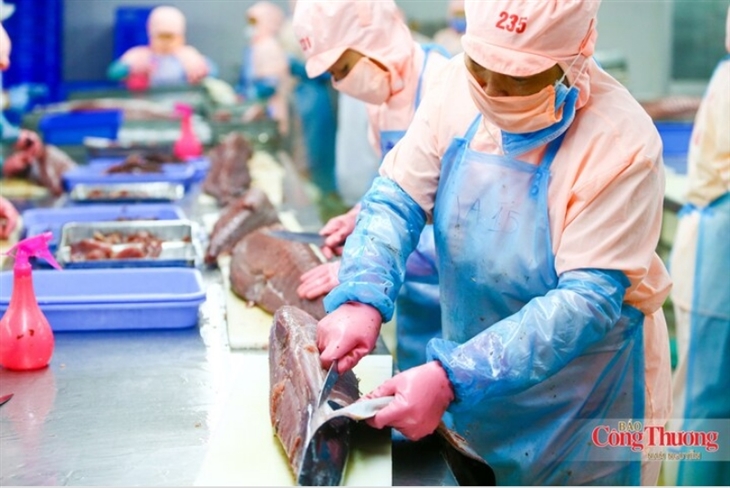
AsemconnectVietnam - Singapore market continues to record high demand for seafood imports, with Vietnam maintaining its position as one of the largest supplying partners.
Ranked second in supply volume
According to statistics from Singapore Enterprise Authority (Enterprise Singapore), cited by Vietnamese Trade Office in Singapore, in the first nine months of 2026, total value of seafood imports (HS 03) to Singapore reached SGD 923.2 million, an increase of 6.1% compared to the same period in 2025. This is the highest level in the first nine months of the year since 2020, surpassing even the peak of SGD 917.9 million recorded in the same period of 2022.
Within this overall picture, Vietnam continues to affirm its role as an important source of seafood for Singapore. Specifically, in the first nine months of 2026, Singapore's seafood imports from Vietnam reached S$95.4 million, a 7.7% increase compared to the same period last year, higher than the overall market growth of 6.1%. Vietnam's market share reached 10.3%, up from 10.2% in the same period of 2025. This is also the highest import value in the first nine months of the year since 2020.
Notably, growth momentum of Vietnamese seafood improved in the third quarter of 2026. Import value in quarter reached S$34.6 million, a 10.3% increase compared to the same period. Thanks to this result, Vietnam surpassed Japan, rising from fifth place in the first six months to fourth place among the largest seafood suppliers to Singapore.
Currently, Malaysia continues to lead with S$129.8 million, accounting for 14.1% of market share; Indonesia ranks second with S$106.3 million, accounting for 11.5%; and China ranks third with S$96.7 million, accounting for 10.5%. Vietnam reached S$95.4 million, only about S$1.3 million less than China.
In terms of volume, Vietnam's position is even more prominent. Singapore imported 21,085 tonnes of seafood from Vietnam in the first nine months, an increase of 7.6%, making Vietnam the second largest supplier, after Malaysia with 22,239 tonnes. Gap between two countries is narrowing as seafood imports from Malaysia decreased by 7.5% compared to the same period.
A notable advantage of Vietnamese seafood is its competitive price. The average import price reached S$4,525/tonne, almost unchanged compared to the same period last year and only about 54% of the market average. While Singapore's import growth was mainly driven by price, Vietnamese seafood growth was mainly driven by volume. Of the total increase of S$6.8 million in import value from Vietnam, approximately S$6.4 million came from volume.
Pangasius continues to play a leading role.
In structure of Vietnamese seafood exports to Singapore, fish fillets and fresh, chilled or frozen fish meat continue to be main product group. In the first nine months of the year, this group reached nearly S$50 million, an increase of 10% compared to the same period last year, accounting for 52.4% of total value of seafood imports from Vietnam.
Notably, Vietnam leads supply of this product group in Singapore with a market share of 30.3%. Specifically, frozen catfish fillets, mainly pangasius, reached S$34.9 million, an increase of 3.7%, with a volume of 14,050 tons, an increase of 5.5%.
This is the largest imported item among Singapore's seafood products and Vietnam currently accounts for 95.4% of market share, with virtually no significant competitors. Unit price of Vietnamese pangasius fillets reached S$2,485/tonne, lower than the market average of S$2,556/tonne.
This price advantage helps Vietnamese pangasius maintain its competitiveness amidst ongoing cost pressures faced by Singaporean food service businesses and consumer spending habits. It is also a suitable product for distribution channels such as industrial catering, budget restaurants and retail.
Besides pangasius, several other Vietnamese seafood products also recorded positive results. Dried anchovies reached S$5.2 million, an increase of 28.3%, accounting for 73.5% of the market share. Live freshwater fish increased by 20.6%, reaching a market share of 47.8%. Dried cuttlefish and squid increased by 63.7%, accounting for 54.1% of the market share. Surimi increased by 59.3%, with imports increasing by 40.4%, placing Vietnam second in terms of supply, after India.
In crustacean group, import value reached S$20.5 million, an increase of 2.4%. Volume increased by 6.4%, however, unit price decreased by 3.8%, indicating that competitiveness of Vietnamese products still mainly relies on supply capacity. Notably, whole frozen tiger shrimp increased by 60.2%, reaching S$2.2 million; market share increased to 21.9%. Frozen whole whiteleg shrimp exports surged, reaching S$1.4 million, 4.7 times higher than the same period last year.
These results show that, in addition to established key products, several whole shrimp, surimi and dried seafood products are expanding their market share, contributing to diversification of Vietnam's export structure to Singapore.
According to assessment of Vietnam Trade Office in Singapore, the Singapore seafood market will continue to remain stable until end of 2026. High import demand, better-than-expected economic growth, and Singapore's strategy of diversifying supply sources create more opportunities for capable suppliers to maintain a stable supply.
In particular, seafood imports to Singapore have a distinct seasonal pattern, with fourth quarter typically accounting for 27-30% of total annual import value. Demand usually increases in December due to consumer activity during the year-end holiday season and preparations for the Lunar New Year. With the Lunar New Year 2027 falling on February 6th, demand for stockpiling is projected to be spread evenly throughout December 2026 and January 2027.
This presents an opportunity for Vietnamese businesses to boost supply, especially for products with competitive advantages. Pangasius fillet is expected to remain stable; shrimp and surimi have the potential for seasonal growth, catering to the demand for dishes during the year-end and Tet holidays. Conversely, scallops may face greater competition from Japan and China.
However, deal also noted that Vietnam's seafood growth is currently driven primarily by production volume in the mainstream segment. Without improving added value, maintaining market share will become increasingly difficult as competitors such as Ecuador, India, Indonesia and China intensify their offerings, especially in price-competitive product groups.
For pangasius, businesses need to maintain stable supply and quality while developing value-added products such as fillets, breaded, processed and packaged retail products. For shrimp, instead of focusing on price competition in mainstream frozen segment, businesses can concentrate on fast-growing products such as large whole tiger shrimp and whiteleg shrimp, and processed products like steamed shrimp, breaded shrimp, and sushi shrimp.
For scallops and other mollusk products, diversifying raw material sources, proactively planning inventory and monitoring competitive developments from Japan and China are also essential requirements. Meanwhile, niche products with high market share such as dried anchovies, dried squid, surimi, live freshwater fish and crab still have room for expansion.
Besides product quality and structure, businesses need to proactively prepare to meet Singapore's regulations on food safety and security, especially the requirements for licensing, traceability, and the control plan expected to be fully implemented from 2028. Coordination with importers to prepare traceability documentation should be done early.
Vietnam Trade Office in Singapore also recommends that associations and businesses actively participate in specialized trade fairs such as Seafood Expo Asia and strengthen connections with importers, retail chains and food service businesses in Singapore.
Source: Vitic/ congthuong.vn
Electronics and phone exports exceed USD 207 billion in the first 10 months
Proof of origin, conditions for utilizing FTA preferences
Transparency in origin to enhance value of seafood export
Certificate of origin: small and medium-sized enterprises hope for support
To leverage FTA preferences, businesses need to master rules of origin.
Removing obstacles to rules of origin helps Hai Phong businesses take advantage of FTAs
Wood export: transparency of raw materials to meet rules of origin
Promoting Vietnam-Cambodia trade connections
Self-certification of origin: proactively leveraging CPTPP preferences
China increases purchases, Vietnamese rice export welcome recovery signals
Export in 2027: Which product groups have prospects and what do businesses need to prepare?
EVFTA creates opportunities for Vietnamese goods to expand market share in EU
Agricultural, forestry and aquatic product export reached over 63 billion USD after 10 months
Seafood export exceed US$10.4 billion: What's driving force for end of this year?
