


Transparency in origin to enhance value of seafood export
Thursday, November 12,2026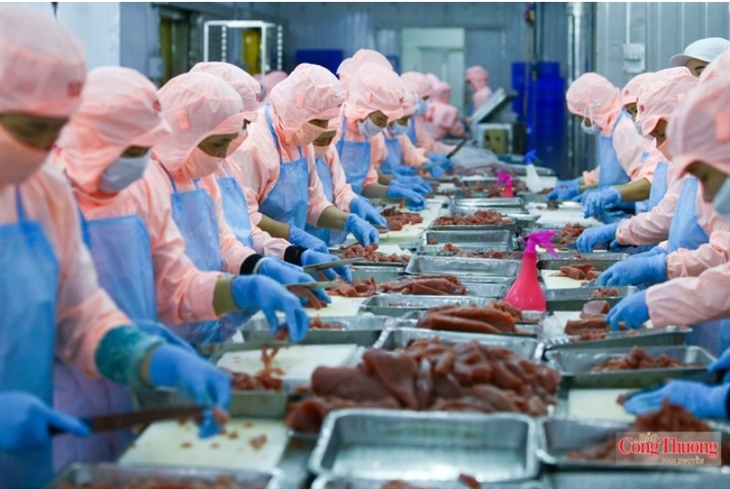
AsemconnectVietnam - Complex seafood raw material chain necessitates strict control over origin, standardized documentation and improved ability of businesses to prove origin of their goods.
Increased export, higher origin requirements
According to data released by Vietnam Association of Seafood Processing and Export (VASEP) on November 4, 2026, seafood export in October were estimated at US$1.315 billion, a 13.5% increase compared to the same period last year. For the first 10 months of 2026, total export turnover reached US$10.459 billion, a 12.1% increase. Of this, shrimp export reached approximately US$4.22 billion, pangasius export nearly US$1.98 billion and tuna export US$817.2 million.
Expanding scale of export also places higher demands on management of origin and provenance of goods. Due to diverse nature of raw materials and numerous stages of procurement, preliminary processing and manufacturing, seafood businesses must ensure ability to prove origin of each product, rather than relying solely on production location or place of completion.
In reality, seafood raw materials for export processing can come from domestic aquaculture farms, fishing operations or imported sources. After procurement, raw materials continue through many stages of processing, preservation and packaging. Each stage generates information and documentation related to origin, quantity, type and formation process of product.
This characteristic makes determining origin of seafood require businesses to control everything from input to finished product. Fact that raw materials are processed in Vietnam does not automatically mean product has Vietnamese origin. Businesses must base their decisions on specific rules of origin for each product and provide documentation proving corresponding criteria.
Speaking with Industry and Trade Newspaper, Ms. Le Hang, Deputy Secretary General of VASEP, stated that determining origin should begin with raw materials themselves. Businesses must clarify whether shrimp are farmed or wild-caught and where they were farmed or caught; the same applies to fish. Especially for imported raw materials, traceability documents must show origin all way back to source of supply.
“Businesses shouldn’t wait until the goods are produced to think about which market they’re going to, under which agreement and which Certificate of Origin (C/O) to use. By then it’s too late”, Ms. Le Hang emphasized.
According to VASEP representative, businesses need to develop production and business plans that are aligned with ability to meet origin requirements from outset. Preparing raw material documentation, identifying supply sources and storing production information should be done in parallel with production process and should not be considered solely responsibility of export procedures department.
Raw material records determine quality of certificates of origin (C/O)
One of crucial requirements for seafood businesses is establishing a system of records capable of connecting information from raw materials to finished export products.
For farmed raw materials, businesses need to maintain information about the farm, farming area, harvesting process, procurement and transportation. For wild-caught seafood, records need to show the source of catch, fishing vessel information, production volume and procurement process. For imported raw materials, documents from suppliers, import records and information on origin of raw materials need to be fully managed to facilitate determination of origin of finished products.
Ms. Le Hang believes that businesses need to strengthen raw material records from farming areas or sources of catch, ensuring complete and accurate information. For imported raw materials, requirement for traceability is even more important. She emphasized: “For imported raw materials, businesses need complete traceability records clearly identifying origin to ensure sufficient evidence for accurate issuance of Certificates of Origin (C/O)”.
This is a matter of direct significance for the assessment of C/O applications. If businesses cannot prove origin of raw materials or cannot compare quantity of raw materials used with standard and output of finished products, determining origin will be difficult. Even with complete invoices and purchase documents, businesses still need to prove that goods meet origin criteria as stipulated, not just prove place where raw materials were purchased.
According to Government Decree No.31/2018/ND-CP of 2018 detailing the Law on Foreign Trade Management on the origin of goods, the application for a C/O includes documents related to the goods, the source of raw materials, and the production process. Depending on case, issuing authority may request businesses to provide additional documents such as import documents for raw materials, invoices for domestically purchased raw materials, detailed lists of goods and other necessary documents to verify origin.
Therefore, standardizing production data and record keeping not only serves one-time application for a Certificate of Origin but also helps businesses be proactive in subsequent export. When information on raw materials, production standards, processing and finished products is managed uniformly, businesses will reduce need for missing documents and repeated requests for clarification or documentation.
From a management perspective, decentralizing authority to issue Certificates of Origin (C/O) to local levels also requires improving professional capacity and standardizing the process of receiving and processing applications. Along with implementing decentralization regulations, Ministry of Industry and Trade is promoting administrative procedure reform, applying an electronic C/O issuance system and standardizing data to serve the certification of origin of goods.
For seafood businesses, proactively preparing documents from raw material stage will facilitate application process for C/O issuance and improve ability to provide explanations when verification is required. This also serves as a basis for the C/O issuing authority to check, compare information and certify origin in accordance with regulations.
Source: Vitic/ congthuong.vn
Wood export: transparency of raw materials to meet rules of origin
Promoting Vietnam-Cambodia trade connections
Self-certification of origin: proactively leveraging CPTPP preferences
China increases purchases, Vietnamese rice export welcome recovery signals
Export in 2027: Which product groups have prospects and what do businesses need to prepare?
EVFTA creates opportunities for Vietnamese goods to expand market share in EU
Agricultural, forestry and aquatic product export reached over 63 billion USD after 10 months
Seafood export exceed US$10.4 billion: What's driving force for end of this year?
UKVFTA creates momentum to raise standards for Vietnamese goods in UK market
UKVFTA opens up, Vietnamese fruits and vegetables need to overcome technical barriers
RCEP expands export opportunities for Vietnamese goods to ASEAN
Exploiting FTAs, opening up more export opportunities for Nghe An
Ha Tinh: Export recover, import increase
Leveraging CEPA to expand export opportunities for Vietnamese fruits and vegetables to UAE
